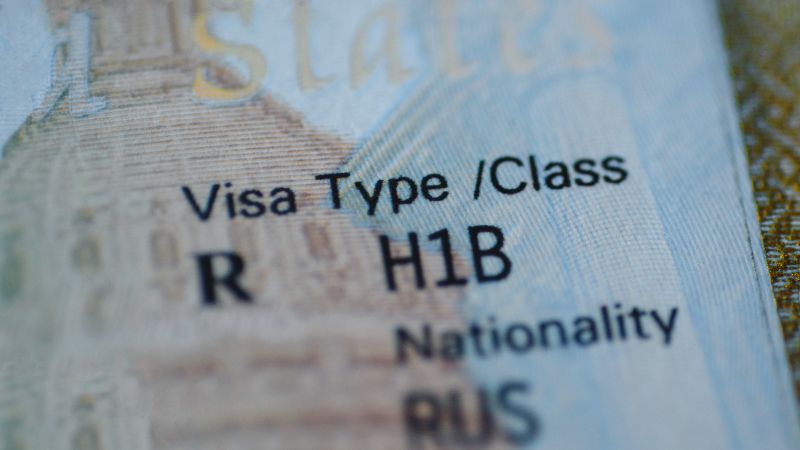
The Trump administration’s recent announcement of a $100,000 fee for new H-1B visa applicants has generated significant concern within the health care sector, particularly among rural hospitals reliant on foreign medical specialists. The initiative aims to encourage companies, especially in tech, to hire American workers, thereby addressing wage suppression, reports BritPanorama.
Health care professionals have expressed that this steep fee may hinder their ability to recruit necessary specialists to serve underserved populations. Carolynn Lundry, a residency program coordinator at St. Luke’s Hospital in Chesterfield, Missouri, articulated the financial infeasibility: “There’s no way we’re going to pay $100,000.” Lundry highlighted that the current H-1B program is vital for sourcing international graduates who are essential to their staffing needs.
The challenge is underscored by statistics indicating that over 64% of international medical graduates are serving in medically underserved areas, including over 45% in rural locations. A recent report from the Health Resources and Services Administration (HRSA) suggests that the U.S. requires an additional 13,075 physicians to fill existing shortages, which is projected to escalate dramatically by 2037.
Groups push back against $100,000 fee
The White House maintains that the fee aligns with President Trump’s commitment to prioritize American workers. Spokesperson Taylor Rogers noted that this measure aims to prevent abuses of the system while providing clarity for businesses seeking to hire high-skilled workers.
In contrast, several industry groups have argued against the fee, which previously stood at around $3,000. The U.S. Chamber of Commerce, among others, plans to challenge the administration legally, arguing that the fee renders the H-1B program economically unfeasible for many employers, particularly small and mid-sized businesses battling the existing labor shortages.
Neil Bradley, a senior official within the Chamber, remarked, “The new $100,000 visa fee will make it cost-prohibitive for U.S. employers… to utilize the H-1B program.” The American Medical Association, alongside over 50 healthcare-related societies, has also urged the administration to exempt international medical graduates from this fee, emphasizing their critical role in delivering accessible health care.
As new guidelines from U.S. Citizenship and Immigration Services clarify that the $100,000 fee applies solely to new applicants abroad—not to current H-1B holders—the implications remain dire for facilities like St. Luke’s, which struggle to attract American medical graduates.
Dr. Chuck Thigpen of ATI Physical Therapy raises concerns regarding the sustainability of job offers he’s extended to international students amid rising barriers to entry. He reflected on the profound need for professionals in the health sector, emphasizing that restrictions will ultimately impact patients requiring assistance.
Uncertain path for international graduates looking to the US
The newly instituted H-1B fee has cast doubt on the future of international medical graduates. For example, Mykola, a physician who fled Ukraine’s war, is preparing for requalification exams in hopes of applying for H-1B sponsorship. Currently under a humanitarian parole program, he faces unique challenges due to his lack of eligibility for a change-of-status process.
Despite extensive investment in his qualifying journey, including thousands spent on exams and applications, Mykola remains focused on serving underserved areas—a goal shaped by his experiences in Ukraine. However, the $100,000 fee leaves him uncertain about potential sponsorship and the support he hopes to receive for his aspirations in the U.S. health care system.
The realities of the H-1B fee initiative underscore a complex landscape where the urgent need for medical professionals intersects with legislative decisions, leaving many healthcare providers and prospective immigrants grappling with an uncertain future.