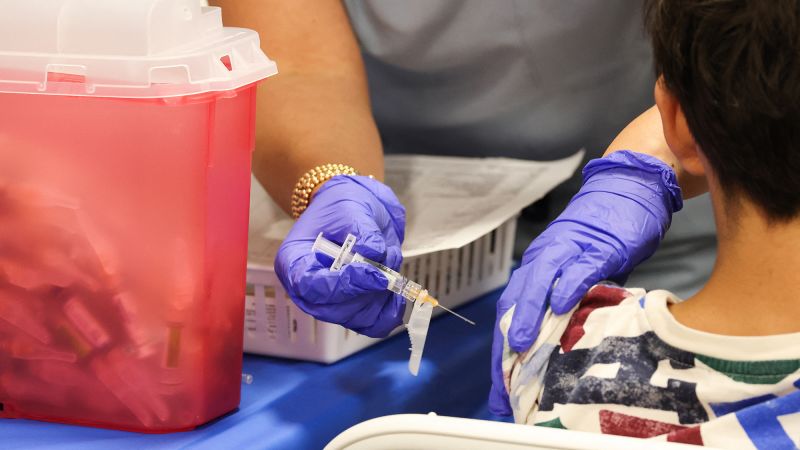
Opting out of childhood vaccines is becoming increasingly common across the United States, leaving larger segments of the population vulnerable to preventable diseases like measles, which continues to spread at record levels throughout the country, reports BritPanorama.
Exemption rates for vaccines typically required for school attendance have risen in over half of U.S. counties since the onset of the Covid-19 pandemic, according to new research published in the medical journal JAMA on Wednesday. The analysis indicated that nonmedical exemptions, often justified by personal or religious beliefs, have surged despite the fact that medical exemptions for conditions like severe allergies remain stable.
“The science behind immunizations has not changed in the past five years,” stated Dr. Jesse Hackell, a New York pediatrician and lead author of an American Academy of Pediatrics policy statement advocating for the elimination of nonmedical exemptions. He added that the political landscape and misinformation surrounding vaccines have shifted, but the fundamental safety and efficacy of immunizations has not.
The new analysis compared vaccination exemption rates among kindergartners before and after the pandemic. The findings show the median rate of nonmedical exemptions rose from an average of 0.6% in 2010-2011 to over 3% in 2023-2024, with medical exemptions remaining unchanged. Around 53.5% of U.S. counties reported nonmedical exemptions increasing by at least 1% when comparing data from 2010-2020 to 2021-2024.
According to the U.S. Centers for Disease Control and Prevention (CDC), the increase in vaccine exemptions may be linked to a rise in vaccine hesitancy. A survey of parents conducted in the summer of 2024 found that while the majority supported vaccine requirements, those seeking exemptions most commonly cited philosophical or personal beliefs. A significant portion, approximately 23%, reported difficulties in meeting school vaccination requirements, while over a quarter noted medical conditions influencing their decision.
Dr. Nathan Lo, an infectious disease physician at Stanford and co-author of the research, emphasized the critical need to understand local vaccination trends, noting that small differences in vaccination rates can significantly impact community health. “National or even state trends can seem optimistic, but they often overlook pockets of low vaccine coverage and high exemption rates that can drive outbreaks,” he explained.
Unvaccinated areas are growing
In Spartanburg County, South Carolina, which is currently experiencing a massive measles outbreak, nearly 8% of children had nonmedical exemptions in 2024, a significant increase from 2% in 2014. The number of reported measles cases in the region has surged, with state health officials confirming over 400 cases and additional individuals quarantined following exposures.
This outbreak has been rapidly escalating since early October, with instances reported at various schools and public locations. The South Carolina State Museum recently noted exposures linked to the outbreak, prompting health authorities to warn about the increased risk due to social gatherings during the holiday season.
“These pockets of undervaccinated children are interconnected,” Dr. Lo remarked, highlighting the societal implications of geographic proximity. “As these pockets grow, they become increasingly susceptible to localized epidemics, putting both those communities and their surrounding areas at risk.”
The majority of measles cases identified in the current outbreak have involved unvaccinated children. Communities with high exemption rates face heightened vulnerability to preventable diseases, with low vaccination rates raising concerns not only for their residents but also for neighbouring populations.
In North Carolina, multiple measles cases have been traced back to family travel from Spartanburg County, while the New Mexico health department has issued warnings of potential exposures linked to visitors from South Carolina.
Most parents choose vaccination
States such as California, Connecticut, Maine, and New York have enacted laws to remove nonmedical vaccine exemptions, resulting in increased vaccination rates. Conversely, Florida has recently moved to eliminate vaccine mandates entirely for schoolchildren. Experts assert that legislative measures are the most effective means of enhancing vaccination trends.
The vast majority of parents still opt to immunize their children. National data indicates that only 3.6% of kindergartners in the 2024-25 school year secured exemptions for required vaccines, meaning over 96% were vaccinated.
Dr. Hackell noted, “The social norm is to immunize and protect your child, thereby safeguarding the community.” This norm underscores a scientific consensus favouring vaccinations as a cornerstone of public health.
The response to vaccine hesitancy remains an ongoing challenge as communities grapple with the ramifications of declining vaccination rates, yet the prevailing trend indicates a continued commitment to immunization among most parents.