Annular solar eclipse on February 17, 2026
A “ring of fire” solar eclipse on February 17, 2026, will mark the first eclipse of the year, but only approximately 2% of the world’s population will have the opportunity to observe it, reports BritPanorama.
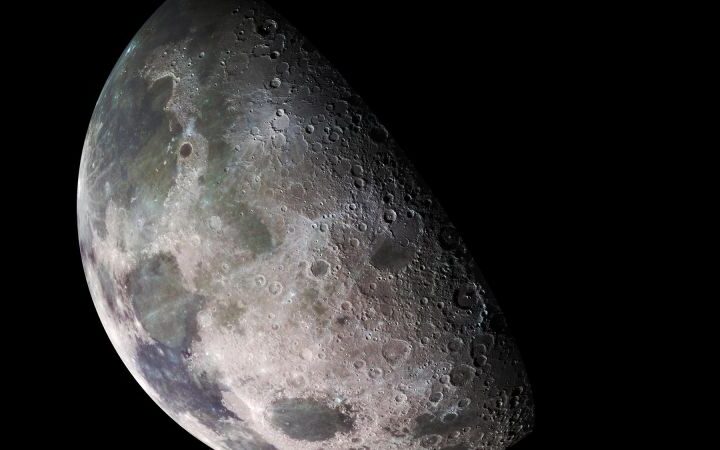
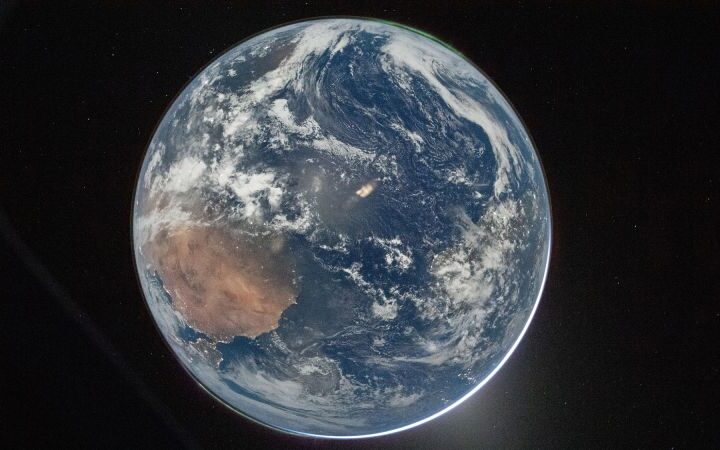
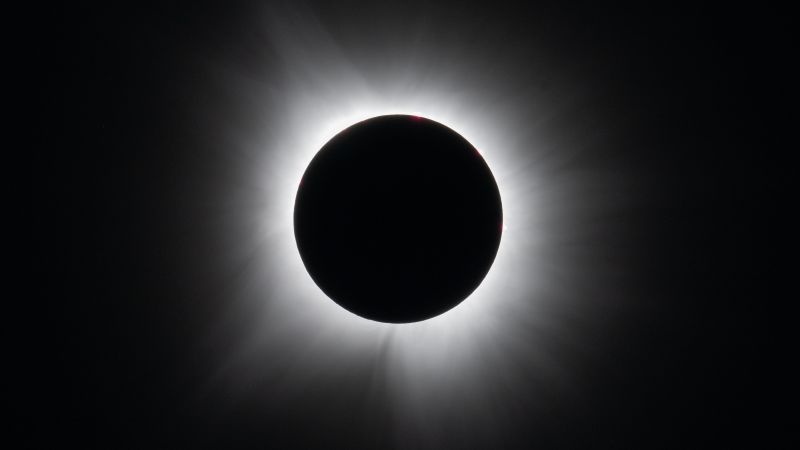
This phenomenon, also known as an annular solar eclipse, occurs when the moon passes directly between the Earth and the sun but is at a distance that prevents it from completely covering the sun’s disk. “This results in a glowing ring of sunlight surrounding the moon’s dark silhouette,” explained Dr. C. Alex Young, associate director for science communication in NASA’s Goddard Space Flight Center.
If the moon entirely covers the sun, it results in a total eclipse; a partial solar eclipse occurs when the moon passes between the sun and Earth, but they are not perfectly aligned. The best vantage point for viewing the ring of fire will be from a narrow path across Antarctica, with a partial eclipse observable from parts of Africa and South America.
Annular solar eclipses take place every one to two years, but many are not visible to significant portions of the global population. Another annular eclipse is scheduled for February 6, 2027, with a wider visibility across South America and Africa. In contrast, the next opportunity for people in the United States to witness an annular eclipse will not occur until 2039.
Eclipses typically occur in pairs, sometimes in trios, referred to as eclipse seasons. Young noted that “a solar eclipse is always accompanied by a lunar eclipse about two weeks before or after,” marking this upcoming event as the first eclipse of the season, with a total lunar eclipse set to follow on March 3.
This annular solar eclipse will be the first following the event in October 2024, during which the moon’s shadow will create a path spanning 383 miles (616 kilometers) wide and 2,661 miles (4,282 kilometers) long across Earth. Due to its narrow path over Antarctica, many viewers will need to rely on livestreams for a glimpse of the spectacle. “It’s all a matter of geometry,” Young noted, emphasizing that witnessing such an eclipse is rare due to the precise alignments required.
The most vivid views will be from Concordia Station in Antarctica, beginning at 6:48 p.m. local time (6:42 a.m. ET) and peaking at 7:47 p.m. local time (7:12 a.m. ET), lasting approximately two hours. A partial eclipse will be visible across South Africa, South America, and Antarctica, with Argentina and Chile starting to see the partial eclipse around 7 a.m. local time (5 a.m. ET).
To check visibility times along the eclipse’s path, viewers can refer to resources for details.
What to look for and how to safely watch
Observers of the annular solar eclipse will initially notice the moon gradually moving across the sun, which leads to a partial eclipse obscuring roughly 80% of the sun. In response, shadows will sharpen, light will dim, and unusual patterns will appear on the ground. Young remarked, “It sort of looks like something’s taking a bite out of the sun.”
During the peak of annularity, the moon will align directly in front of the sun, creating the iconic “ring of fire.” Observers using eclipse glasses will notice distinct circular patterns in shadows, making the event particularly striking. However, it is crucial to remember that without proper solar viewing eye protection, it is unsafe to look directly at the sun during an annular or partial eclipse.
“You need certified eclipse glasses,” Young emphasized. “Regular sunglasses, even very dark ones, are nowhere near sufficient.”
Unlike total solar eclipses, during partial and annular eclipses, there is never a moment when the moon completely covers the sun’s face, maintaining the necessity for eye protection. Alternatives, such as handheld solar viewers or making a simple pinhole projector, could also facilitate safe viewing.
Upcoming celestial events
This year’s celestial calendar is filled with notable occurrences. On February 28, stargazers can anticipate a parade of six planets visible shortly after sunset; Mercury, Venus, Saturn, and Jupiter will be observable to the naked eye under favorable weather conditions, while Uranus and Neptune may require binoculars or a telescope.
Following closely, on March 3, a total lunar eclipse will be visible in Asia, Australia, the Pacific Islands, and the Americas, resulting in the moon appearing red, a phenomenon known as a blood moon. Young highlighted this eclipse as significant, noting it will be the remaining opportunity for total visibility from North America until 2028.
Additionally, throughout 2026, several meteor showers are predicted to occur, with significant dates as follows: April 21-22 (Lyrids), May 5-6 (Eta Aquariids), July 30-31 (Southern and Alpha Capricornids), August 12-13 (Perseids), October 21-22 (Orionids), November 4-5 (Southern Taurids), November 11-12 (Northern Taurids), November 16-17 (Leonids), and December 13-14 (Geminids), culminating with the Ursids on December 21-22.