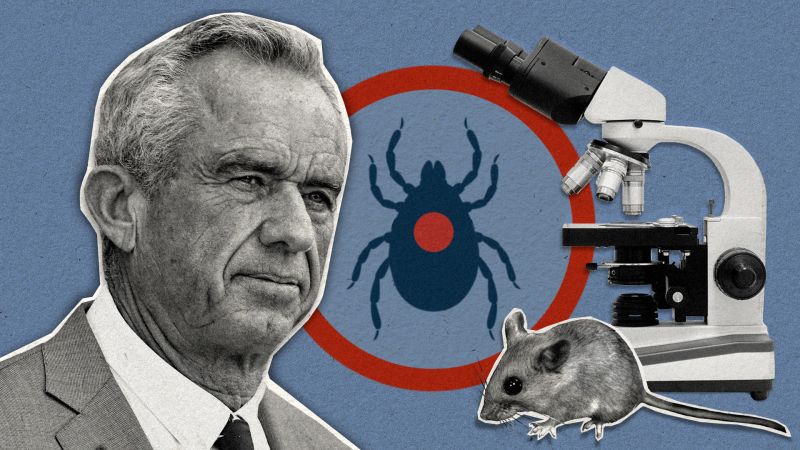
When the topic of Lyme disease arises, Robert F. Kennedy Jr. often recounts a personal experience from the 1980s, detailing an instance where he removed nearly 30 ticks from his body after a day in the woods in Westchester County, New York. He reports that he showed the characteristic bullseye rash of Lyme disease and claims all of his children have had the tick-borne illness, with two suffering severe effects.
As the secretary of the US Department of Health and Human Services, Kennedy has vowed to tackle Lyme disease, which has escalated into a significant public health issue over the past four decades. At a roundtable discussion he organized in December with patients, clinicians, and researchers, he committed to enhancing support for improving diagnostics and treatment options for those affected.
“We’ve got to figure out a way to make it safe for children to go back in the woods again,” Kennedy stated. Recently, a potential solution surfaced when Pfizer announced plans to seek regulatory approval for a Lyme disease vaccine, marking the first of its kind to be introduced to the market in over two decades, reports BritPanorama.
However, its path in the US may be fraught with challenges, particularly due to Kennedy himself. He has garnered attention for endorsing both anti-vaccine views and unfounded conspiracy theories, including the notion that Lyme disease was engineered by US government scientists as a bioweapon during the Cold War.
The complexity surrounding this issue extends beyond Kennedy. The US has a troubled history with Lyme disease vaccines, and many of these concerns remain relevant today.
A growing problem
The challenge posed by Lyme disease is substantial and worsening. Estimates suggest that approximately 476,000 people are diagnosed and treated for Lyme disease annually in the US, with its geographic spread reportedly expanding due to factors like climate change and changes in land use.
“Lyme is entering areas where it didn’t occur before,” remarked Dr. Richard Ostfeld, a disease ecologist at the Cary Institute of Ecosystem Studies in Millbrook, New York. The disease is caused by the bacterium Borrelia burgdorferi and spread to humans via blacklegged ticks, leading to symptoms such as fever, fatigue, and a distinctive skin rash. Untreated, it can advance to serious complications involving joints, heart, and nervous system.
Most early cases respond effectively to antibiotic treatment, yet some patients experience lingering, debilitating symptoms thereafter, a situation termed post-treatment Lyme disease syndrome or chronic Lyme.
The number of individuals susceptible to Lyme disease continues to increase as ticks carrying the bacteria extend their range. Climate change appears to facilitate this expansion, creating longer warm seasons conducive to tick activity.
Additionally, expanding suburban areas contribute to increased Lyme disease risk, as fragmented forests support higher rodent populations, which act as primary hosts for the ticks. This results in more frequent human-tick encounters.
The first Lyme disease vaccine
The urgency of the Lyme disease situation a few decades ago led various pharmaceutical companies to spend considerable resources developing vaccines. GSK’s Lymerix was notably approved by the US Food and Drug Administration in 1998 but faced challenges from the outset.
Government bodies’ endorsements were muted as the vaccine navigated regulatory scrutiny. Dr. Dixie Snider of the US Centers for Disease Control and Prevention noted at the time, “The benefits are on the side of the vaccine in the short term… In the long term, we don’t know.”
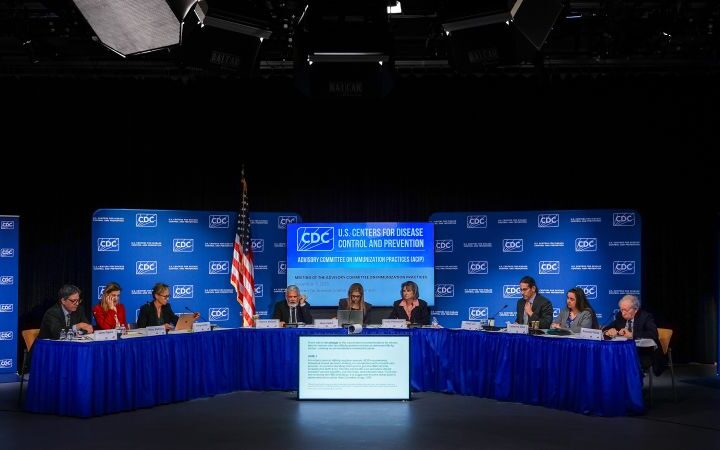
Despite its approval, a tepid recommendation from CDC advisers hindered its uptake. According to Dr. Paul Offit, a member of the advisory group, “The ACIP really killed that product; they damned it with faint praise.” The CDC advised that vaccination “should be considered” in high-risk regions but fell short of a sweeping endorsement.
Concerns lingered after Lymerix’s market introduction, as misinformation propagated fears that the vaccine could induce arthritis—a claim that subsequent studies dismissed. Nonetheless, public apprehension led GSK to withdraw the vaccine from the market in early 2002, citing insufficient demand.
A second Lyme vaccine candidate failed to advance through the approval process despite promising results. Dr. Stanley Plotkin remarked on the situation, asserting, “We had a good vaccine that failed because people didn’t use it.”
Pfizer’s new vaccine
It remains uncertain whether the new vaccine developed by Pfizer and Valneva will encounter similar obstacles. Initial trial results indicated mixed efficacy, yet Pfizer continues to express confidence in the vaccine’s potential as it prepares regulatory submissions.
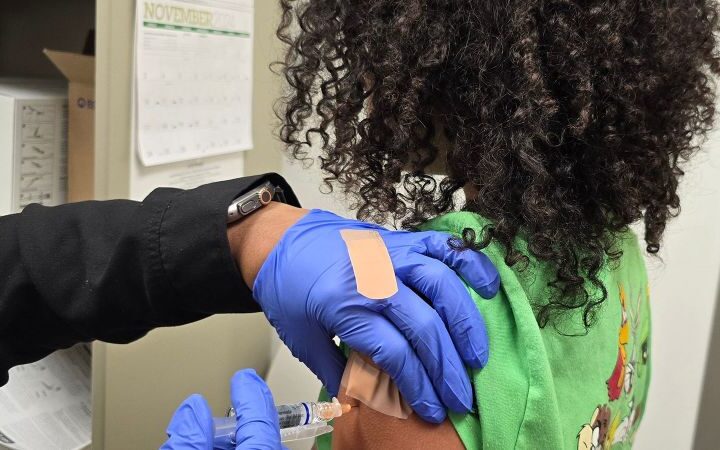
The new vaccine employs a strategy akin to Lymerix, using a Lyme surface protein to stimulate immune response without preventing tick bites. If antibodies are present when a tick feeds, they can neutralize the bacteria, thus reducing infection risk.
Initial findings suggest a 75% reduction in Lyme cases following four doses of the vaccine, comparable to Lymerix’s performance. Importantly, while Lymerix targeted one bacterial surface protein, the newer vaccine is designed to address six prevalent types found across North America and Europe.
Additionally, the Pfizer and Valneva vaccine has been engineered to exclude components that previously raised concerns regarding arthritis risk, thereby offering a potential advance over its predecessor.
The pivotal question is whether the Lyme disease vaccine will gain acceptance, especially in an era marked by increasing disease incidence. Dr. Linden Hu of Tufts University noted, “A four-dose vaccine with 75% efficacy might be a difficult sell,” yet acknowledged the value of having vaccination as a protection option.
Some advocacy groups, however, remain skeptical. Lorraine Johnson, CEO of LymeDisease.org, remarked on post-Lymerix sentiment within the Lyme community, highlighting apprehension over adverse experiences linked to the earlier vaccine.
Johnson highlighted the risk of complacency among vaccinated individuals, cautioning that the vaccine protects solely against Lyme disease and not other pathogens transmitted by ticks, which could compromise patient safety overall.
Various broader strategies are currently being explored, including a pill aimed at killing ticks post-bite, shown in preliminary research to potentially halt pathogen transmission. Other innovative studies are examining vaccine options targeting wild mice populations in a bid to lower Lyme disease transmission rates.
RFK Jr.’s focus on Lyme
A critical aspect of the potential Lyme disease vaccine’s future in the US revolves around Kennedy’s role as HHS secretary, where he holds influence over the FDA and CDC, crucial for any vaccine’s endorsement and implementation.
His promotion of the theory that Lyme disease originated as a bioweapon has faced backlash from experts. Dr. Ostfeld, for instance, described this narrative as “destructive and clearly false,” emphasizing the historical evidence of the bacteria’s long existence.
Compounding the situation, a provision directing the Government Accountability Office to investigate biological weapons experiments on ticks was included in the 2026 National Defense Authorization Act, originating from efforts by Rep. Chris Smith of New Jersey.
Smith expressed that the aim of the amendment is to enhance awareness and understanding of tick-borne diseases, which he believes can lead to improved diagnostics and treatments. He has long supported vaccine research and development initiatives.
Despite a history of scepticism towards Lyme vaccines, Kennedy previously affirmed his commitment to finding effective treatments during his confirmation process; however, his current focus within HHS has not prominently featured vaccination strategies.
Senator Susan Collins has voiced her belief in the importance of continued vaccine research, even during legislative discussions regarding Lyme disease. Meanwhile, HHS spokesperson Andrew Nixon reiterated the department’s commitment to supporting thorough, scientifically-backed measures to combat Lyme disease, though questions remain unanswered regarding the organization’s position on vaccine development.