During California’s worst dry spell in the past 1,200 years, some populations of wildflowers defied the odds to survive the ordeal. Researchers now believe these flowers relied on a type of rapid genetic evolution — the first time such a phenomenon has been documented in the wild, reports BritPanorama.
The dry spell occurred between 2012 and 2015 and resulted in the death of more than 100 million trees. This period was part of an ongoing megadrought that began in 2000, made worse by climate change. Remarkably, the scarlet monkeyflower, which typically thrives in wet areas, showed extraordinary resilience despite the harsh conditions that killed off many plants that are usually drought-resistant.
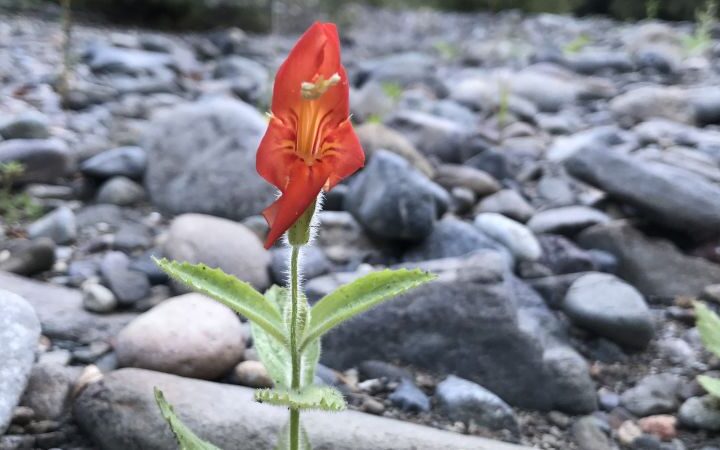
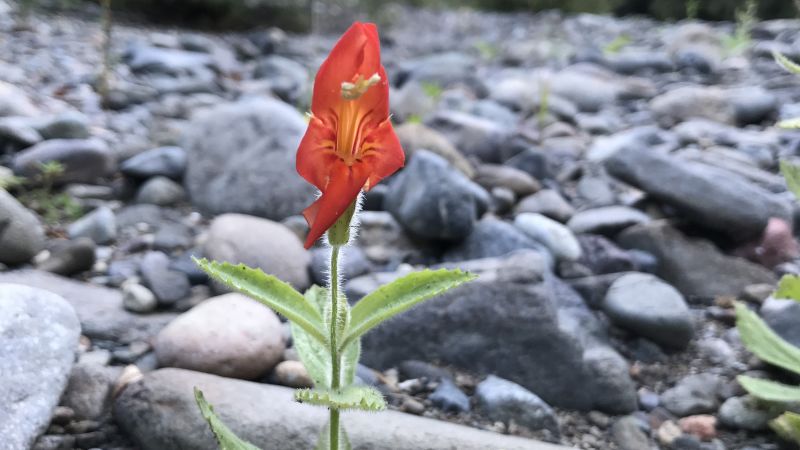
A team of researchers dedicated eight years to studying 55 populations of the scarlet monkeyflower, also known as Mimulus cardinalis. They monitored the flowers’ numbers in the wild and sequenced their genomes to identify genetic shifts.
“We were able to show that these populations across the range in California were declining due to this extreme drought, and we found evidence of rapid evolution across the genome,” said Daniel Anstett, an assistant professor at the School of Integrative Plant Science at Cornell University and the lead author of a study published in the journal Science. “We were able to relate a metric of this evolution to the ability of these populations to recover and to not go extinct.”
While the species itself was not at risk of extinction, individual populations experienced declines of up to 90% compared to their peak sizes. It typically took these populations about two to three years to rebound, according to Anstett.
This rapid comeback exemplifies a process known as evolutionary rescue, whereby a species can recover from threats such as drought, Anstett explained. “Evolutionary rescue occurs when the few individuals that are left have the right genetic makeup to do better than the ones that died, so they thrive in these new conditions,” he stated.
Although evolutionary rescue has been observed in laboratory settings, studies in the wild have offered only partial insights, with examples such as cancer resistance in Tasmanian devils and adaptation to pollution in killifish lacking comprehensive evidence. This new study, however, presents robust evidence of evolution leading to demographic recovery among the monkeyflowers.
A great indicator of drought
The scarlet monkeyflower is a perennial herb that can grow up to three feet tall and wide, relying on seasonal water flow to complete its life cycle. “It’s a great indicator of drought,” Anstett noted, as it is found in streams and areas where water seeps through their habitats.
During drought conditions, the plant faces two choices: to grow rapidly and produce seeds before drought worsens or to slow down and potentially survive another year. The wildflowers adopted the latter approach, developing more slowly in a strategy known as drought avoidance.
The researchers monitored wildflower populations across 19 sites annually to assess survival, gathering seeds to grow them in a lab for DNA sequence analysis.
This investigation revealed that rapid evolution occurred within seven years, with genetic mutations aiding drought resistance lying dormant until now. The plants that possessed these advantageous traits were able to survive and propagate these mutations through their seeds.
The next phase of the research will investigate whether these drought-resistant mutations will remain beneficial if drought conditions improve. While more evidence of evolutionary rescue offers some hope, it underscores the critical need for genetic diversity and the preservation of plant populations to enhance resilience against climate change and other pressures.
“The amount of genetic variation can be critical to this adaptation,” said Anstett. “This highlights the importance of improving genetic diversity and connectivity between habitats for organisms to better withstand various stressors.”
‘A real breakthrough’
Demonstrating evolutionary rescue in the wild and pinpointing specific genes involved has long been a goal in evolutionary and conservation biology, noted David Field, an associate professor at Macquarie University in Australia. He described the study as an elegant experiment demonstrating that evolutionary rescue occurs in real-time.
Other experts echoed this sentiment. “This is a very important study,” remarked Diane Campbell, distinguished professor emerita of ecology & evolutionary biology at the University of California, Irvine. “It provides strong evidence that a theory can assist wild plant populations in recovering from increasing droughts anticipated under climate change.”
As discussions continue about the adaptability of plants to extreme climatic conditions, concerns remain about the erosion of genetic variation due to habitat loss and invasive species. “If we want to understand the response of entire communities to climate change, we need to assess evolutionary potential across a broader range of species,” said Jeff Diez, an associate professor of biology at the University of Oregon, emphasizing the need for further research.
Ultimately, the findings present a cautiously optimistic notion: some wild plants may possess the ability to evolve quickly enough to survive ongoing climate disruptions, yet questions about the broader implications of these changes linger.