Quantum scientists awarded Turing Award for cryptography breakthrough
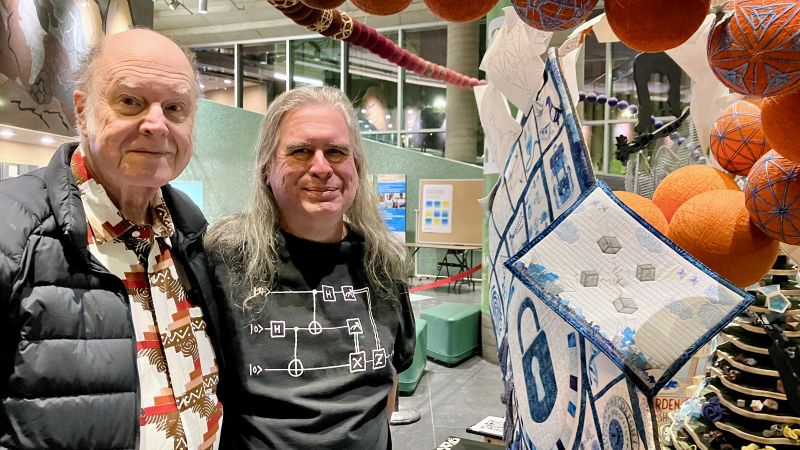
The A.M. Turing Award has been bestowed upon physicist Charles Bennett and computer scientist Gilles Brassard for their pioneering work in quantum key cryptography, advancing cybersecurity by providing a method to secure communications against potential eavesdroppers, reports BritPanorama.
Bennett, associated with IBM Research, and Brassard from the University of Montreal achieved this groundbreaking feat in 1984, focusing on principles derived from quantum physics rather than relying solely on complex mathematical algorithms. Their joint efforts have significantly transformed how data security is understood in the digital age.
The significance of their work is underscored by Michele Mosca, CEO of cybersecurity firm evolutionQ, who emphasized the importance of cryptography as a foundational element of global security and economic stability. The award, which comes with a $1 million prize, validates decades of research that initially faced skepticism.
As concerns mount around what has been termed “Q day”—the moment when a sufficiently powerful quantum computer could render current encryption methods obsolete—the urgency for enhanced cryptographic solutions has intensified. Bennett and Brassard’s work is now seen as vital in preventing potential breaches that could compromise sensitive data.
Current security practices utilize public key encryption predicated on mathematical challenges that traditional computers can’t overcome efficiently. If a quantum computer emerges, it might exploit these vulnerabilities, highlighting the need for protocols like the one developed by Bennett and Brassard, which leverages the laws of quantum physics to secure data transmission.
From initial struggles to gain recognition, Bennett and Brassard have seen their contributions become precursors to a new field of quantum technologies. The duo’s BB84 protocol, which employs photons for secure key establishment, ensures that any attempts at interception would fundamentally alter the information being communicated, making unauthorized access immediately detectable.
Notably, the establishment of this secure communications channel negates the reliance on mathematical assumptions, a shift hailed by experts as revolutionary. The implications of these advancements resonate within a landscape increasingly susceptible to data breaches and cyber threats.
As quantum technology evolves, its integration within the realm of cybersecurity will necessitate further research and development, serving as both a challenge and an opportunity for security practitioners worldwide, as highlighted by industry leaders. The question remains: how will traditional cryptographic methods adapt alongside these quantum advancements?