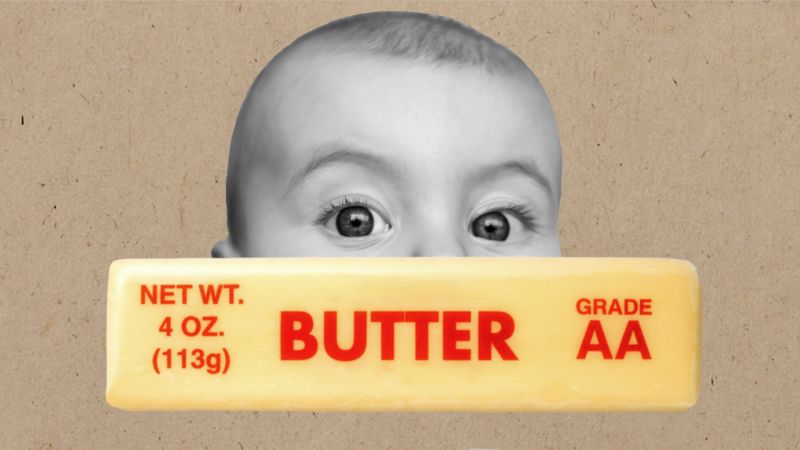
The trend of feeding infants butter has gained traction among parents on TikTok, with some claiming this practice promotes longer satisfaction after meals and better sleep. Videos show parents offering their babies spoonfuls or even entire sticks of butter as a quick solution to feed their hungry children, prompting a significant online response, reports BritPanorama.
This surge in butter consumption among babies reportedly extends from the belief that it enhances growth and development. Many influencers suggest that a sufficient intake of saturated fat is essential during the initial stages of life. However, the reality behind these claims raises critical questions regarding nutritional balance.
Content shared on social media platforms indicates that some parents have observed their infants sleeping longer hours, attributing this improvement to butter in their diet, sometimes given even before bedtime. This method, while popular among certain circles, has elicited concern among health experts regarding the implications of high saturated fat consumption.
Multiple healthcare professionals caution against adopting such habits without a diverse range of foods in a child’s diet. Although infants do require fats for energy and development, excess saturated fat could pose long-term health risks. Dr. Molly O’Shea, a pediatrician, highlighted the importance of a balanced diet, suggesting that “giving a baby a whole stick of butter as a food or as a meal is not really in balance in a nutritious meal.”
Experts such as Amy Reed, a registered dietitian, have noted that for children under two, there is no set limit on saturated fat intake. This exception stems from the role fats play in brain development and overall growth. However, they emphasize that butter should be viewed as just one component of a diverse diet, not the mainstay. There are healthier avenues to include essential fats, such as avocados and various oils.
While some parents may find that adding butter keeps their children satiated for longer, this method may inadvertently discourage the intake of more nutritious foods essential for growth and development. O’Shea reiterated that diversity in diet is paramount to ensure balanced nutrition: “Yes, there are little bits of vitamin A and vitamin D in butter, but with the amount we’re supposed to have, it’s not highly contributing those vitamins.”
Ultimately, pediatricians recommend prioritizing a well-rounded diet over reliance on butter, suggesting that parents consult with healthcare providers to address any sleep or nutrition concerns. Feeding infants primarily with one type of food as a sleep aid may not facilitate the desired outcomes and could lead to habits that are challenging to change later on. The ongoing conversation about infant nutrition thus underscores the need for informed decisions guided by pediatric advice.