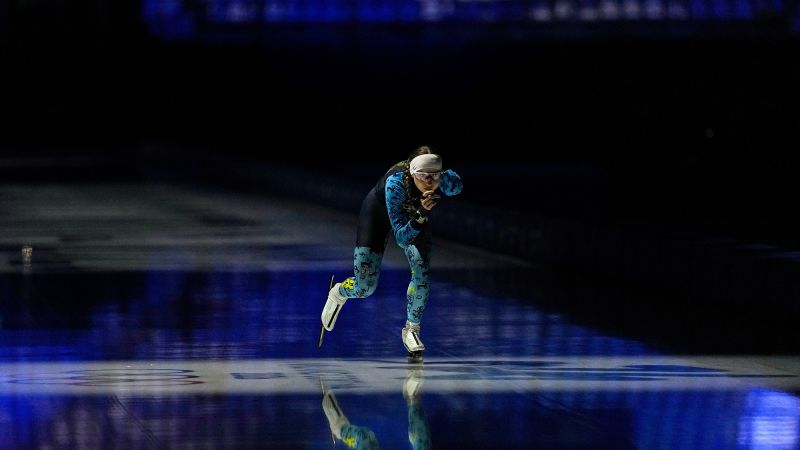
As some of the world’s top athletes gather in northern Italy for the 2026 Winter Olympics, many may enjoy the country’s pasta and pizza while sticking closely to their optimal nutrition routines and plans, reports BritPanorama.
For many Olympians, knowing when and what to eat can be just as crucial as the hours spent training on the ice, snow, or track.
Inside the Milan Olympic Village’s main dining hall, where athletes and team officials gather throughout the day, various menus are tailored to meet athletes’ nutritional needs and cultural preferences. The scale of the operation includes preparing about 3,000 eggs and approximately 450 kilograms of pasta each day, according to the Olympics website.
The main dining hall serves about 3,400 meals per day, spread across six food stations — those meals go hand in hand with rigorous training.
Nutrition supports the “actual physical training” and fuels peak performance, said Kristen Gravani, a performance and food allergy dietitian at Stanford University who has worked with numerous Olympic athletes.
Notably, due to their intense training schedules, most Olympic athletes likely consume and burn more energy than the average person. During his Olympic training, US competitive swimmer Michael Phelps claimed to consume 10,000 calories in a day, while Jamaican sprinter Yohan Blake attributed his performance to 16 ripe bananas every day.
Caloric intake and extreme eating habits aside, there are some key practices in Olympic athletes’ training and nutrition that the average person can emulate. The intricacies of the dietary recommendations Gravani makes for highly active Olympians differ from what she would suggest for the average adult working a desk job; however, she maintains that the general public can still “get inspiration” from how Olympians eat.
When to eat
In high-stakes competition, nutrition — and the timing around it — can shape how well athletes train, recover, and ultimately perform, noted Dr. Dan Benardot, a professor at Emory University and registered dietitian who has served as the nutritionist for several Team USA athletes.
“When I was working with the US marathon team… I asked them, ‘What’s your eating pattern like?’ And they said, ‘Well, we wake up in the morning, we go for a morning run, we come back home, we have breakfast, something to eat.’ And I said, ‘Well, wait a second, don’t tell me anything else. That’s already a mistake,’” Benardot recalled.
One of the most important actions an athlete can take in the morning is to eat something before they start training, he stated.
“Have a little something. It doesn’t have to be a lot. Just enough to have a normal blood sugar and hydration state,” said Benardot, who worked with US marathoners at the 2004 Athens Olympic Games. “The next time I met with them, most of them gave me a hug. They said, ‘I’ve never felt so good.’”
What to eat
For the average person, Gravani also recommends a quick snack before exercise. However, timing is just one piece of the puzzle; what that snack may be can significantly impact training and performance.
A preworkout snack
“A preworkout snack I love is a low-fiber fruit or crackers, and if there’s enough time before the training, then we can pair that with a small amount of protein or a small amount of fat. For instance, a banana with a little bit of peanut butter would be great,” said Gravani, who also serves as a consulting sports dietitian at Stanford Medicine.
For instance, you could slice bananas, place them in muffin cups or ice tray molds, add a spoonful of peanut butter on top of each slice, and then freeze them to make frozen banana peanut butter cups.
A postworkout snack
Gravani added that it’s also crucial to eat after exercise.
“For postworkout recovery, I recommend a combination of protein and carbohydrates, with the carbohydrate ratio adjusted based on the endurance demands of the workout or sport,” she said.
“A longer endurance-based workout requires more carbs, while a shorter or more strength-focused workout requires less,” she added. “Either way, a smoothie can be a versatile post-training option with a whey or vegetarian protein powder, fruit, and liquid.”
Benardot sometimes recommends beet juice, which may improve fat metabolism, help ease muscle soreness, and support recovery after a challenging workout, he noted.
Beetroots possess antioxidant and anti-inflammatory properties, which could help reduce inflammation and oxidative stress tied to muscle soreness. A review paper published in the journal Sports Health in 2021 suggests that beetroot supplementation has the potential to accelerate recovery after exercise.
In general, anti-inflammatory foods are beneficial for recovery after intense training for high-performance competitions like the Winter Olympics, said Jessica Arquette, a registered dietitian at Ohio University.
“The antioxidant vitamins A, C, E, the mineral selenium, and omega-3 essential fatty acids are usually accepted as the main antioxidant and ‘anti-inflammatory’ nutrients. These can be found in a variety of foods including colorful fruits and vegetables, nuts and seeds, and healthy fats such as salmon, flax, and chia seeds,” Arquette, who works with elite athletes, wrote in an email.
“For beetroot, it seems like most benefits are found as a precovery for athletes doing high-intensity and repeat sessions. From my perspective, there is not enough evidence to make any blanket recommendations; however, it could certainly make sense for a high-performing athlete,” she added.
Other types of juices may also have benefits, Gravani stated. “Things like tart cherry juice or blueberry you’re seeing incorporated into more postworkouts for antioxidant benefits,” she noted.
For instance, an anti-inflammatory smoothie might include tart cherry juice, pineapple, spinach, and Greek yogurt.
Pair iron with vitamin C
The quality of food is equally important, especially for athletes who compete at high altitudes and in cold temperatures, according to Benardot. He has worked with Team USA figure skaters, including some who are competing at this year’s Olympic Games.
Due to thinner air at higher altitudes, athletes “must develop an enhanced ability to capture oxygen in a lower-oxygen environment,” Benardot explained.
“To achieve this, it is important for athletes to consume enough nutrients that enable enhanced red blood cell formation. You need a little bit more iron, you need a little bit more vitamin B12, and you need a little bit more folic acid,” he added.
Iron, vitamin B12, and folic acid are crucial for the production of hemoglobin, a protein in red blood cells that helps transport oxygen.
“Having slightly more of the right nutrients makes it possible for athletes to increase red blood cells so that they can capture more oxygen at high altitudes,” Benardot said.
Without these nutrients, the body cannot produce enough hemoglobin, resulting in inadequate blood oxygen levels. This can hinder an athlete’s ability to burn fat for energy, potentially leading to premature fatigue.
“When people think about iron intake, they typically only think about meat, but if you change the absorbability of the iron in vegetables, you’re good,” Benardot said. This might be done by pairing lemon juice with an iron-rich vegetable like spinach.
“The iron in vegetables is not highly absorbable, but if you add vitamin C — and lemon juice is high in vitamin C — vitamin C is a reducing agent,” he said. “It reduces the iron that it comes in contact with to a more absorbable and metabolically useful form.”
In general, pairing foods high in iron with vitamin C-rich foods can enhance absorption, according to Gravani.
“Anything with vitamin C works,” she stated. “It could be citrus-based, such as a lemon vinaigrette, but it could also be berries, broccoli, or bell pepper, which are all rich in vitamin C.”
‘Get a variety of colors’
When considering what to eat, both Benardot and Gravani advise against having the same meals every day.
“The first thing that I recommend for people is to vary your diet,” Benardot said. “There is no perfect food; try to have as many different foods as possible. So if you had it yesterday, have something different today. If you had a green-colored fruit yesterday, have an orange-colored fruit today. They provide different phytonutrients.”
And Gravani said she “always” emphasizes variety. “I think people as a whole, even at the elite athlete level, get into a rhythm with their favorite or most convenient go-to foods. For instance, you may always eat veggies, but is it typically spinach?” Gravani questioned.
“Being able to get a variety of colors and foods throughout the