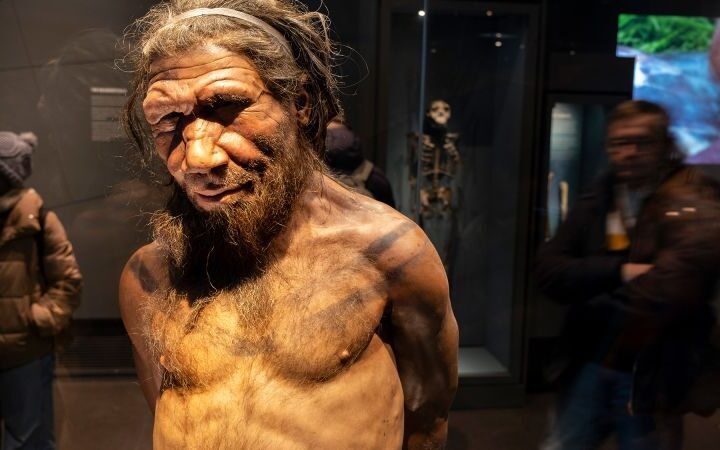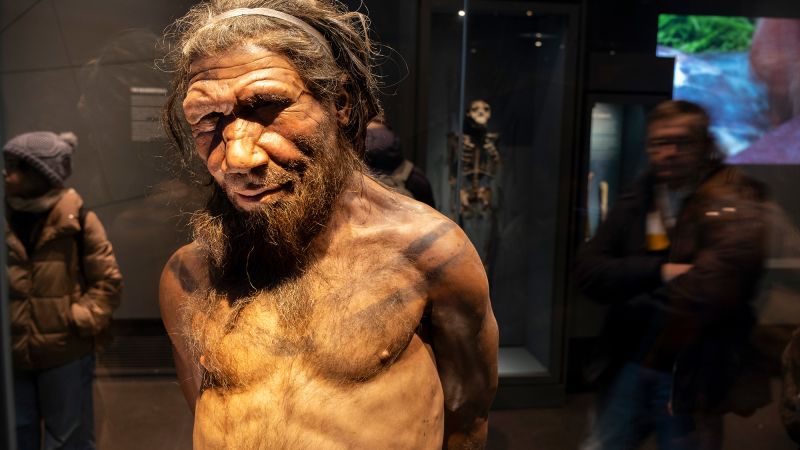
The 2010 discovery that early humans and Neanderthals once encountered one another and had offspring has significantly shaped our understanding of human origins, reports BritPanorama. Now, geneticists at the University of Pennsylvania suggest these interactions predominantly involved male Neanderthals mating with female humans.
This finding, detailed in the journal Science, provides insight into the uneven distribution of Neanderthal ancestry across contemporary human genomes. Nevertheless, the reasons behind this mating pattern remain unclear, particularly as Neanderthals went extinct roughly 40,000 years ago.
Joshua Akey, a geneticist at Princeton University, indicated that it is remarkable to use genomic data to infer social dynamics and mating practices from tens to hundreds of thousands of years ago. The frequency of encounters between Neanderthals and humans is not well-documented; however, a 2024 study suggested that interbreeding occurred multiple times as both species migrated globally. Notably, both Neanderthals and Homo sapiens are also known to have interbred with the Denisovans, a third hominin group.
Most humans retain a small percentage of Neanderthal DNA, residues of these ancient interactions which can still affect health, influencing factors such as circadian rhythms, immune system function, and pain perception. Interestingly, the human X chromosome appears to be what geneticists term an “archaic desert,” containing very little Neanderthal-derived DNA.
Alexander Platt, the study’s lead coauthor, remarked that while there is some Neanderthal DNA in the X chromosome, it is predominantly absent. For over a decade, explanations for this phenomenon have varied, ranging from inefficiencies in the transfer of X chromosome genes between the species to the idea that Neanderthal variants might have been detrimental compared to those in humans.
Contrary to these suppositions, the latest research by the University of Pennsylvania posits that a significant sex bias in mating practices could explain the disparity. The study demonstrated that when interbreeding did occur, it typically involved male Neanderthals with female Homo sapiens, underscoring a fundamental imbalance in the genetic contributions from male Neanderthals to the modern human gene pool.
The researchers concluded that Neanderthal males may have developed preferences for females that possessed some human ancestry as potential mates—possibly due to perceived social or reproductive advantages. This finding opens doors to new inquiries into early human social structures and mating choices, fostering a deeper understanding of genetic interrelations across species.
These insights, however, raise further questions about the complexities of Neanderthal-Homo sapiens interactions. Current genomic modeling cannot wholly elucidate the intricacies of human behavior during those prehistoric encounters. The pursuit of more precise answers continues, with experts noting the inherent challenges in obtaining concrete archaeological evidence of such interspecies relationships. As understanding progresses, the enigma of our shared history remains fertile ground for ongoing research.