Study reveals new insights into T. rex growth
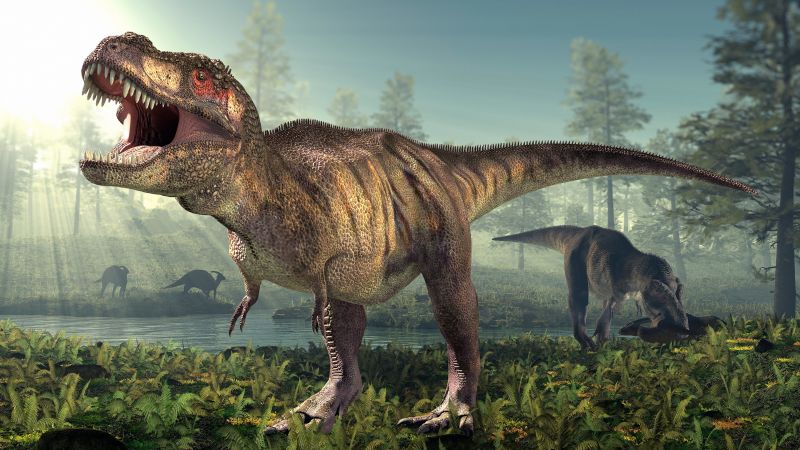
A recent study indicates that **Tyrannosaurus rex** lived longer and took more time to reach its maximum size than previously understood, reports BritPanorama. Researchers have discovered that T. rex likely didn’t reach its maximum weight of approximately 8 tons until it was between 35 to 40 years old, revealing significant implications for our understanding of this apex predator’s life cycle.
Traditionally, growth rings in fossilized T. rex leg bones indicated that these dinosaurs ceased growing around the age of 25 and lived to about 30. However, the latest research, published in the journal PeerJ, employed polarized light techniques to identify additional growth rings from 17 individual specimens. This revelation suggests that growth patterns were more complex than once thought and significantly extends the lifespan and growth period of these creatures.
According to the study, the growth rings from T. rex fossils can represent only the final 10 to 20 years of an individual’s life. Nevertheless, by analyzing specimens of different ages, the researchers were able to develop a comprehensive picture of T. rex growth rates, which revealed a slower growth trajectory than previously assumed.
Lead study author Holly Woodward, an anatomy professor at Oklahoma State University, emphasized that T. rex spent most of its life at mid-body sizes rather than rapidly achieving its full length of 40 feet. “We found that growth ring spacing varied within individuals, indicating that growth was flexible and likely influenced by resource availability and possibly environmental conditions,” she explained.
Utilizing the largest dataset assembled for T. rex, the researchers reconstructed growth patterns year by year, unveiling that these dinosaurs took a more gradual approach to growth. Woodward noted that this lengthy developmental phase allowed T. rex to occupy various ecological niches, which contributed to its success as a top predator.
Woodward further remarked, “This study helps reveal why T. rex was so successful as an apex carnivore — that by growing slowly over a longer period of time, T. rex occupied many food niches throughout its life, eventually becoming large enough that it was only really competing with other T. rex for resources.”
Growth rings in T. rex fossils
Variations in growth curves among the specimens studied lend credence to ongoing debates in paleontology about whether the creatures traditionally classified as T. rex might include other species or subspecies. Recent findings also align with previous research suggesting that specimens once thought to belong to juvenile T. rex may actually represent a distinct species known as Nanotyrannus.
While these findings do not conclusively prove the existence of separate species, they do suggest a compelling possibility, as stated by the researchers. Steve Brusatte, a professor of paleontology and evolution at the University of Edinburgh, remarked that the new insights provoke thought about the variability within T. rex, noting that some fossils previously categorized as T. rex might belong to other species.
This evolving understanding of T. rex growth dynamics could also have broader implications for paleontologists studying dinosaur growth rates, particularly when it comes to interpreting closely spaced growth marks within fossil specimens. Research co-author Nathan Myhrvold highlighted the need for revised protocols in growth studies, indicating that traditional methods may require updating to accurately reflect the complexities of dinosaur development.
As the study opens new avenues for exploration in the field of paleontology, it brings forward the potential for significant re-evaluation of established ideas surrounding T. rex and its relatives. The investigation’s findings contribute to a deeper understanding of these iconic creatures, reinforcing their complex role in the prehistoric ecosystem.