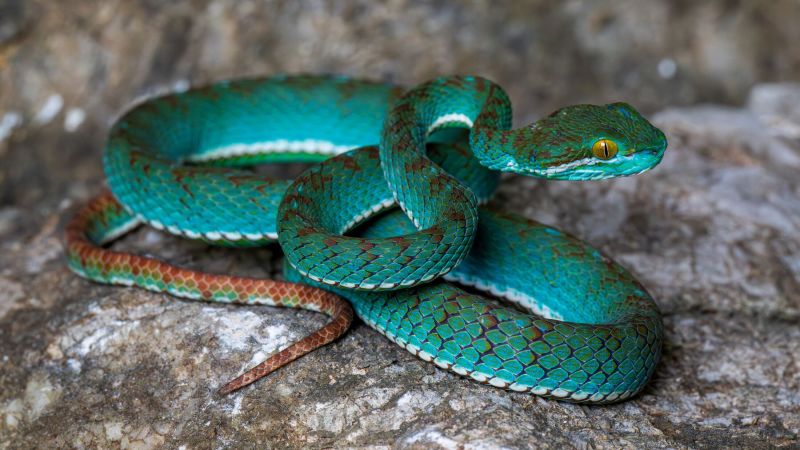
The recent biodiversity survey in Cambodia’s limestone caves has uncovered several species new to science, including a turquoise pit viper and a flying snake, signalling the region’s ecological richness. The research took place in the northwestern province of Battambang, where investigators explored 64 caves across ten hills from November 2023 to July 2025, resulting in significant findings, reports BritPanorama.
Among the notable discoveries are four species of geckos, two micro-snails, and two millipedes. While the viper and three of the gecko species are yet to be formally named, the majority of these findings have been officially documented in a recently published report. The biodiversity survey indicates a necessity for ongoing exploration, as each cave may represent a unique environment supporting distinct life forms.
The karst landscape where these caves are situated is characterized by isolating formations that function as individual “island laboratories” of evolution. According to the UK-based conservation charity Fauna & Flora, these habitats allow species to evolve independently, leading to numerous adaptations to their specific environments.
Lee Grismer, an evolutionary biologist supporting the study, likened the isolated habitats to repeating biodiversity experiments, emphasizing the need to understand these conditions for conservation purposes. Researchers identified one species of gecko, the striped Kamping Poi bent-toed gecko (Cyrtodactylus kampingpoiensis), during fieldwork in 2024. They found several distinct populations, each evolving differently despite their similarities.
The latest survey also recorded globally threatened species, such as the Sunda pangolin and green peafowl, adding to the region’s conservation importance. Conservation biologist Pablo Sinovas, who led the Fauna & Flora team, pointed out that many caves serve as shrines and are frequented by tourists, indicating their cultural significance.
Only ‘scratched the surface’
Sinovas described the biodiversity investigation as only having “scratched the surface,” as many areas remain unexplored. He noted the challenges faced by researchers, who often had to navigate treacherous terrain at night, searching for crevices where creatures typically hide. Despite difficulties, they aimed to thoroughly document the ecosystems they encountered.
While the caves house diverse species, they face threats from industrial activities and wildlife exploitation. Sinovas highlighted the growing demand for cement, a product to which the karst landscape contributes significantly, underscoring the potential consequences of habitat destruction. Conservationists are actively collaborating with the Cambodian government to propose protective measures for these vital areas.
As this exploration reveals the exquisite biodiversity of Cambodia’s caves, so too does it illuminate the urgent need for effective conservation strategies to preserve these unique ecosystems. The findings underscore the importance of scientific research in informing environmental policies to guard against potential extinction events.