The mystery of human evolution, long associated with a 60,000-year-old pinkie finger bone, began to unravel in 2025, as researchers made significant advancements in understanding the Denisovans, reports BritPanorama.
In 2010, the electrifying analysis of DNA extracted from this fossil revealed a previously unknown human population that had interbred with Homo sapiens. This group, known as the Denisovans, was named after the Denisova Cave in Siberia’s Altai Mountains, where the pinkie finger was discovered.
Despite having detailed genetic information about this population, including traces present in millions of people today, little was known about their physical appearance or why they vanished. This enigma energized a new generation of geneticists, archaeologists, and paleoanthropologists to delve deeper into Denisovan ancestry.
In 2025, new analysis brought fresh insights. Scientists extracted clues from another notable fossil: a prehistoric human skull that did not match any known groups. This pivotal finding has begun to connect the dots surrounding the Denisovans.
Enter ‘Dragon Man’
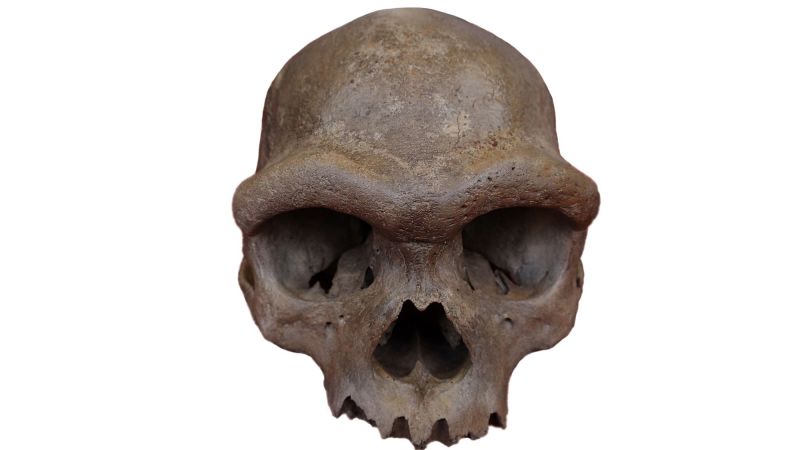
The skull, unearthed in Harbin, northeastern China, in 2018, had been safeguarded in a well for years before its release. Initial investigations suggested that the skull could belong to the Denisovans, particularly as genetic sequences had been found in modern Asian genomes, though not in Europeans, indicating the Denisovans’ likely habitat.
Researchers attributed the skull to a new species they called Homo longi, or “Dragon Man.” In contrast, existing Denisovan fossils tended to be small and fragmentary, lacking the detail required for formal classification.
A vital step in confirming the connection between Dragon Man and the Denisovans involved obtaining ancient DNA from the skull, estimated to be 146,000 years old. However, initial attempts to extract DNA from this skull’s samples met with mixed success.
Led by geneticist Qiaomei Fu at the Institute of Vertebrate Paleontology and Paleoanthropology in Beijing, the team tested several samples but found no viable DNA. However, Fu, who had previously contributed to the initial discovery of the Denisovans, reported in June that genetic material had been successfully retrieved from Dragon Man’s dental calculus—a substance formed on teeth that can preserve DNA.
This discovery did not definitively link Dragon Man to the Denisovans. The mitochondrial DNA recovered offered an incomplete view of an individual’s genomic ancestry, suggesting potential hybridization between species. In past discoveries, a Denisovan girl was found with a Neanderthal mother.
Furthermore, findings of protein fragments from the skull indicated its belonging to a Denisovan population. “After 15 years, we know the first Denisovan skull,” Fu stated in June as the research was published.
The results pave the way for recognizing the name Homo longi for other Denisovan fossils. Chris Stringer of London’s Natural History Museum remarked that while “Denisovan” would likely remain a common name, Homo longi could provide formal taxonomic recognition.
Paleoanthropologists Ryan McRae and Briana Pobiner highlighted that further investigations could expand knowledge of Denisovan anatomy and lifestyle, with potential new discoveries awaiting inspection in the coming year.
A portrait of a Denisovan
A skull’s unique features can reveal much about its individual, according to paleoartist John Gurche, who reconstructed what Dragon Man’s face might have looked like for National Geographic. If the skull represents a typical Denisovan, it would exhibit pronounced brow ridges and large teeth.
Gurche explained that he applies known relationships between soft and bony tissue to recreate facial features, while some aspects, such as the shape of lips and placement of hair, remain elusive based on skeletal structure alone.
The linkage of molecular evidence to the Denisovans allows for easier identification of other potential Denisovan remains across various excavation sites, including those in China, which have posed classification challenges.
Further investigation could arise from a recently discovered skull in China, which is yet to be formally described. This cranium, dating back about 1 million years, adds to excavation efforts at the Yunxian site in Hubei province.
Connections between emerging evidences and existing fossil records may reshape the timeline of species like Homo sapiens and Homo neanderthalensis by up to 400,000 years, challenging prior assumptions in human evolutionary history.
While findings sparked excitement, some skepticism remains, particularly concerning the accuracy of reconstructions and the broader human lineage context—an area for future exploration.
Oldest genome poses new questions
A 200,000-year-old tooth, unearthed during a 2020 excavation at Denisova Cave, may soon challenge current understandings of the Denisovans and the broader human family tree. Analysis of this molar has yielded a complete Denisovan genome, allowing for deeper insight into genetic diversity and evolution.
This genome represents the second successful high-coverage sequencing from a Denisovan fossil, adding to the foundational discoveries of 2010. Researchers released preliminary findings in October, pending formal publication and peer review.
Stéphane Peyrégne from the Max Planck Institute noted that these genomic insights are “very important,” although specifics remain under wraps until subsequent reviews conclude. The genome links the individual to ancestors who interbred with Neanderthals and exhibit traits from a mysterious “super archaic” lineage with no current matches in the fossil record.
Unraveling the nature of these ghost lineages presents yet another compelling puzzle for paleogenetics, with researchers aiming to reach answers in the near future.