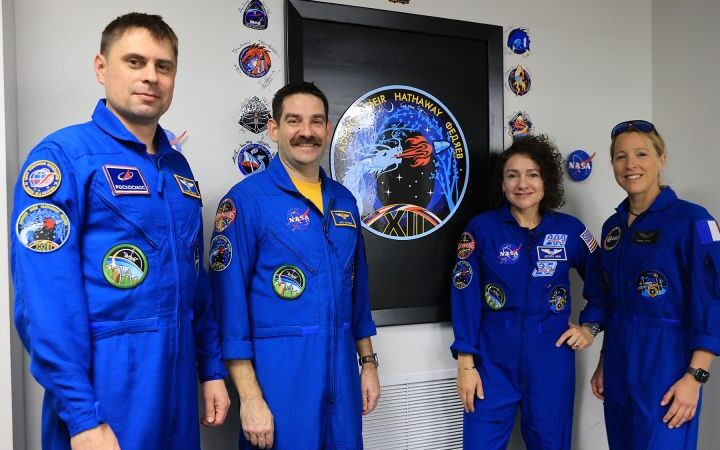
The countdown clock is officially rolling at Kennedy Space Center in Florida, where four astronauts are preparing to take off on the mission of a lifetime — circumnavigating the moon and returning humans to deep space for the first time in five decades, reports BritPanorama.
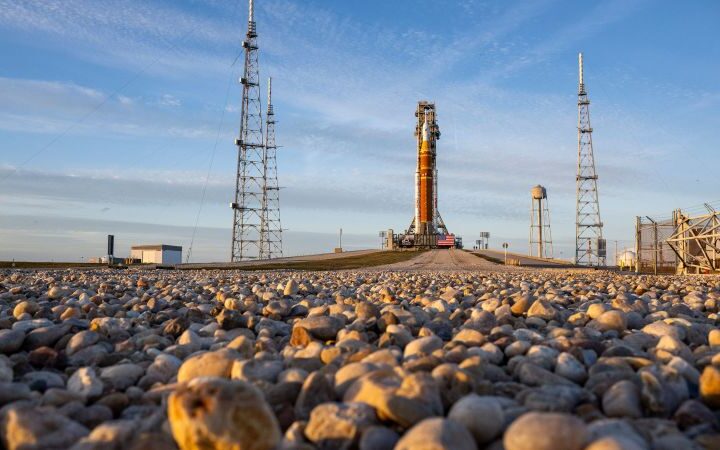
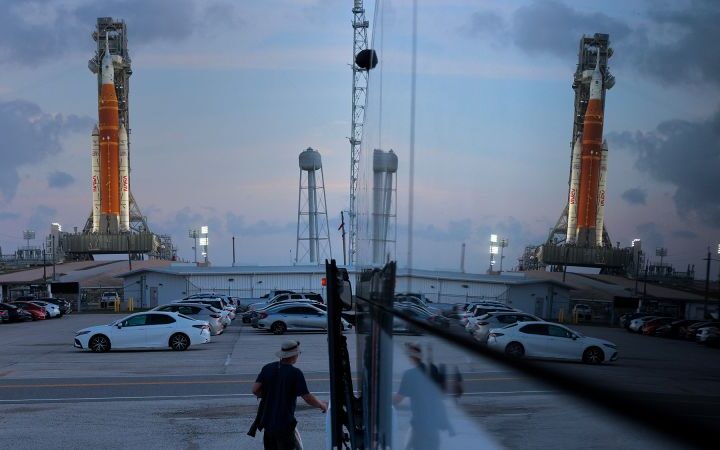
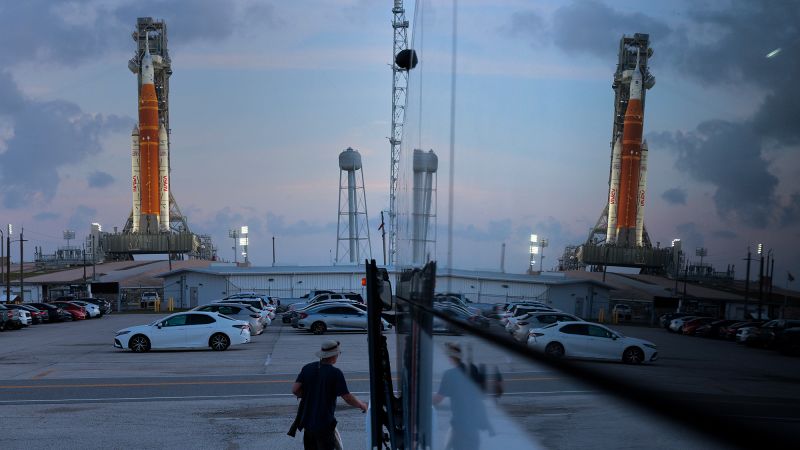
After nearly two months of tests and troubleshooting, NASA appears to be on the cusp of firing its 322-foot-tall (98-meter) Space Launch System rocket to orbit. The current target for takeoff is a two-hour launch window that opens at 6:24 p.m. ET on Wednesday.
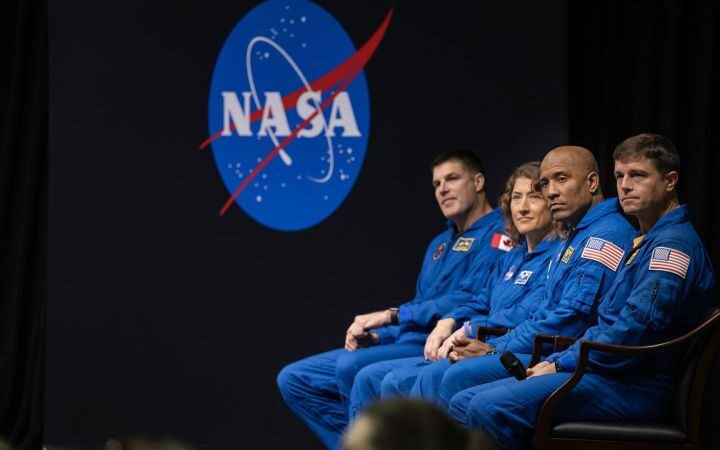
While rocket launches from the United States’ Space Coast are common, this mission is particularly significant. NASA’s Reid Wiseman, Victor Glover, and Christina Koch, alongside Canadian Space Agency astronaut Jeremy Hansen, will board the Orion spacecraft — perched atop the Space Launch System rocket — and accelerate from zero to 500 miles per hour (about 805 kilometers per hour) in just two seconds.
Within three and a half hours after liftoff, the Orion capsule will fully separate from the rocket, providing the astronauts a chance to manually pilot the spacecraft.
Tracking Ts and Ls
One important note for those planning to follow along as NASA prepares for liftoff: The countdown clock isn’t always intuitive. It shows the “T minus” time, where the “T” stands for “terminal count.” At times, the clock will stop—this is intentional, as the launch team has pre-planned holds at the 40-minute and 10-minute marks.
Currently, NASA is aiming for a liftoff time of 6:24 p.m. ET — the first minute of the two-hour launch window. This is referred to as the “L minus” time, which represents the actual target for launch.
On Wednesday, should a technical issue arise or if a wayward boat enters the flight path, NASA will issue a new “L minus” time. The rocket can launch anytime between 6:24 p.m. ET and 8:24 p.m. ET.
Eyes on the rocket
There are no guarantees that the astronauts will take flight on Wednesday; potential weather or technical issues may arise. The Space Launch System (SLS) rocket is known for its complexity, particularly concerning its fuel system. Millions of gallons of super-chilled liquid hydrogen must be loaded onto the SLS if the launch teams give the “go” for fueling, which occurs approximately 10 hours and 20 minutes before liftoff.
As fueling begins, launch controllers will closely monitor the process for leaks, since hydrogen, being the lightest molecule in the universe, is prone to seepage. Previous launch attempts have already faced issues due to hydrogen fuel volatility.
Astronaut walkout
A considerable amount of focus will be directed at the SLS rocket until about four hours and 40 minutes before launch when the four astronauts exit their quarters, known as the Neil Armstrong Operations & Checkout (O&C) Building. Their families will be present, offering well wishes and farewells.
Glover, the mission’s pilot, noted the emotional significance of this moment: “Our families are outside the building when we walk out. And that is the moment that I’m going to get to tell them I love them,” he said. For him, this opportunity transcends a text message or phone call.
Ready for takeoff?
As the countdown progresses, NASA will conduct a comprehensive series of vehicle checks and monitor the fueling process closely. Notable moments in the countdown include a final “go/no-go” poll conducted at T – 16 minutes, determining whether the launch can proceed.
At the 10-minute mark, the clock starts for “terminal count,” during which the Ground Launch Sequencer software assesses the rocket’s health and ensures all criteria for liftoff have been met. If issues surface during the countdown, NASA has the option to troubleshoot and reset the clock, potentially allowing for another launch attempt within the same day.
If the Orion spacecraft successfully lifts off as planned, it will be a momentous occurrence for the Artemis program and human space exploration.
Taking the wheel
Upon reaching stable low-Earth orbit, the crew is set to engage in one of the mission’s key milestones: conducting a manual test drive of the spacecraft. This test, termed the Proximity Operations Demonstration, will allow them to practice docking with the Interim Cryogenic Propulsion Stage (ICPS), which is crucial for future missions.
The ICPS will separate from Orion approximately three and a half hours after launch, serving as a proxy for any spacecraft Orion may dock to in upcoming missions. “Orion was developed for autonomous capability all the way to docking, so the crew does not need to take over manually,” explained Howard Hu, manager of NASA’s Orion Program, emphasizing the significance of understanding the manual capabilities as well.
The crew’s insights and experiences during the manual test will be shared with mission control, providing a real-time glimpse into this landmark voyage as they navigate their mission around the Moon.
With all systems potentially a go, the journey promises to rekindle human exploration in deep space.