NASA has announced an unexpected modification to its plan for returning astronauts to the moon, introducing an additional crewed test flight prior to any landing attempts, reports BritPanorama.
The agency’s “Artemis III,” previously intended for a moon landing projected for no earlier than 2028, will now serve a different purpose: launching a crewed capsule to Earth orbit to dock with a prototype lunar lander developed by SpaceX or Blue Origin. NASA Administrator Jared Isaacman expressed optimism about launching this mission in 2027.
The lunar landing initiative, now designated “Artemis IV,” still aims for 2028, with Isaacman revealing that NASA is pursuing up to two moon landings that year. However, oversight officials have raised significant doubts about the feasibility of this timeline.
Isaacman framed the decision as a strategy to accelerate Artemis missions. Notably, the inaugural uncrewed test flight, Artemis I, was launched in November 2022, which placed over three years between it and the upcoming Artemis II mission — the first crewed test flight planned to take four astronauts on a lunar flyby.
“We didn’t go right to Apollo 11,” Isaacman pointed out. “We had a whole Mercury Program, Gemini — lots of Apollo missions before we ultimately landed right. Now, our program is essentially set up with an Apollo 8 and then going right to the moon. That is, again, not a pathway to success.”
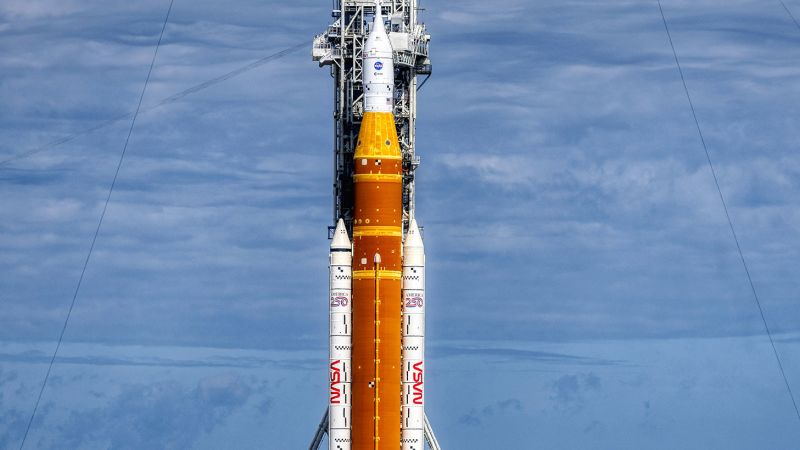
This announcement coincides with ongoing efforts to prepare Artemis II, a mission slated to send four astronauts on a test flight around the moon without landing. Initially targeting launch opportunities in February, these plans were jeopardized due to complications affecting NASA’s Space Launch System rocket, including hydrogen leaks and issues with helium flow.
As a result, Artemis II, which will utilize NASA’s Space Launch System and Orion spacecraft but not a lunar lander, is now anticipated to launch no earlier than April.
The landing problem
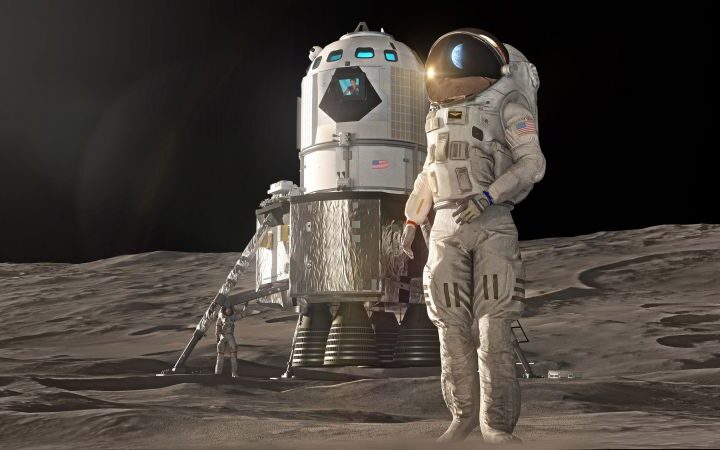
Although Artemis II is conceived as a precursor to an actual moon landing, questions persist regarding NASA’s ability to achieve a lunar touchdown within the decade. While the SLS and Orion spacecraft are equipped for the journey to lunar orbit, the agency previously opted to outsource the development of a lunar lander. Such a vehicle is essential for transporting astronauts from Orion to the moon’s surface.
Both SpaceX and Blue Origin have secured fixed-price contracts with NASA to create lunar landers. SpaceX intends to deploy its Starship megarocket, designed initially for Mars missions, for this purpose, though it remains in the early development stages, with previous prototypes experiencing failures during suborbital tests.
Conversely, Blue Origin is constructing a more traditional lunar lander reminiscent of Apollo vehicles but has yet to conduct a test flight.
Nasa’s assertion of a potential moon landing in 2028 — coupled with the acceleration of Artemis III into a pre-2028 practice mission — has been met with increasing skepticism from oversight officials, who question the achievability of current timelines.
The programme managing the development of the lunar landers, known as HLS (Human Landing System), faces challenges outlined in a report from NASA’s Aerospace Safety Advisory Panel, which has indicated that ongoing issues could jeopardize the Artemis III schedule.
These findings lead to questions about whether the lunar landers can be prepared for a moon landing in 2028, especially considering potential delays for the upcoming test mission in low-Earth orbit.
In response to inquiries about the challenges raised by oversight officials, Isaacman stated, “I think what we’re doing is directly in line with what ASAP asked us to do.”
He emphasized the need for a more effective approach, noting, “There has to be a better way in line with our history. Again, we did not just jump right to Apollo 11. We shouldn’t be comfortable with the current cadence.”