A suggestion made last week by acting NASA administrator Sean Duffy that SpaceX could be excluded from the agency’s upcoming moon-landing plans has significantly impacted the space industry, reports BritPanorama.
Behind the scenes, alternative proposals for lunar landings are quietly beginning to take shape. SpaceX currently holds a $2.9 billion contract to prepare its Starship rocket system to transport astronauts to the Moon’s surface as part of NASA’s Artemis III mission. However, citing delays in Starship’s development amidst competitive pressure from China, NASA has requested SpaceX and Blue Origin—who holds a separate lunar lander contract with the agency—to submit plans to expedite the development of their respective spacecraft by October 29. Both companies have complied.
Moreover, the space agency is engaging the broader commercial space industry to propose expedited solutions, hinting that NASA leadership may be willing to consider alternatives to its current partners. CNN has spoken with several companies regarding their plans to respond to NASA’s impending call to action, which is expected to be issued once the government shutdown concludes, according to a source familiar with the matter.
While some of the proposed alternatives may appear simpler than the current Starship-based landing plan, each would involve the construction and testing of new spacecraft designs—a process that typically requires six to seven years, noted Casey Drier, the chief of space policy at the nonprofit exploration advocacy group Planetary Society. The lengthy development timeline poses a challenge for NASA, particularly as China aims to land astronauts on the moon by 2030, with Duffy emphasizing that outperforming China is a national security priority.
Artemis III is currently slated for a potential launch as early as mid-2027, but NASA has indicated that the pace of Starship’s development could delay this target by months or even years. “There’s a certain part of the moon that everyone knows is the best,” Duffy remarked, referencing the largely unexplored south pole region of the moon, which is NASA’s intended landing site for Artemis III astronauts.
“We have ice there. We have sunlight there. We want to get there first and claim that for America,” he added in an August statement.
Experts suggest that reassessing SpaceX’s lunar lander contract might be prudent. Some believe that developing a new spacecraft could ultimately be quicker than resolving the engineering challenges presented by the enormous and complex Starship, which has faced significant setbacks this year. In the first half of 2025, three prototype vehicles experienced explosions during test flights, and another burned during routine ground testing, damaging SpaceX’s Texas-based infrastructure. These incidents have raised concerns among national security advocates regarding SpaceX’s ability to deliver Starship in time for NASA’s objectives.
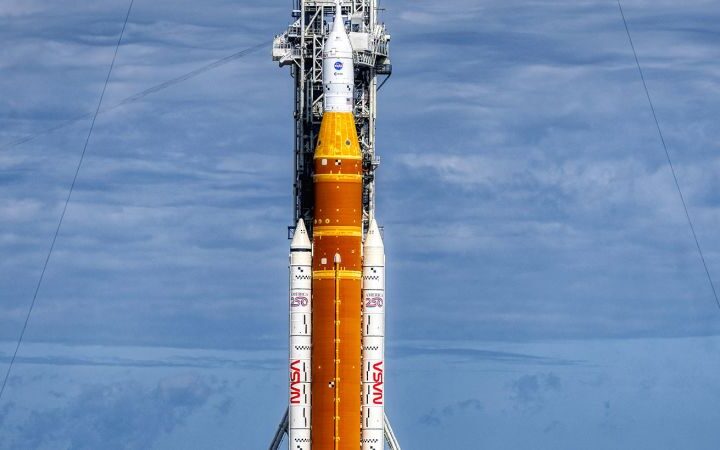
Under the current plans, NASA’s astronauts would launch aboard the Orion capsule sitting atop the Space Launch System rocket, both developed by NASA. After entering lunar orbit, they would transfer to Starship for the descent to the moon’s surface and return. However, Starship is still untested for its capacity to transport astronauts as it has only accomplished hour-long suborbital test flights and has not yet undertaken an operational mission.
SpaceX claims it has completed 49 milestones necessary for lunar mission readiness and asserts that the majority of its contractual testing milestones for NASA have progressed on schedule. NASA has yet to respond to these assertions.
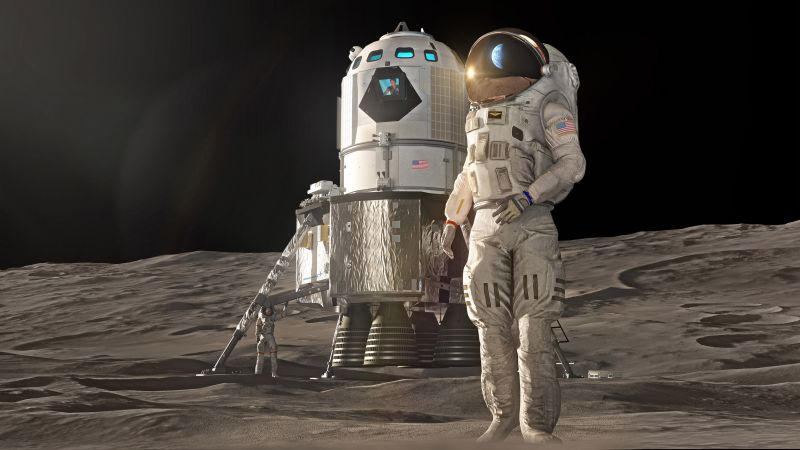
Meanwhile, alternative plans to expedite a lunar lander design are being explored by other firms. Lockheed Martin, for instance, has proposed leveraging existing hardware from the Orion spacecraft to develop a two-stage lunar lander. This could minimize the need for new designs, making it a potentially quicker solution. Analysts have suggested that innovative approaches could allow rapid development but at potentially high costs.
The upcoming decisions around NASA’s lunar lander contracts reflect a race not just against time, but against international capabilities as well. As the situation unfolds, the focus remains on how the interplay of commercial interests and national priorities will shape the future of lunar exploration.