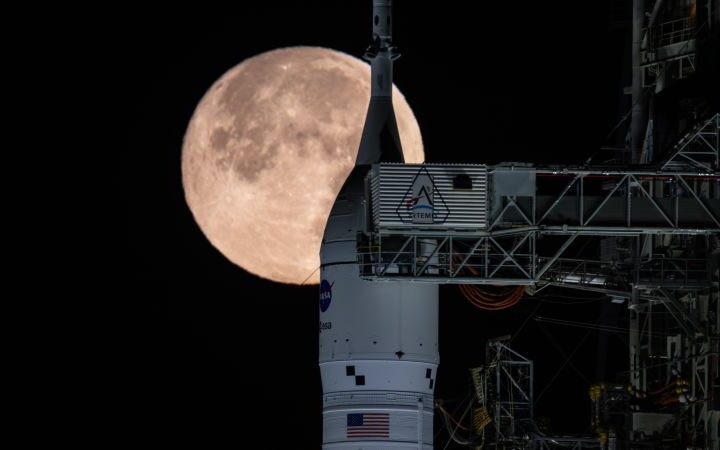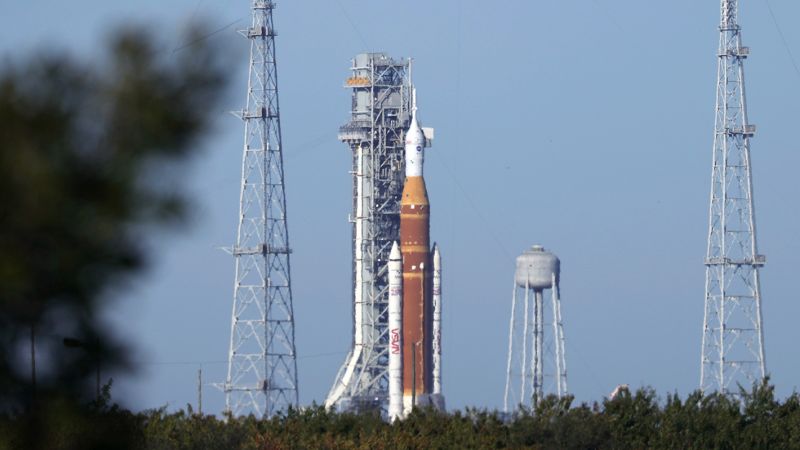
The launch of NASA’s Artemis II mission has encountered further delays due to a newly identified issue with the flow of helium, critical for pressurizing fuel tanks and purging propellant lines. This has necessitated rolling the rocket back to the Vehicle Assembly Building for repairs, effectively removing a potential March launch date from consideration, reports BritPanorama.
The problem was flagged on Saturday, with engineers requiring additional time to understand and resolve the helium flow issue. NASA had initially been optimistic about a March 6 liftoff following a successful fueling test known as a wet dress rehearsal conducted the previous Thursday. Those tests had led agency officials to believe that they had addressed previous hydrogen fuel leaks that had troubled earlier preparations.
The unexpected helium problem arose post-wet dress rehearsal, catching officials off guard. NASA Administrator Jared Isaacman indicated that the causes of the malfunction remain unclear but confirmed that any issue must be resolved while the rocket is in the VAB, as the helium’s role is crucial for the rocket’s safety during launch preparations.
With the aim of resolving the helium flow problem, NASA is now targeting no earlier than April for a potential launch. The agency noted that its quick response to begin preparations could potentially preserve the new timeline, but much depends on the outcomes of repairs and further testing in the coming weeks.
Previously, NASA had identified several potential dates in April, including the 1st, 3rd, 4th, 5th, 6th, and 30th, but agency officials have acknowledged the likelihood of considering May and June as alternative launch windows.
When it eventually launches, Artemis II is set to carry a crew comprising NASA astronauts Reid Wiseman, Victor Glover, Christina Koch, and Canadian Space Agency astronaut Jeremy Hansen on a ten-day mission around the moon. This mission will be historic, marking the first time humans have ventured to deep space since the conclusion of the Apollo program in 1972.
One problem subsides — another emerges
Despite plans to resume the Artemis II launch preparations, uncertainty looms over the feasibility of an April launch. Questions arise regarding whether there are other undiscovered issues within the data and the timeframe needed to address the helium malfunction.
Naturally, the potential complexity of resolving the helium issue raises further concerns about possible delays. Engineers must grapple with various challenges, not least of which is how to mitigate known hydrogen leak issues while progressing with the launch preparations. Historically, hydrogen leakage has been a persistent problem for NASA, particularly highlighted during the preparations for Artemis I.
NASA had hoped to contain the earlier hydrogen leakage by replacing seals around the propellant lines. The success seen during the last wet dress rehearsal was overshadowed by the discovery of unexpected moisture near the seals, indicating ongoing challenges with the SLS rocket’s reliability.
“We didn’t have one thing that we could point to where we said this was absolutely it,” explained launch director Charlie Blackwell-Thompson, hinting at the complex interplay of factors affecting the success of the ongoing testing process.
As the agency moves to address the helium issue, Administrator Jared Isaacman identified possible causes that could include a faulty filter or a problematic valve on the rocket. These scenarios are concerning as similar issues had previously led to delays during Artemis I preparations.
Ultimately, moving the SLS rocket back to the VAB raises questions about its durability during the 8-mile journey. This trek could pose additional risks as previous movements have contributed to known hydrogen leak challenges.
A rocky road to launch
Even if the helium problem is resolved, NASA might need to conduct another wet dress rehearsal. Launch controllers are set to evaluate the necessary assessments once the rocket is back in position.
Given the persistent hydrogen leak risks, maintaining their resolution during subsequent steps proves critical for the mission’s success. As history has shown, delays in such extensive preparations are not uncommon, raising the possibility of prolonged timelines ahead.
A significant delay would not be unprecedented; the Artemis I launch faced multiple postponements, culminating nearly eight months after its initial rollout. The mission continues to represent not only a technological challenge but also a pivotal moment in space exploration history.