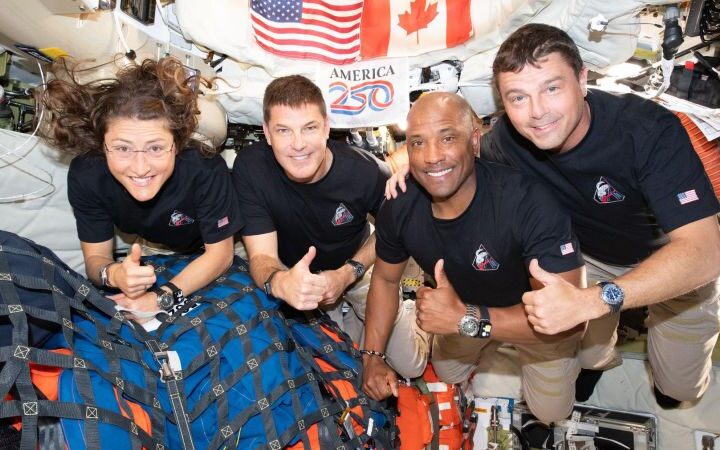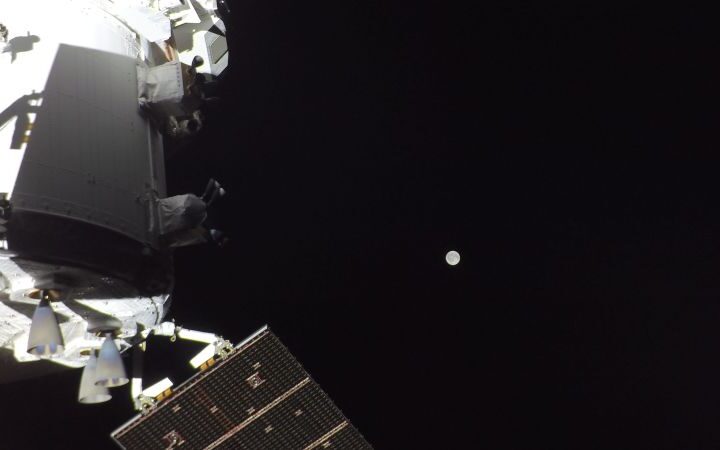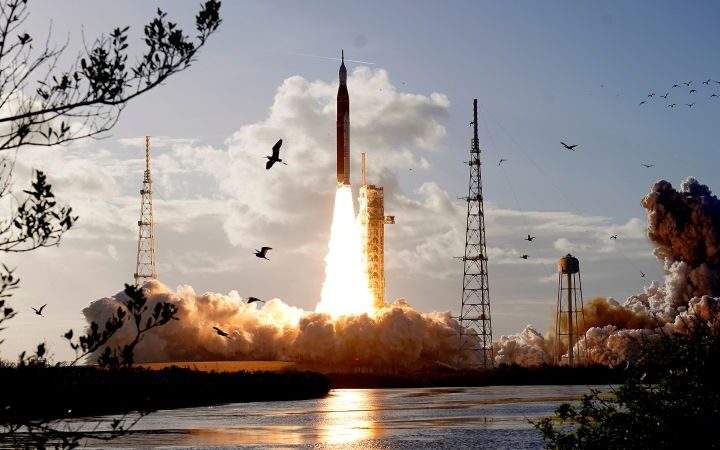
After months of anticipation, the monumental 10-day Artemis II mission, which sent four astronauts on a record-breaking flyby of the moon, has concluded. It’s a “mission well accomplished,” said NASA Administrator Jared Isaacman just after splashdown, reports BritPanorama.
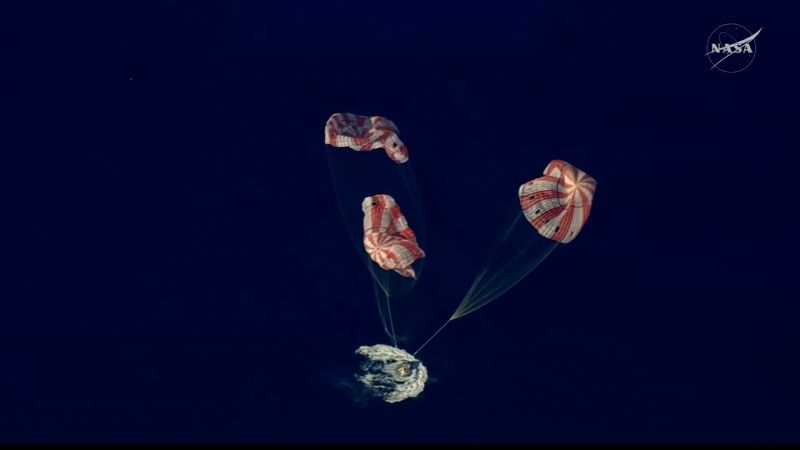
The Orion spacecraft, carrying NASA’s Reid Wiseman, Victor Glover, Christina Koch, and the Canadian Space Agency’s Jeremy Hansen, splashed down in the Pacific Ocean off the coast of California at 8:07 p.m. ET Friday.
The mission has provided unprecedented images of the moon and a special solar eclipse from space, while allowing unique insights into life inside a campervan-size capsule for a week and a half with three close companions.
The crewmates actively shared live views from inside Orion, showcasing workout routines, meals, and reflections on the experience, including considerations for future missions, such as warmer sleeping bags and spare computers due to equipment issues.
Eloquent words and moments of connection—like naming a lunar crater after Wiseman’s late wife—have drawn people around the world into this flight’s narrative in ways that feel distinct from previous missions. The astronauts reiterated that this was a test flight, with actions taken to prepare for future missions. As NASA reviews the data and looks towards Artemis III, five key takeaways from the journey emerge.
Orion still needs some fine-tuning
As expected, several issues arose during this test flight, ranging from minor annoyances to potentially significant problems.
One persistent concern involved the toilet system, which faced challenges in venting wastewater outside the capsule. This malfunction occasionally rendered the onboard toilet unusable, necessitating a backup option using plastic bags.
While the precise cause of the toilet issues remains unclear, NASA has stated intentions to resolve the problem before the next Orion flight. Throughout the mission, Orion also triggered warning messages from faulty sensors, although mission controllers indicated these issues did not pose significant risks.
More concerning is a leak in Orion’s service module, responsible for providing oxygen, power, and propulsion throughout the flight. This leak has raised apprehensions regarding pressurization of propellant tanks.
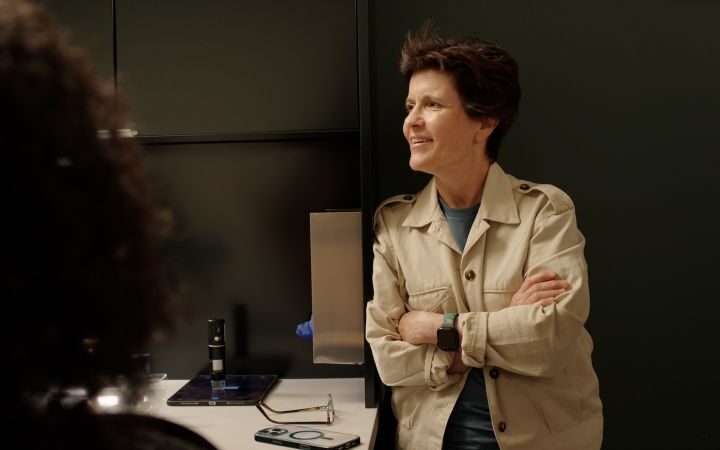
NASA had anticipated potential leaks prior to launch but believed the problems would be manageable. Kshatriya mentioned the leak seemed to worsen during the spacecraft’s main engine burn for translunar injection on the second day. While this mission did not reveal critical concerns, corrective measures will be necessary for future flights.
The world is still captivated by life in space
The mission employed a range of cameras, allowing the public to witness many facets of life aboard the Orion capsule, many of which revealed unexpectedly quirky side stories. One particularly viral moment occurred when Glover, after exercising, “showered” with wipes. NASA initially cut the feed but resumed broadcasting after the crew expressed comfort with the livestream.
On the first day, the crew encountered technical issues with personal computing devices, highlighting a common thread of challenges even in space. Despite these minor setbacks, the Orion spacecraft, dubbed “Integrity” by the crew, provided significant space and amenities compared to the Apollo Command Module.
Amid the quirks, the astronauts reflected on the profound experience of viewing Earth from space, expressing an appreciation for its fragility and emphasizing unity among humanity. “The first thing I would say is, trust us, you look amazing,” stated Glover about Earth, underscoring the shared perspective they gained during the mission.
Our moon still holds many mysteries
The Artemis II mission not only documented human experiences in space but also aimed to uncover scientific insights about the moon. During a seven-hour flyby on the sixth day, the astronauts observed previously unseen lunar features, contributing data that may address longstanding scientific questions.
The astronauts captured photographs documenting events like solar eclipses, enriching the dataset critical for future lunar explorations. The crew’s observations and feedback will shape upcoming training and preparation for subsequent Artemis missions.
How NASA will fund future missions is unclear
The excitement surrounding Artemis II contrasts with growing concerns about funding for future missions. President Donald Trump and Congress have emphasized the importance of the Artemis program amid competitive space endeavors. Nonetheless, the recent budget proposal suggested significant cuts to NASA’s science budget, alarming many within the space community.
Critics are questioning how NASA can balance ambitious objectives while facing budget constraints. With the Artemis III mission scheduled to launch next year, the agency’s ability to meet its goals while managing funding will be closely watched as the story of human exploration continues.