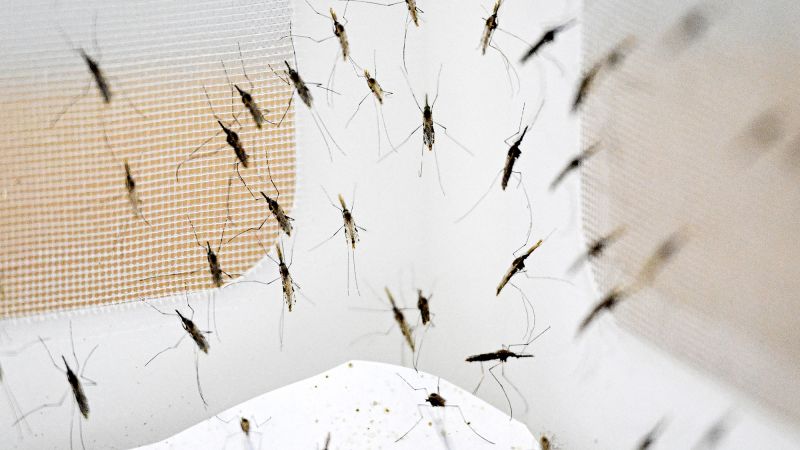
The recent study indicates that mosquitoes, specifically those capable of transmitting malaria, developed a preference for human blood due to the influence of early human ancestors in Southeast Asia between 2.9 million and 1.6 million years ago, reports BritPanorama.
Researchers found that this evolutionary shift might correlate with the presence of **Homo erectus** in the region, which was likely abundant enough to drive such changes in mosquito behavior. The findings enrich existing hypotheses regarding the timeline and spread of early human populations as they moved out of Africa.
Published in the journal Scientific Reports on February 26, the study employed genetic analysis of various mosquito species collected over decades. Co-author Catherine Walton from the University of Manchester pointed out that traditional methods like fossil analysis are often hampered by time, leading scientists to seek new approaches to understanding ancient human migrations.
By analyzing DNA from field-collected **mosquito species**, particularly from the **Anopheles leucosphyrus** group known for their anthropophilic tendencies, the team uncovered significant insights into the complex relationship between these insects and early human communities. The variance in dietary preferences among related mosquito species offers valuable information about the ecological interactions of the time.
Throughout their research, the team sequenced DNA from 38 mosquitoes spanning 11 species, revealing that a selective attraction to human hosts emerged approximately between 2.9 and 1.6 million years ago in **Sundaland**, a region encompassing several Southeast Asian islands. This shifted dynamic may have been influenced by environmental changes that characterized the last two million years, impacting habitats and food sources available to both early hominins and mosquitoes.
Dr. David L. Reed highlighted how studying dependency on human hosts can illuminate our evolutionary history, suggesting that such investigations could bridge gaps left by limited fossil records. This study exemplifies the importance of interdisciplinary approaches that integrate genetic data, ecological factors, and historical context to further our understanding of both human and ecological evolution.
As research continues, the exploration of how mosquitoes and other organisms have adapted alongside early humans promises to unearth further insights into our shared history across time and geography.