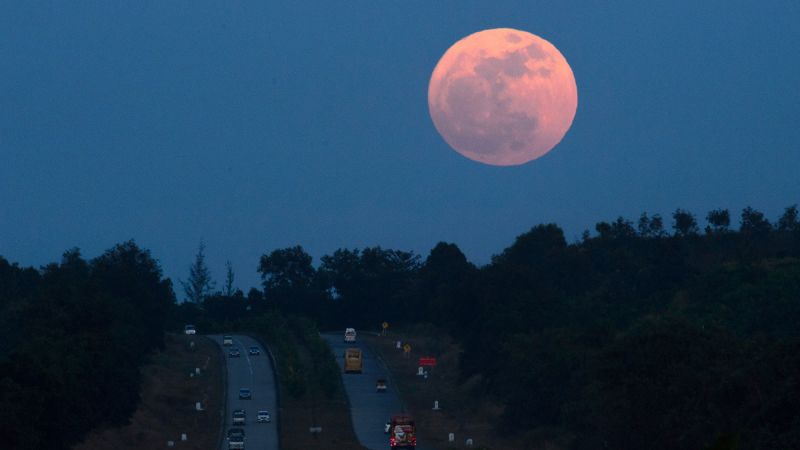
December’s full supermoon arrives this week
The last supermoon of the year, the full moon known as the cold moon, will reach its peak around 6:14 p.m. ET on Thursday, December 21. This celestial event presents an opportunity for sky gazers to observe the moon when it appears at its fullest, reports BritPanorama.
On Thursday, the moon is expected to rise just as the sun sets, leading to its full appearance in the night sky. Noah Petro, project scientist for NASA’s Artemis III mission, noted, “On Thursday, the moon will rise right around sunset time, and that’s why it’s full, because it’s exactly opposite in the sky from where the sun is.” The cold moon will also appear full on the evenings of Wednesday and Friday.
This marks the final of three consecutive supermoons this year, a phenomenon defined by the moon reaching perigee, its closest point to Earth, resulting in a more prominent visual appearance. The name “cold moon” derives from its occurrence near the winter solstice, which occurs on December 21 and signals the start of winter in the Northern Hemisphere.
Indigenous cultures have varied interpretations of this moon phase; for instance, the Cherokee refer to it as the snow moon, whilst the Abenaki tribe calls it the winter maker moon. Petro highlighted the supermoon’s brightness in winter, suggesting, “The brightness of these supermoons in the winter, especially when it’s really cold, like it is now, I think can be enhanced because the trees aren’t blocking the light.”
Remembering the Apollo missions
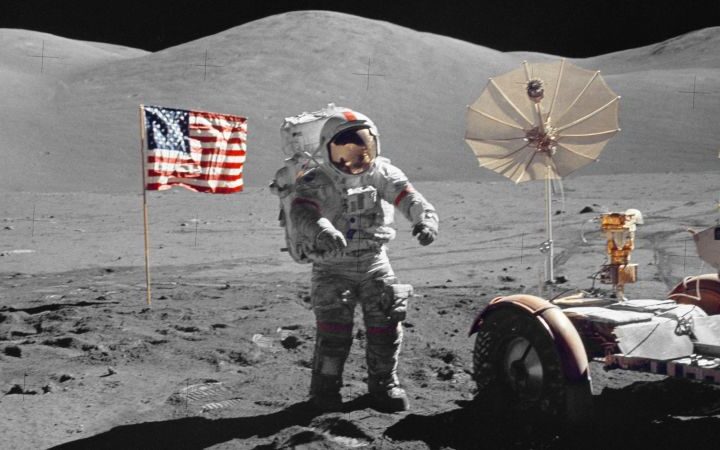
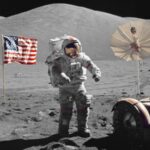
December’s full moon coincides closely with significant anniversaries of the Apollo 8 and Apollo 17 missions. Apollo 8 launched on December 21, 1968, carrying a crew into lunar orbit and making history with a Christmas Eve broadcast from space. Apollo 17, which launched on December 7, 1972, represents the last time astronauts landed on the moon’s surface.
The upcoming full moon also precedes the anticipated launch of Artemis II, set for early 2026. This mission aims to send four astronauts on a ten-day journey around the moon. Petro expressed enthusiasm for the upcoming lunar endeavors, stating, “I would encourage folks to go out this week, go look at the moon, bask in its glory. Think back to what we did in 1968 and 1972 with Apollo 8 and Apollo 17, and then turn the corner and say, hey, we’re just maybe two full moons away from sending humans back to fly past the moon and get a close-up view of the lunar surface from Artemis II.”
Upcoming celestial events
As the year closes, astronomy enthusiasts can look forward to the last two meteor showers. According to the American Meteor Society and EarthSky, the peak dates for these showers are:
- Geminids: December 13-14
- Ursids: December 21-22