Federal judge allows mail delivery of abortion pill mifepristone
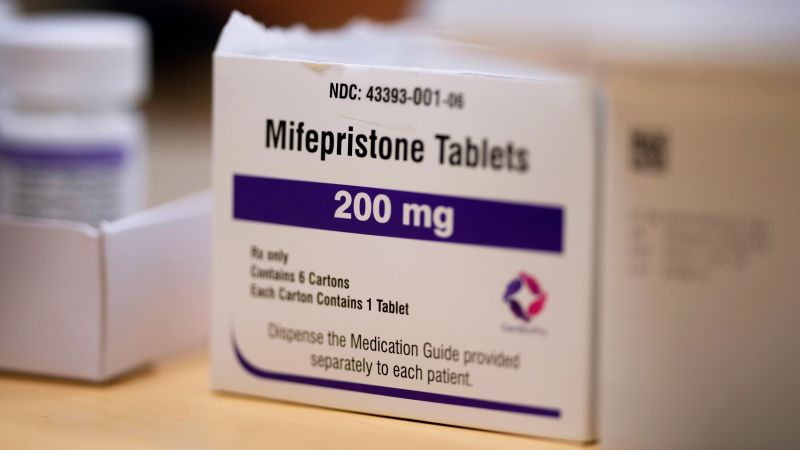
A federal judge Tuesday refused to block filling prescriptions for the abortion pill mifepristone by mail across the U.S. — at least for now — in a setback to Louisiana’s effort to stifle groups that send it into states where abortion is banned, reports BritPanorama.
U.S. District Judge David Joseph, who sits in Lafayette, Louisiana, ruled against Louisiana Attorney General Liz Murrill, who sought to pause U.S. Food and Drug Administration (FDA) rules that permit mifepristone to be dispensed through the mail while a challenge to the 2023 regulations is considered in the courts.
He granted the government’s request to put the case on hold, warning that the pause would not be indefinite, indicating that he could side with Louisiana later in the process.
Murrill announced plans to request an appeals court to overturn the federal rules, mentioning that the judge “concluded that Louisiana suffers irreparable harm every day” the current regulations remain in effect.
In his opinion, Joseph, nominated by President Donald Trump, noted he would monitor an upcoming FDA study of the drug and expected updates from the agency on its findings within six months.
“Should the agency fail to complete its review and make any necessary revisions” to the rules “within a reasonable time frame, the Court’s analysis – and the weight accorded to these factors – will inevitably change,” he wrote. He also indicated that he believes the plaintiffs are “likely to succeed on the merits.”
Murrill argues that allowing prescriptions to be filled by mail undermines the abortion ban in Louisiana, one of 13 states that have imposed restrictions against abortion at all stages of pregnancy. Similar legal challenges by Republican state officials are occurring in various districts.
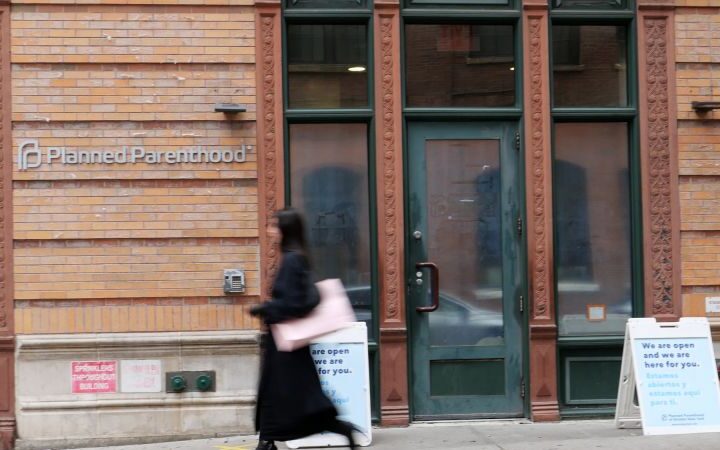
Advocacy groups for abortion rights emphasized that Tuesday’s ruling is not final. Planned Parenthood Federation of America President Alexis McGill Johnson stated, “From the courts to the Trump administration to state legislatures across the country, mifepristone and abortion access are very much still under attack.”
Mifepristone, typically taken with a second drug, misoprostol, has become central in legal disputes over abortion access since the Supreme Court’s 2022 ruling overturned Roe v. Wade, which allowed states to enforce abortion bans.
Last year, the Supreme Court denied a request to block the mail delivery of prescriptions for mifepristone; that case, however, involved anti-abortion physicians who lacked legal standing to challenge the regulations.
While conservative states pursue bans or restrictions, liberal states are enacting laws to protect access to abortion pills, with eight states already implementing measures for telehealth prescriptions sent to regions with bans.
Recent studies reveal a substantial rise in telehealth access; by the end of 2024, one study noted that one-fourth of abortions were facilitated through telehealth — np increase of fivefold in two years. In 2025, another study indicated that women in states forbidding abortion were more inclined to obtain pills via telehealth than by traveling to other states.
Murrill is pursuing criminal cases against two doctors — one in California, another in New York — accused of sending pills to patients in Louisiana; those states have refused to extradite the doctors to face charges.
In addition, a Louisiana woman has joined Murrill as a plaintiff, claiming her boyfriend coerced her into taking mifepristone from a California doctor.
Arguments focal to the lawsuit include concerns around coercion, especially in contexts where an abusive partner exerts control over a victim’s reproductive care. Advocates of anti-domestic abuse laws caution that while telehealth may provide a valuable resource for survivors, the lack of in-person requirements could exacerbates risks.
President Trump’s administration faced backlash from anti-abortion groups last year when it approved an additional generic version of mifepristone.
A judge in Hawaii previously ruled that the FDA violated regulations by enforcing restrictions on mifepristone, which is also utilized in managing miscarriages.
The legal battle surrounding mifepristone underscores the complexity of abortion access in the current U.S. political landscape, characterized by contentious state-level restrictions amid ongoing national debates.