Wolf moon graces 2026 sky, impacting meteor shower visibility
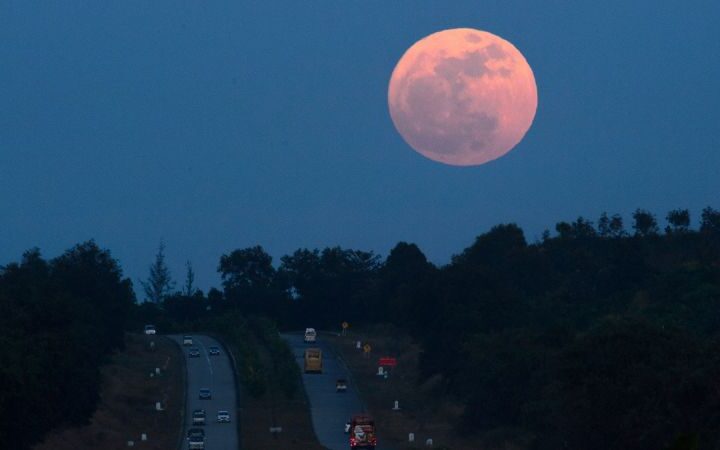
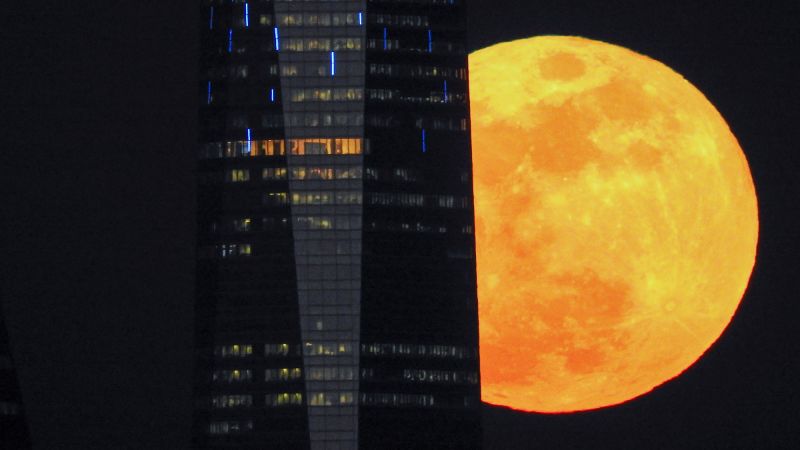
The wolf moon, the first full moon of 2026, will rise this weekend, coinciding with the Quadrantid meteor shower, which will be more challenging to observe due to the moon’s brightness, reports BritPanorama.
The full moon will begin to appear large in the sky around New Year’s Eve, reaching its peak illumination at 5:03 a.m. ET on Saturday, according to the Old Farmer’s Almanac. Noah Petro, chief of NASA’s Planetary, Geology, Geophysics and Geochemistry Laboratory, indicated that the moon will appear full on the days surrounding January 3.
The brightness of the wolf moon, caused by sunlight reflection, will hinder visibility for the Quadrantid meteor shower, which is set to peak from 4 to 7 p.m. ET on Saturday, according to Robert Lunsford of the American Meteor Society. He noted that the best chance to see meteors will occur between midnight and dawn ET on Sunday.
January’s supermoon and its significance
This wolf moon will also be the first supermoon of the year, indicating it is closer to Earth than usual and will appear larger and brighter. According to Petro, the winter moon is one of three supermoons in 2026, with the December cold moon expected to be the closest.
Petro pointed out that while the distinction between a supermoon and a regular full moon is subtle, those observing need to pay close attention to notice the difference. For a clearer sense of the lunar phases throughout the year, NASA has provided animations for sky watchers.
Optimal conditions for viewing do not require special glasses; simple eyes or tools like telescopes or binoculars can enhance the experience. Petro emphasizes the importance of finding a dark place with an unobstructed view, suggesting that even popular local spots can suffice.
“Being in a place that is meaningful and enjoying the full moon makes it that much more special,” he added.
A glimpse into future lunar missions
With NASA’s Artemis II mission expected to send a crew around the moon in early February, Petro encourages the public to take the opportunity to appreciate the moon before this milestone in lunar exploration. This mission will see astronauts venture beyond near-Earth orbit for the first time in over five decades.
The upcoming supermoon serves as a reminder of the excitement surrounding space exploration, inviting enthusiasts to engage with the night sky. As people gaze at the supermoon, they can envision the perspectives of the Artemis II astronauts, who may witness features of the moon previously unseen from Earth.
Petro encourages viewers to start their own mental countdown to this mission, urging them to closely follow the phases of the moon.
Challenges for meteor watchers during the Quadrantid meteor shower
The Quadrantid meteor shower will remain active until January 16, with meteors appearing to radiate from the constellation Boötes. Lunsford noted that the bright illumination from the full moon this weekend will obscure much of the celestial activity.
For those keen on viewing, he suggests positioning oneself with the bright moon behind them while facing northeast. With favourable conditions, observers might see up to five meteors per hour.
The Quadrantids are noted for particularly bright fireballs; however, Lunsford warns that observers in North America may have limited success spotting them this year. Fortunately, multiple meteor showers will occur throughout 2026, including the Perseids in August, expected to peak under ideal viewing conditions.
Looking ahead: Upcoming meteor showers and full moons
Following the Quadrantids, the next anticipated meteor shower is the Lyrids, occurring in April. Below is a list of upcoming meteor showers peaking in 2026:
- Lyrids: April 21-22
- Eta Aquariids: May 5-6
- Southern Delta Aquariids: July 30-31
- Alpha Capricornids: July 30-31
- Perseids: August 12-13
- Orionids: October 21-22
- Southern Taurids: November 4-5
- Northern Taurids: November 11-12
- Leonids: November 16-17
- Geminids: December 13-14
- Ursids: December 21-22
Additionally, here are the remaining full moons of 2026 along with their nicknames:
- February 1: Snow moon
- March 3: Worm moon
- April 1: Pink moon
- May 1: Flower moon
- May 31: Blue moon
- June 29: Strawberry moon
- July 29: Buck moon
- August 28: Sturgeon moon
- September 26: Harvest moon
- October 26: Hunter’s moon
- November 24: Beaver moon
- December 23: Cold moon
The interplay of lunar phenomena and meteor showers continues to engage enthusiasts and the scientific community alike, promising a vibrant year ahead for celestial observation.