Understanding rib cage mobility and back pain relief
Stiffness in the rib cage can significantly contribute to recurring back pain, often overlooked in conventional fitness regimens. This issue is related to rib mobility, which is crucial for proper spinal movement and overall back health, reports BritPanorama.
As the twelve vertebrae of the thoracic spine connect to the rib cage, limited rib movement can lead to restrictions in the upper body and mid-back, causing tension and additional strain on the lower back. This challenges the overall stability and movement of the spine, particularly during activities that require twisting or bending.
Rib cage stiffness typically develops gradually due to factors such as suboptimal breathing mechanics and poor movement patterns. By implementing a few simple daily exercises, individuals can counteract the causes of rib immobility, potentially relieving and preventing back pain.
How rib cage rigidity hurts your back
The rib cage’s protective structure is designed to allow movement rather than remain rigid. It encases the upper and mid-back, facilitating movement necessary for daily activities like reaching and turning. When the rib cage becomes stiff, proper thoracic motion is compromised, forcing the lumbar spine to compensate, leading to additional strain.
This pattern is prevalent among individuals who spend prolonged periods sitting or training without focusing on spinal rotation. As the lumbar spine is primarily designed for stability, repeated compensatory motions can create instability, which triggers the nervous system to establish protective tension, ultimately contributing to increased back pain.
Why breathing matters
Effective breathing is reliant on rib mobility. The ribs must expand and contract to enable the diaphragm, the primary muscle for breathing, to function adequately. Shallow breathing can restrict rib movement and perpetuate a cycle that exacerbates back pain. Limited rib mobility not only impedes deep breathing but also activates the body’s stress response, leading to increased muscle tension and reduced spinal movement.
Restoring rib cage mobility through breathing exercises can disrupt this cycle, enhancing breathing depth while promoting healthy spinal motion and reducing protective tension.
Positional breathing exercises to restore rib mobility
The following exercises are designed to enhance rib and spinal movement via slow, deep diaphragmatic breaths. Practitioners should move within a comfortable range, stopping if they experience pain or difficulty breathing.
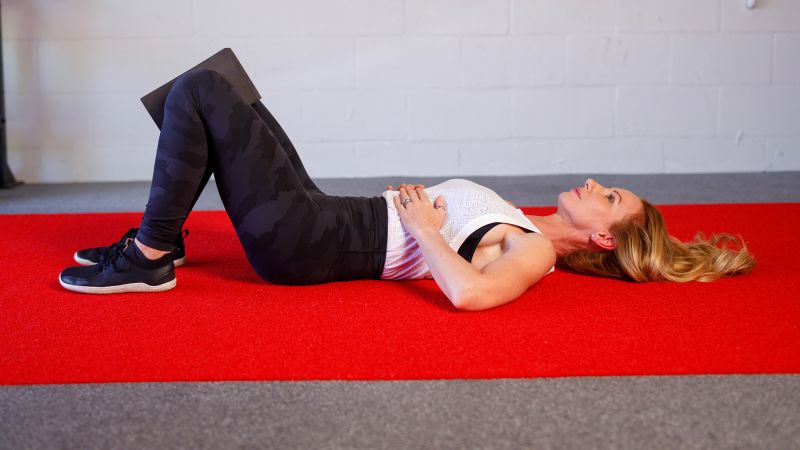
1. Breathing with hand-guided rib movement: Align your fingers along the lower ribs to feel the expansion during inhalation. Perform six long, deep breaths with a recommended pattern of a 5-count inhale, 7-count exhale, and 3-count pause, in whichever position is comfortable.
2. Breath-fueled rotation: Healthy twisting relies on rib cage mobility. While seated, the exercise involves reaching the right arm out at shoulder height and rotating the upper body during exhalation. Maintaining breath focus can help enhance the rotation.
3. Side bending with breath awareness: This exercise focuses on expanding the rib cage during side bends to strengthen spinal support. Practice by reaching one arm overhead while placing the opposite hand on the ribs, using breath to deepen the stretch.
Consistency is crucial for effectiveness. A complete set of each exercise at least once daily can promote ease of movement and maintain rib cage mobility over time.
Improving rib cage mobility should become a regular part of any back care routine. In addressing back health comprehensively, individuals can achieve better spinal function and ultimately a more pain-free experience.