An interstellar comet that originated outside our solar system just made its closest pass of the sun, setting it on an outgoing path — but it’s not leaving our cosmic neighborhood yet, reports BritPanorama.
The comet, dubbed 3I/ATLAS, came within about 126 million miles (203 million kilometers) of our star, according to Earth’s leading astronomy experts. The object is currently obscured by the sun from the perspective of ground-based telescopes on Earth; however, astronomers anticipate being able to view the comet again in a few weeks, said Darryl Seligman, assistant professor in the Department of Physics and Astronomy at Michigan State University.
Stargazers using telescopes should be able to see the object in the predawn sky beginning November 11, according to experts. Astronomers will have several more months to observe the comet before it begins heading out of our solar system, Seligman indicated.
The comet will make its closest approach to Earth on December 19, coming within about 168 million miles (270 million kilometers) — a distance that poses no threat to our planet, according to the European Space Agency. Astronomers have been observing the comet, only the third known interstellar object to pass through our solar system, since its discovery on July 1.
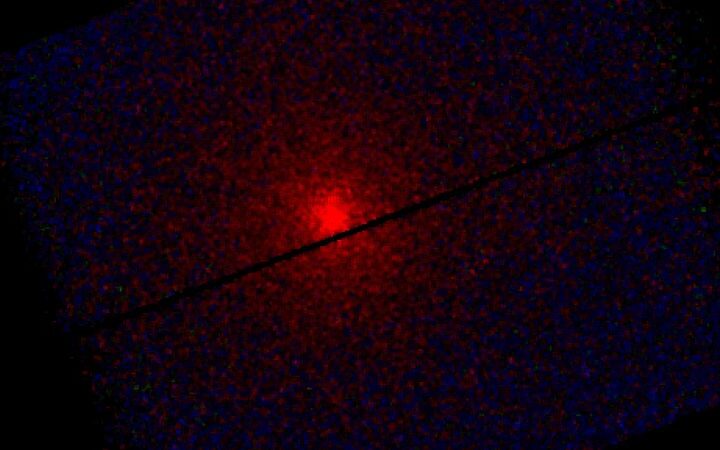
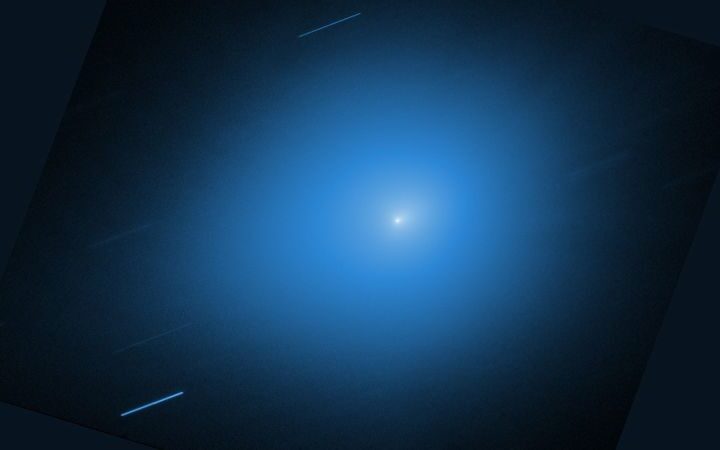
Each observation sheds light on this interstellar object and how it may differ from comets that originated in our solar system. The SPHEREx and James Webb Space telescopes, alongside various space missions, have been employed to monitor the comet’s activity.
The ingredients of an interstellar comet
Comets are akin to dirty snowballs left over from the formation of solar systems. A comet’s nucleus is its solid core, made of ice, dust, and rocks. When they travel near stars like the sun, heat causes them to release gas and dust, forming their characteristic tails. Astronomers are particularly interested in capturing observations of the comet because material released as it approaches the sun could reveal valuable information about its composition and the star system from which it originated.
“When it gets closest to the sun, you get the most holistic view of the nucleus possible,” Seligman explained. “One of the main things driving most cometary scientists is, what is the composition of the volatiles? It shows you the initial primordial material that it formed from.”
Preliminary estimates suggest that the interstellar comet is between 3 billion and 11 billion years old, according to a study coauthored by Seligman and Aster Taylor, a doctoral student at the University of Michigan. For context, our solar system is estimated to be about 4.6 billion years old.
All eyes on 3I/ATLAS
The comet faded from view of ground-based telescopes in October; however, it remained detectable for missions such as Polarimeter to Unify the Corona and Heliosphere (PUNCH) and the Solar and Heliospheric Observatory (SOHO). It also made its closest approach to Mars on October 3, coming within 18.6 million miles (30 million kilometers) of the red planet.
While the government shutdown has hindered data sharing from any NASA missions observing the comet since October 1, the European Space Agency’s Mars Express and ExoMars Trace Gas Orbiter attempted to capture images in October.
“This was a very challenging observation for the instrument,” said Nick Thomas, principal investigator of the orbiter’s camera. The comet is estimated to be around 10,000 to 100,000 times fainter than typical targets.
Future attempts to observe 3I/ATLAS include ESA’s Jupiter Icy Moons Explorer (Juice), which will attempt to observe the comet in November, although any insights from these observations may not be available until February.
“We’ve got several more months to observe it,” Seligman noted. “And there’s going to be amazing science that comes out.”