Discovery of ancient bee nests in Caribbean cave
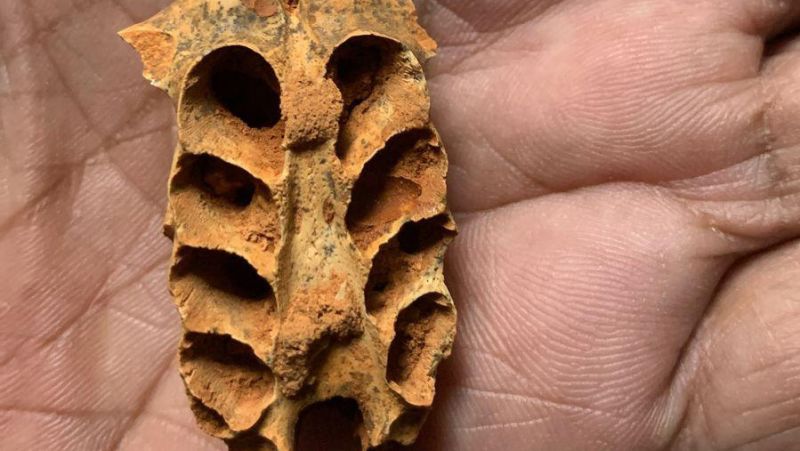
A recent study has revealed that ancient bees nested within fossilized bones in a cave on the Caribbean island of Hispaniola, marking a unique behavior previously undocumented in the species. This finding is significant as it provides insight into the nesting habits of bees, contrary to the common image of elaborate hives, reports BritPanorama.
Researchers identified tiny nests in the empty tooth sockets of bones from extinct animals, showcasing an evolutionary adaptation that is not typically associated with modern bees. The study, published in the journal Royal Society Open Science, highlights the surprising nesting strategy of these ancient bees, which seems to have thrived in a cave environment.
Lead author Lázaro Viñola-López, a postdoctoral researcher at the Field Museum of Natural History, expressed astonishment at the discovery, stating, “It was very surprising, because you never find invertebrates there — you find snails, but you don’t find insects.” He noted that the cave typically housed rodents and birds, making this finding particularly exciting as it represents the first evidence of ancient bees nesting in the Caribbean.
The nests are believed to date back roughly 20,000 years, contributing valuable data to the fossil record, which has previously only included older bee species found encased in amber. Viñola-López explained, “This shows that the diversity of nesting processes of bees is actually really big.” The findings encourage further exploration of the ecological history of the region, as well as how bees have adapted to their environments over generations.
The cave itself contains layers of fossils from more than 50 species, including vertebrates. Viñola-López and his team discovered evidence of a family of barn owls that may have lived in the cave, possibly leading to the accumulation of these fossilized remains over time. The cave’s stable conditions likely played a crucial role in preserving both the nests and the environment in which these bees lived.
Through advanced imaging techniques, researchers confirmed that the nests were constructed from mud, characteristic of bee nesting behavior, as opposed to the materials used by wasps. Viñola-López remarked, “Nesting in a cave is a very, very strange behavior,” underscoring the unusual nature of this discovery.
The nests have been classified as Osnidum almontei, named after the scientist who first discovered the cave. While the specific species of bee responsible for these nests remains unidentified, this research underscores the ecological significance of bee behavior and biodiversity. “This discovery is doubly surprising,” commented Anthony Martin, a professor at Emory University, emphasizing the remarkable adaptability of insects over millions of years.
Researchers hope to conduct further surveys in the area to understand whether similar nesting behaviors occur in contemporary bee populations, broadening the scope of knowledge regarding the environmental adaptability of these essential pollinators.