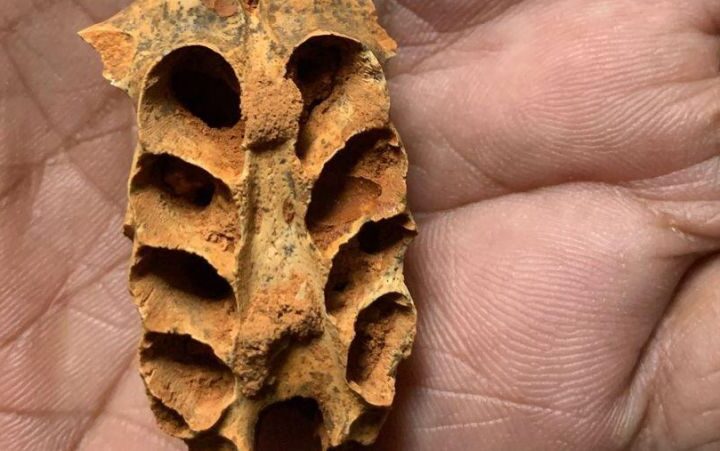
The discovery of hominin fossils in Morocco offers a potential key to unlocking a mystery in human evolution: the identity of our ancestral predecessors. Unearthed from a cave known as Grotte à Hominidés in Thomas Quarry, Casablanca, these fossils date back approximately 773,000 years, making them the first from this period found in Africa, reports BritPanorama.
The haul includes three jawbones, one belonging to a child, as well as teeth, vertebrae, and a femur. This find is significant because it fills a notable gap in the fossil record; experts have long observed a scarcity of hominin remains dating from around one million years ago until roughly 500,000 years ago. “There are a lot of fossil hominins in Africa until about a million years ago, but then after that there is a jump to around 500,000 years ago, and in this gap we have almost nothing,” said Jean-Jacques Hublin, a paleoanthropologist involved in the study published in the scientific journal Nature.
Hublin expressed enthusiasm about the implications of these fossils. “It is extremely exciting to have fossils right in the middle of this gap,” he added. CT scans and examinations of the fossils revealed a combination of primitive and evolved features. While the specimen did not possess a defined chin, akin to modern Homo sapiens, its dental characteristics were markedly similar to those of both our own species and Neanderthals.
Most of the fossils were found in 2008 and 2009, but they were definitively dated much later using paleomagnetism—a technique that analyzes the geological signature of Earth’s magnetic field reversals. The research team identified the layer containing the fossils corresponding to the Matuyama-Brunhes transition, a known chronological marker from 773,000 years ago.
Coauthor Serena Perini, a paleomagnetist at the University of Milan, remarked, “The technique allowed the team to anchor the presence of these hominins within an exceptionally precise chronological framework.” Previously, the earliest known remains of Homo sapiens were located at Jebel Irhoud in Morocco and dated to approximately 400,000 years ago. However, Hublin cautioned against interpreting this region as the definitive site of human origins, suggesting that geological conditions facilitating fossil preservation play a crucial role.
Hublin also noted the perilous environment these early humans inhabited. Evidence from the fossils indicates they were vulnerable to predation, with bite marks on the leg bone likely left by hyenas.
Elusive figure
The fossils are pivotal in elucidating the lineage linking Neanderthals, Denisovans, and modern humans—the only surviving human species. While these two extinct groups disappeared approximately 40,000 years ago, the timeline for Denisovans remains uncertain. Antonio Rosas from the National Museum of Natural Sciences in Madrid described the last common ancestor of these groups as an “elusive figure.” He underscored the importance of accurately identifying this ancestral species, explaining that understanding it is crucial for grasping the trajectory of subsequent evolutionary changes.
Research indicates this ancestor likely existed between 550,000 and 765,000 years ago before diverging into three sister species, yet the precise identity of this ancestor and its habitat remain ambiguous. Possible candidates include Homo antecessor and Homo heidelbergensis, both of which have fossil evidence from around the same period as the Moroccan remains.
While no formal scientific name has yet been assigned to the Moroccan fossils, Hublin compared them to Homo erectus, suggesting they may represent a close ancestor of modern humans. The debate continues regarding whether populations of Homo erectus directly gave rise to all existing human lineages or if observable evolutionary changes occurred along the way. Anthropology experts emphasize the significance of such early fossils in enriching our understanding of human evolution.