February’s full moon and Artemis II preparations
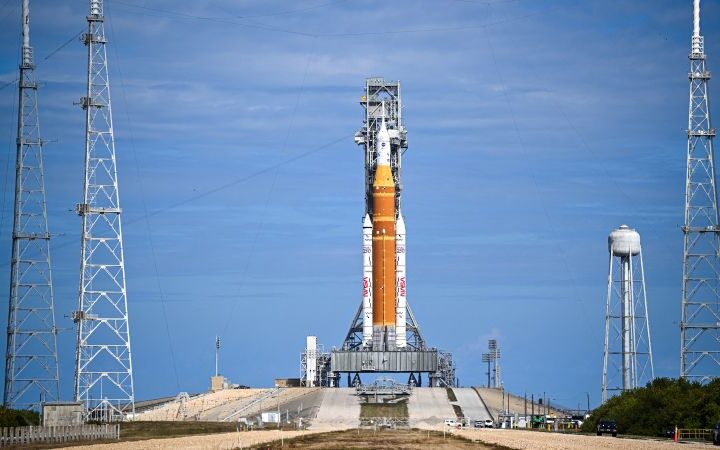
This weekend, sky-watchers will have an opportunity to view February’s wintry full moon, coinciding with preparations for NASA’s historic Artemis II lunar mission, set to launch soon, reports BritPanorama.
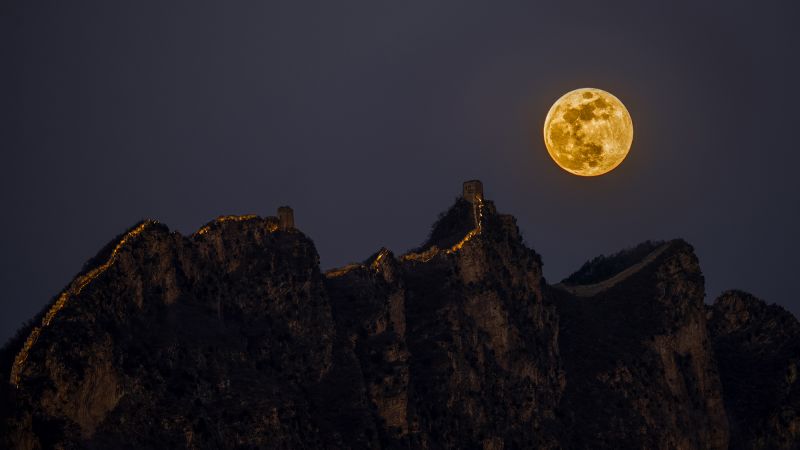
The full moon will peak at 5:09 p.m. ET on Sunday, appearing most prominent in the eastern sky just as the sun sets. Observers will also notice the moon’s full appearance on Saturday and Monday, according to Noah Petro, chief of NASA’s Planetary, Geology, Geophysics, and Geochemistry Laboratory at Goddard Space Flight Center.
This moon is commonly referred to as the snow moon, highlighting the heavy snowfall typical for parts of North America during this month. Other cultural names from indigenous tribes include the sleet moon by the Comanche and the wind moon from the Creek tribe, reflecting regional weather patterns.
Moreover, with the anticipated launch of NASA’s Artemis II mission, scheduled for February, the moon’s visibility offers a prime opportunity for sky-gazers to familiarize themselves with its geography. “Go out and look at it when it’s full, when it’s partially full, and learn its geography,” said Petro, who also leads the science team for the Artemis III mission, which aims to land humans near the lunar south pole. “Start learning what features are where and what it looks like as the moon goes through its phases to celebrate the fact that we are in this Artemis era and going back to the moon.”
Petro advised that while the moon’s light and dark areas can be seen with the naked eye, using a telescope enhances the visibility of craters and other features, making this a worthwhile activity for anyone interested in lunar observation.
Upcoming celestial events and lunar phenomena
As the year progresses, sky-watchers can look forward to seeing supermoons in November and December. These occur when the moon is closest to Earth in its orbit, appearing brighter and larger than usual. December’s supermoon is expected to be the closest, at 221,667 miles (356,740 kilometers) from Earth, a significant reduction from the average distance of approximately 238,900 miles (384,472 kilometers).
This year also marks a total lunar eclipse on March 3, visible over Asia, Australia, the Pacific Islands, and the Americas. A total lunar eclipse happens when the sun, Earth, and moon align, casting Earth’s shadow on the moon, often creating a red hue known as a “blood moon.” This effect results from atmospheric scattering, reinforcing the red color as sunlight passes through the Earth’s atmosphere.
A partial lunar eclipse will take place from August 27 to 28. This type of eclipse occurs when the alignment of the sun, Earth, and moon is incomplete, causing only part of the moon to enter the shadow. Additional details on these astronomical events can be found on platforms such as Time and Date.
The intriguing interplay between the moon phases and forthcoming space missions adds an enriching layer to what lies ahead in our exploration of the cosmos.