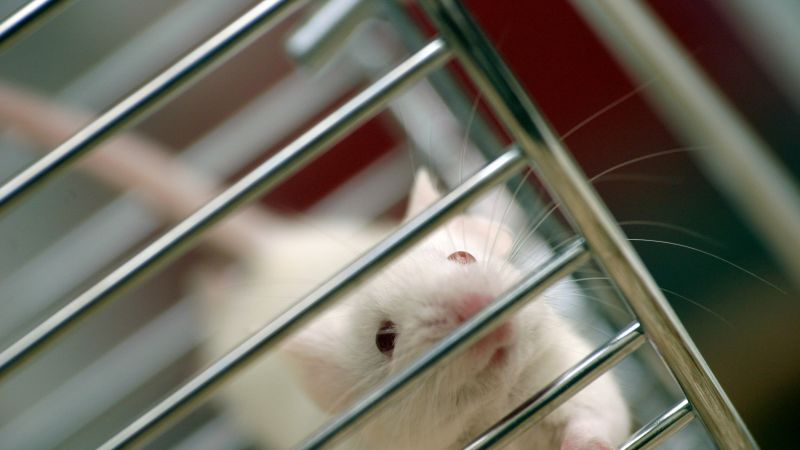
The US Food and Drug Administration (FDA) this week highlighted its commitment to reducing animal testing in drug development through a social media post featuring a macaque. The agency stated, “Some drugs use 144 monkeys on average for preclinical testing. We’re changing that,” reports BritPanorama.
In a significant step towards this goal, the FDA released draft guidance aimed at clarifying how drug developers can utilize alternative testing methods when seeking regulatory approvals. This announcement, part of a broader initiative dating back to the Trump administration’s Make America Healthy Again movement, represents a shift in policy, as animal testing has been a traditional component of pharmaceutical research.
The National Institutes of Health (NIH) has also announced a $150 million investment to develop alternatives to animal testing. The new guidance is intended to direct pharmaceutical companies towards what the industry refers to as New Approach Methodologies, with an FDA official noting that these methods may expedite drug development processes. “These data can be much more predictive and also a more ethical option,” the official commented during a briefing.
However, the draft guidance is not conclusive, and experts acknowledge the limitations of current alternatives. New technologies cannot fully replicate the detailed biological information that animal models provide. Delcianna Winders, director of the Animal Law and Policy Institute, remarked on the extensive need for reform, stating that significant challenges remain in reducing animal testing numbers despite recent progress and funding initiatives.
The shift toward alternative models has been met with mixed responses. While many in the scientific community welcome the move towards more humane practices, they also stress that animal testing continues to play a critical role in certain areas. For instance, Dr. Emma Robinson, a professor at the University of Bristol, illustrated the ongoing necessity of animal models for complex research questions that alternatives cannot yet address.
Why animals are used in testing
Animals have been integral to major scientific discoveries, as their biological similarities to humans allow researchers to study diseases effectively. Despite advancements, reliance on animal testing remains prevalent for developing treatments and conducting safety assessments.
The 2025 Nobel Prize winners in medicine utilized mice in groundbreaking research that contributed to new cancer treatments. Notably, public opinion is shifting; a recent Gallup poll indicated a decrease in support for animal testing, revealing that only 47% of respondents now see it as morally acceptable.
The predominant reasons for animal testing include developing health-related treatments, regulatory research, and safety assessments, although there is a growing focus on finding alternatives, including organ-on-a-chip technologies and computational models. Nevertheless, experts acknowledge that current non-animal methods cannot yet fully replace traditional animal research.

Government’s changing approach
In recent years, the US government has made some progress in revising its animal testing policies. Last year, the FDA announced plans to phase out animal testing requirements for monoclonal antibodies in favour of alternative models.
Additionally, initiatives like the one from the NIH are signaling a shift towards prioritizing human-based research methods. Reports indicate that the CDC is also working towards phasing out all monkey testing in its research in response to evolving regulations.
Despite these advancements, experts stress the need for ongoing investment in alternative methods, as animal research remains crucial for addressing complex health challenges and ensuring effective safety assessments for new pharmaceuticals. The NIH’s recent allocation of funding towards alternative methods, while a positive step, constitutes a small fraction of its overall research budget.
As the regulatory landscape evolves, the effectiveness of alternative testing methods is paramount. The pursuit of balance between scientific rigor and ethical considerations continues, leaving the research community at a pivotal juncture.