Five requirements. Seventy-five days. No breaks and no room for mistakes, reports BritPanorama.
That’s the premise of 75 Hard, a challenge created by entrepreneur and author Andy Frisella and marketed as a “transformative mental toughness program” and “an ironman for your brain.”
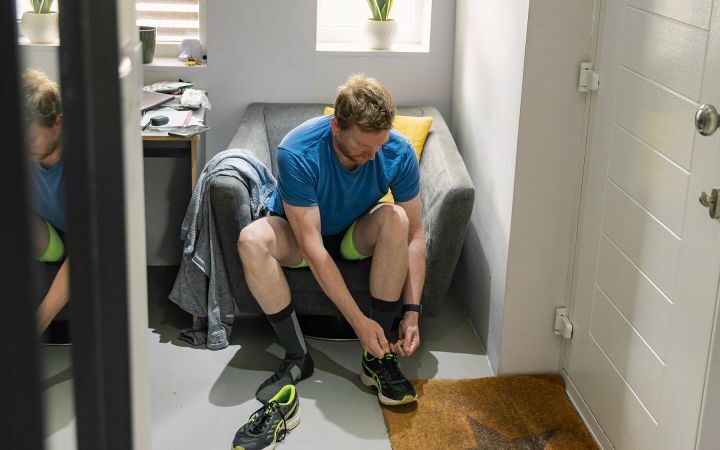
Chicago runner Sarah Lyons learned quickly how demanding the rules could be.
On paper, the daily checklist seems straightforward: Follow a structured diet with no alcohol, drink a gallon of water, read 10 pages of nonfiction, take a progress photo, and complete two 45-minute workouts, one outdoors, every day for 75 consecutive days. In practice, the routine can take over your schedule and your life.
The challenge includes several healthy habits such as daily movement, reading and hydration. However, experts say its rigid, all-or-nothing approach may undermine the long-term behavioral changes it promises. For people drawn to 75 Hard, the goal shouldn’t be perfection but building habits that can be maintained when life inevitably gets messy, according to experts. Here’s what they say should be taken away from this challenge — and what could be left behind.
The ‘start over’ rule
One of the program’s defining features is its strictness: Miss one task and you restart the entire challenge, whether you’re on day 2 or day 74. The website discourages modifications, stating that “compromise nerfs off the sharp edges of what could be an exceptional life.”
Before she started her first 75 Hard challenge, Lyons “felt stuck in a rut both physically and mentally.” Initially drawn to the structure of the challenge, she was looking for something to help rebuild discipline and momentum. But that structure can backfire.
“Sustainable fitness isn’t about punishment or proving discipline through extremes — it’s about building habits that integrate into your lifestyle in a way that feels supportive and repeatable,” said CNN fitness contributor Dana Santas, a certified strength and conditioning specialist and mind-body coach in professional sports.
Forcing a restart after one deviation, Santas said, can reinforce a cycle of perceived failure rather than building durable behavior changes — especially when real life inevitably intervenes through travel, illness, family obligations, weather, or simply an off day. This mindset may also affect eating behaviors, potentially contributing to binge eating, disordered eating patterns, negative body image, and negative self-talk, warned Bethany Doerfler, senior clinical research dietitian at Northwestern Medicine Digestive Health Institute in Chicago.
People may also define “slip-ups” differently, creating a potential gateway to unhealthy behaviors. Lyons said the rigidity sometimes created stress in her own life, too. During her first attempt, she said there were many days when she delayed tasks until late in the evening, adding pressure rather than making her feel healthier.
With that strict framework in mind, experts say it’s worth separating the challenge’s healthier building blocks from the parts that may be risky or unsustainable. One important note: Before beginning any new exercise program, consult your doctor. Stop immediately if you experience pain.
The diet: Flexible in theory, hard in practice
One element of the 75 Hard that allows flexibility is the way people eat. Participants choose their own diet, which could mean Mediterranean, Paleo, cutting ultraprocessed foods, or another structured approach. But experts stress that any diet change works best when designed for real life.
If considering a structured eating plan, Doerfler points to the Mediterranean diet. It emphasizes fruits, vegetables, whole grains, legumes, and nuts, uses plant-based fats and limits ultraprocessed foods and desserts, she noted. Lasting dietary change requires a lifestyle shift — and consistency matters more than intensity. “Patients often benefit from a routine strategy that reduces friction for lifestyle change,” she said.
Doerfler recommends setting aside one or two days each week to wash and cut produce for meal prep and snacks. She also suggests having a plan for social settings so eating out feels manageable rather than stressful.
Lyons, the runner, said her diet evolved between her two attempts at the challenge. During her first round, she followed a strict whole-food, plant-based diet. During her second attempt, she focused on eliminating processed sugars, fast food, and baked goods while still including meat and fish. However, she noticed the rules changed how she navigated food socially. Lyons said she became cautious about eating out and often avoided restaurants because she felt anxious about potentially breaking the challenge.
Alcohol and water: One clear benefit and one major red flag
Food rules may be flexible in 75 Hard — but the drinking rules are not. Participants must abstain from alcohol and drink 1 gallon of water each day. Cutting back on alcohol can improve how you feel and lower your risk of numerous health issues, according to health organizations.
The water requirement, however, raises concerns among experts. “I do not recommend drinking this much water,” Doerfler said, noting that 1 gallon is equivalent to 16 cups of water. Experts recommend 9 cups of fluids for females and 12.5 cups for males. Combined with a strict diet and increased exercise, there is a significant risk of developing an electrolyte imbalance, particularly sodium.
Symptoms of hyponatremia, or abnormally low sodium levels in the blood, can include seizures, muscle cramping, nausea, and vomiting, according to health authorities. Hydration needs vary widely depending on body size, activity level, and climate, Santas said. While drinking enough water is essential, rigid daily targets without guidance can disrupt sleep or contribute to electrolyte imbalances if large amounts of fluid are consumed quickly.
Lyons said the gallon rule often felt excessive. Frequent bathroom breaks often disrupted her routine and didn’t always feel necessary from a hydration standpoint. Because the program requires two workouts a day, hydration and recovery can become even more critical.
High-volume exercise with no recovery
Participants must complete two 45-minute workouts every day for 75 straight days — with one outdoors. This is where experts see some of the biggest physical and behavioral risks.
During her first attempt, Lyons quickly discovered that using the outdoor workout primarily as a walk would be more feasible. “Two high-intensity 45-minute workouts each day would not have been realistic for me long term,” she said.
Santas pointed to the US Department of Health and Human Services’ Physical Activity Guidelines for Americans, which recommend 150 to 300 minutes per week of moderate-intensity activity (or 75 to 150 minutes of vigorous activity), with an emphasis on customization, progressive overload, recovery, and sustainability. The 75 Hard structure far exceeds these recommendations and doesn’t provide any individualized guidance or programmed recovery.
The program’s claim that it works for everyone “regardless of physical fitness” may not hold up in practice, Santas said. Although professional athletes or individuals with highly flexible schedules might manage it, for many people balancing work and family, the structure can be unrealistic. Even for those who complete it, Santas warns of overuse injuries, excessive fatigue, and burnout due to unclear intensity guidance and no recovery days.
Lyons experienced this firsthand during her second attempt, which overlapped with training for the Boston Marathon. Long marathon runs can last 2 to 3.5 hours, and because the challenge prohibits combining workouts, she often had to complete a long training run plus an additional 45-minute workout. On some days, this resulted in four or more hours of exercise.
What habit science suggests instead
If the extreme discipline of 75 Hard isn’t the best way to build lasting habits, what does science-based research show? “Habits are behaviors that we enact without deliberation,” said Dr. Katy Milkman, James G. Dinan Endowed Professor at Wharton School of the University of Pennsylvania.
Habits are formed through repetition. The more often a behavior is repeated, the more likely it is to become habitual and go on autopilot, Milkman explained. They are formed through positive associations and rewards, often triggered by a common cue like a location, time, or even smell.
It takes a set number of days to form a habit, she noted, but more complex habits typically take longer to become automatic. “The more friction you put between someone and execution of a habit, the worse it is for habit formation,” she said. “If you want to break a habit, you make it really hard to do.”
If someone is already regularly exercising, reading daily, and staying well-hydrated, Milkman said, 75 Hard may be more doable. But for someone starting from scratch, the time and logistical burden of completing every requirement every day may be overwhelming.
Lyons said one part of the challenge that did help her build a lasting routine was the daily reading component. She enjoyed this requirement, as she has many books she wants to read but often struggles to consistently set aside time for it. Across both attempts at the challenge, she finished four books each time, thanks to this structure.