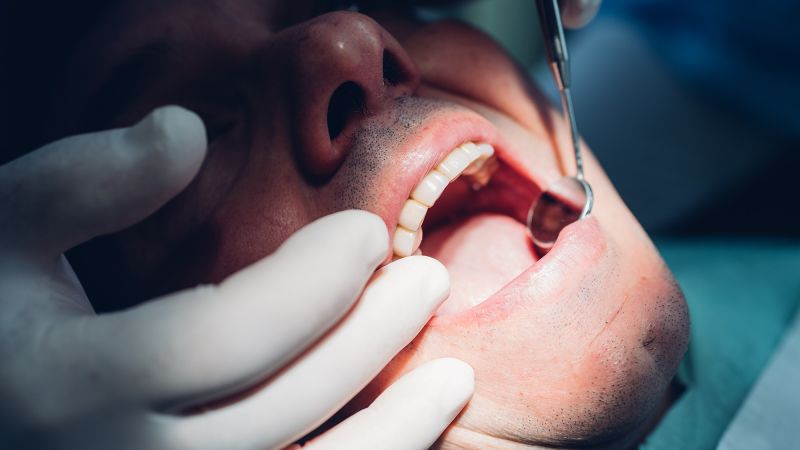
Dentist Ellyce Clonan is witnessing a trend among her patients who arrive for appointments under the influence of marijuana. The effects are particularly evident, from the telltale smell to the red eyes and dry mouth. “If I ask, some patients will tell me, ‘I’m so scared of going to the dentist, I had to come stoned,’” Clonan noted, adding that while the dental profession encourages regular checkups, many are unaware of the significant oral health risks associated with frequent marijuana use, reports BritPanorama.
Research indicates that marijuana consumption correlates with a 55% increased risk of cavities, a 41% heightened risk of tooth loss, and a threefold likelihood of developing mouth cancers. These findings have emerged from a growing body of studies that examine the relationship between marijuana usage and oral health.
While tobacco is widely recognized as a major contributor to lung and oral cancers, recent findings from a study examining California hospital records revealed that individuals diagnosed with cannabis use disorder were over three times more likely to develop lip and tongue cancers within five years. “Our analyses suggest that cannabis exposure itself impacts the risk of oral cancer,” remarked Raphael Cuomo, a biomedical scientist at the University of California, San Diego.
Cuomo attributes some of the risk to tetrahydrocannabinol (THC), the psychoactive component of marijuana, which may suppress immune responses in oral and nasal tissues exposed to smoke. Furthermore, similar to tobacco, marijuana smoke contains various volatile compounds that can be detrimental to sensitive tissues in the mouth and lungs.
Ammonia, known to cause irritation in the respiratory tract, is frequently added to tobacco products to enhance nicotine absorption. Research indicates that ammonia levels in marijuana smoke can be twenty times greater than in tobacco. Moreover, marijuana smoke also contains high concentrations of hydrogen cyanide, a toxic chemical, and aromatic amines, which have been linked to carcinogenic properties.
Despite ongoing investigations, the link between marijuana smoke and oral cancers remains uncertain. However, Clonan warns that inhaling any burning substance is detrimental to lung and oral health. “You’re putting fire directly in your mouth,” she stated. “I’d love to know what edibles as a route of cannabis delivery are doing to the mouth, but we don’t have research on that yet.”
Marijuana and anesthesia don’t mix
In addition to oral health concerns, there are significant implications for patients who use marijuana before dental procedures, particularly regarding their response to anesthesia. Studies indicate that regular marijuana users or those who consume it on the day of surgery often require additional anesthesia and experience heightened postoperative pain and complications. The cardiovascular risk is notable too; marijuana use can double the chance of dying from heart disease, even among young, otherwise healthy individuals.
“Marijuana has been shown to increase blood pressure and heart rate,” Clonan explained. “We use local anesthetics with epinephrine, so there’s always a risk.” Epinephrine, or adrenaline, is included in dental numbing agents to constrict blood vessels, reduce bleeding, and prolong anesthetic effects. In patients with uncontrolled blood pressure or heart disease, dentists may opt for alternative anesthetics.
Clonan highlighted the psychological effects of marijuana, noting, “Cannabis has been shown to increase people’s anxiety. So, if people are panicky in the chair, if their blood pressure is already increased, their heart rates already increased, that’s an additional risk.” She clarified, however, that the risks are less concerning when compared to sedation methods like nitrous oxide, for which cannabis can present additional complications.
Dr. Austin Le, a New York City orthodontist and assistant research scientist at NYU Langone Health, echoed similar concerns regarding the use of anesthesia in patients who are not fully sober or are heavy users. “You’re worried about drug interactions or you’re just worried about the body responding in a very bad way, causing an emergency in the chair,” he noted. Research he co-authored found that young marijuana users, aged 12 to 25, were more likely to suffer from oral lesions and exhibit detrimental dietary habits linked to sugar consumption.
Marijuana and dental hygiene
Beyond acute health risks, marijuana use can foster behaviors that contribute to dental decay and damage. Clonan observed that marijuana users often indulge in sugary snacks, exacerbating the risk of cavities. The lethargy associated with cannabis may also reduce the likelihood of maintaining proper dental hygiene practices such as regular brushing and flossing.
Additionally, the dry mouth frequently experienced by marijuana users further complicates oral health. “When the mouth gets really dry, it limits the buffering capacity of saliva,” Clonan explained. Saliva plays a crucial role in washing away food particles and plaque, preventing cavity formation.
Despite the known risks, many patients remain unaware of the dangers associated with marijuana use before dental appointments. Even dental professionals are struggling to navigate this uncharted territory. Clonan believes that dentists should include questions about marijuana use in their medical questionnaires to better inform their treatment approaches.
“We want you to tell us if you use so you can be safe when you visit us,” she urged. “We also want to advise you to take extra precautions with your teeth — brush two times a day, drink more water, come to the dentist every six months, minimize snacking and limit sugar.” Clonan stresses the importance of approaching such inquiries from a place of care and understanding, emphasizing that there is no judgment attached.