Consuming a combination of two award-winning diets has been shown to slow aging in key brain structures by over two years, according to a new study, reports BritPanorama.
The study highlights the MIND diet, or Mediterranean-DASH Diet Intervention for Neurodegenerative Delay, which incorporates elements from both the acclaimed Mediterranean diet and the heart-healthy DASH diet. This eating plan prioritizes foods believed to mitigate dementia risk, including berries, beans, leafy greens, fish, poultry, whole grains, olive oil, and nuts. It markedly limits saturated fats found in foods like cheese, butter, and fried items.
Research conducted over a span of 12 years suggested that adherence to the MIND diet significantly reduced structural brain aging. “People who adhered more closely to the MIND diet seemed to show slower structural brain aging,” said senior author Changzheng Yuan, a research professor at Zhejiang University School of Medicine in Hangzhou, China. The study found that participants experienced slower loss of grey matter, which is crucial for memory and cognitive function.
Each three-point increase in adherence to the MIND diet correlated with a 20% reduction in gray matter shrinkage, equating to a 2.5-year delay in brain aging. This aligns with previous research linking the Mediterranean diet and the MIND diet to improvements in cognitive health and a decreased likelihood of Alzheimer’s disease, according to Dr. Walter Willett, a leading nutrition researcher.
Another key part of the brain was impacted
The study, published in the Journal of Neurology, Neurosurgery & Psychiatry, analyzed the dietary habits of over 1,600 adults from the Framingham Heart Study, designed to identify cardiovascular disease risk factors. Participants, who began the study in 1999 and had an average age of 60, underwent health evaluations and MRI scans over roughly 12 years.
In addition to less gray matter shrinkage, those adhering closely to the MIND diet experienced slower enlargement of brain ventricles, which typically expand as brain tissue diminishes with age. The study reported an 8% reduction in ventricle development for every three-point increase in adherence to the MIND diet, which corresponds to a one-year decrease in brain aging. This enlargement is often linked to Alzheimer’s disease and cognitive decline.
Notably, the study’s observational nature means it cannot definitively establish cause and effect. Dr. David Katz, a specialist in preventive and lifestyle medicine, cautioned that improvements in brain structure might also stem from pre-existing healthier dietary choices. “In other words, people with healthier brain structure and function over time may have made better dietary choices,” he noted.
Drilling down to individual foods
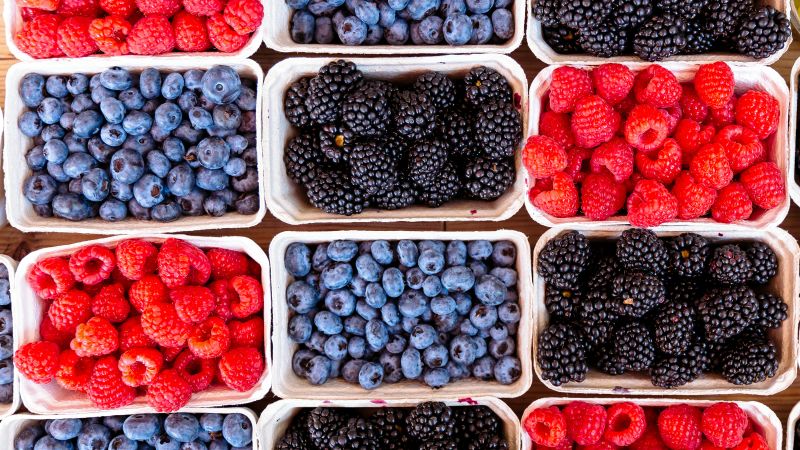
The research identified specific foods with notable impacts on brain health. Berries were highlighted for their role in decreasing ventricle enlargement, while poultry was linked to reductions in both gray matter decline and ventricle enlargement. “Berries are rich in antioxidants and other bioactive compounds, and poultry can provide high-quality protein,” noted Hui Chen, the study’s first author.
Conversely, higher consumption of sweets and fried foods was associated with accelerated brain aging, with increased sweets intake specifically linked to hippocampal decay. Unexpectedly, cheese consumption appeared to offer some brain protection, although Chen stressed that cheese’s limited role in the MIND diet should temper this interpretation. Additionally, what was categorised as “whole grain” in earlier decades might differ from contemporary standards, warranting cautious interpretation of findings.
Ultimately, Chen highlighted that the dietary pattern as a whole is crucial. “What appears to matter most is the overall dietary pattern rather than any single item in isolation,” she remarked. This reinforces the importance of a comprehensive dietary approach in supporting brain health.
The ongoing exploration of dietary impacts on cognitive function underscores the complexity of nutrition and its role in aging gracefully.