Canada faces year-long measles outbreak amid declining vaccination rates
Canada has marked the end of a full year of continuous measles transmission, a development that stands to significantly undermine its long-standing commitments to global health objectives, reports BritPanorama. This situation is aggravated by ongoing outbreaks in the United States, positioning both countries for scrutiny by international health leaders and exposing them to the risk of losing their elimination status.
All regions of the World Health Organization have pledged to eliminate measles by 2030, defined by the absence of local transmission for any period over 12 months. Canada achieved this target in 1998, but recent declines in vaccination rates have led to what is now regarded as a massive and persistent outbreak, threatening both national and regional elimination statuses.
In early November, the Pan American Health Organization will hold its annual meeting to formally assess measles elimination status across the Americas. “A country is no longer considered to be measles-free if the virus returns and transmission is sustained for more than a year,” said a statement from the WHO. While there are no formal repercussions for losing this status, the re-emergence of measles as an endemic disease would have drastic consequences for communities, including preventable deaths among the most vulnerable populations.
Countries that fail to maintain elimination status will be prompted to devise corrective action plans. These may include intensified vaccination campaigns and improved outbreak response measures. In 2016, the Americas became the first region to effectively eliminate measles, but Venezuela and Brazil have since lost that status. PAHO reported that both countries have recently regained verification following extensive vaccination initiatives.
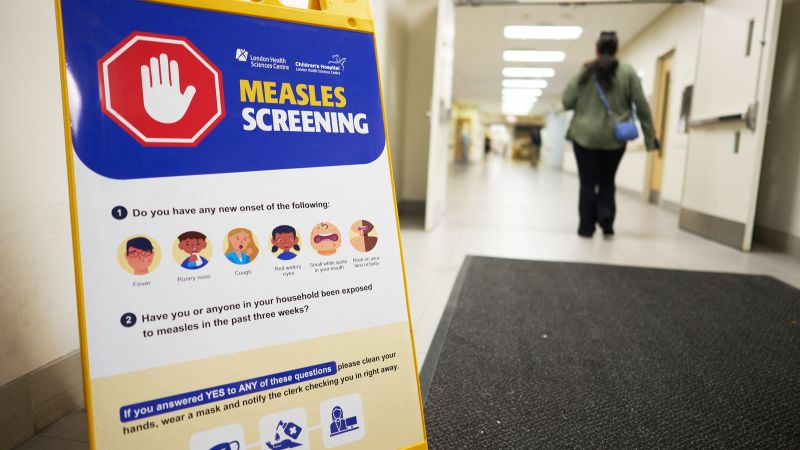
International travel initiated the current outbreak in Canada in October 2024, according to the Public Health Agency of Canada. The outbreak has led to thousands of confirmed cases across ten jurisdictions, resulting in hundreds of hospitalizations and two documented fatalities among infants born prematurely due to infections contracted in utero.
Canada has reported over 5,000 measles cases this year, which exceeds cumulative totals for the previous 25 years. Approximately 90% of cases have occurred among unvaccinated individuals, reinforcing the urgent need for increased immunization coverage.
WHO highlighted that immunization rates are currently insufficient to prevent outbreaks. “The region needs to sustain high coverage, quality surveillance, and rapid response at all times,” the organization stated. Despite general support for vaccinations among Canadian parents, concerns such as the effects of the Covid-19 pandemic, circulating misinformation, and liberal exemption rules have contributed to vulnerabilities in immunization rates.
The potential loss of elimination status signals the outbreak’s severity, according to Dr. Dawn Bowdish of McMaster University. She emphasized the necessity for constant vigilance and unwavering support for public health systems as a buffer against infectious disease threats.
The outbreak appears to be slowing, with the Canadian health agency reporting just 30 new cases in the latest week of available data. However, the risk extends beyond Canada; six other countries, including the US and Mexico, are facing active transmission situations. Upcoming discussions at the PAHO meeting will consider these developments.
The continuing outbreaks highlight the fragility of immunization coverage. The Centers for Disease Control and Prevention in the US considers measles elimination a historic achievement. Still, vaccination rates for the measles-mumps-rubella (MMR) vaccine have been declining over the years, exacerbated by the pandemic.
In South Carolina, there have been at least 22 reported cases tied to a local outbreak, prompting health officials to deploy mobile vaccination units. However, uptake has been disappointing, underscoring the challenges of addressing vaccine hesitancy in specific communities.
The interconnectedness of ongoing outbreaks, particularly among unvaccinated populations, underscores the complex factors fueling vaccine hesitancy, including misinformation and social dynamics. As these outbreaks continue, the imperative for increased vaccination efforts and public health vigilance remains critically clear.