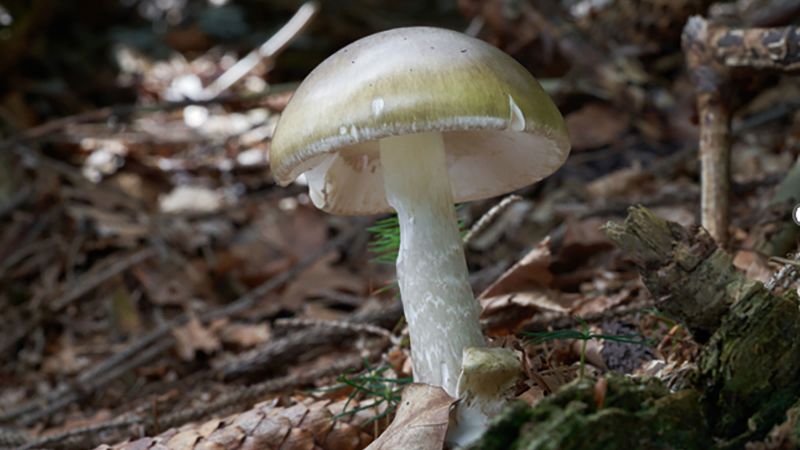
California officials are warning foragers after an outbreak of poisoning linked to wild mushrooms has killed one adult and caused severe liver damage in several patients, including children, reports BritPanorama. The state poison control system has identified 21 cases of amatoxin poisoning, likely caused by death cap mushrooms, according to the health department. These toxic wild mushrooms are often mistaken for edible ones due to their appearance and taste.
“Death cap mushrooms contain potentially deadly toxins that can lead to liver failure,” Erica Pan, director of the California Department of Public Health, stated. “Because the death cap can easily be mistaken for edible safe mushrooms, we advise the public not to forage for wild mushrooms at all during this high-risk season.” So far, one adult has died, and several patients are receiving intensive care, with at least one possibly requiring a liver transplant.
Wet weather has contributed to the proliferation of death cap mushrooms, prompting officials to advise against any wild mushroom foraging to avoid confusion. Residents in central California’s Monterey County fell ill after consuming mushrooms found in a local park, while another cluster of poisonings occurred in the San Francisco Bay Area. State health officials caution that the risk extends beyond these specific regions.
In 2023, over 4,500 cases of exposure to unidentified mushrooms were logged at America’s Poison Centers, with roughly half involving young children, who experts warn may pick and consume mushrooms while playing outside. California’s poison control system typically handles hundreds of wild mushroom poisoning cases annually. The death cap and the “destroying angel” mushrooms share similarities with edible varieties, making identification challenging; color alone is not a reliable indicator of toxicity, and the preparation method—raw or cooked—does not alter the danger posed.
Symptoms of mushroom poisoning can manifest as stomach cramping, nausea, diarrhea, or vomiting within 24 hours of ingestion. However, even if gastrointestinal symptoms improve, health officials caution that patients may still experience severe complications, including liver damage, that can develop later. Guidance for diagnosing or treating mushroom poisoning can be sought through the poison control hotline at 1-800-222-1222.