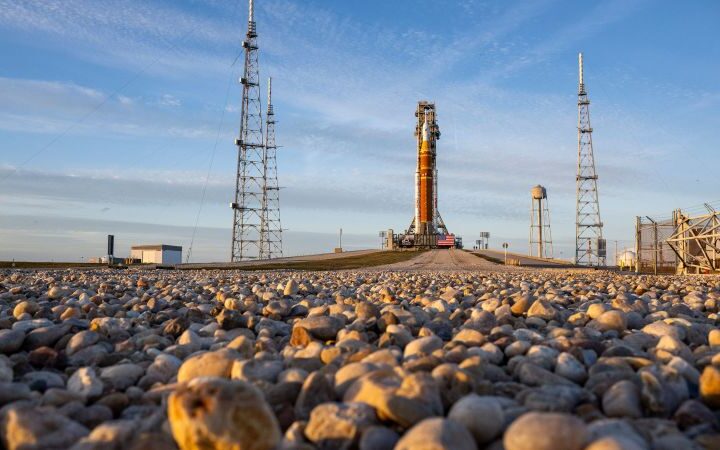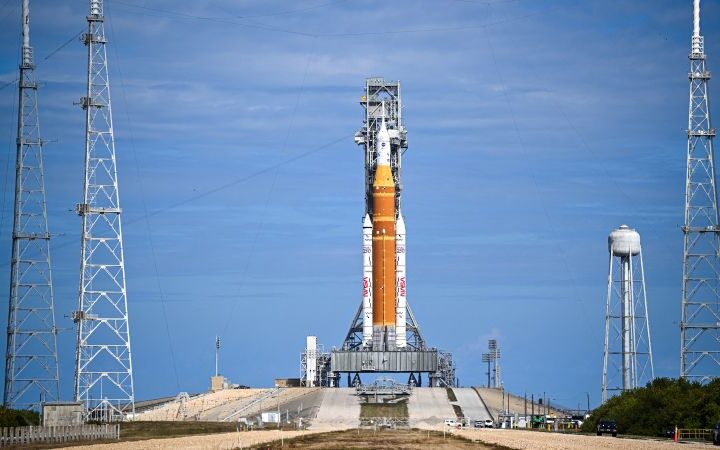
NASA is preparing for the historic launch of Artemis II from the Kennedy Space Center in Florida, which aims to send four astronauts on a journey around the moon, marking the first crewed lunar mission in over half a century. Liftoff is targeted for April 1, 2026, pending successful launch preparations, reports BritPanorama.
The Artemis II mission follows the uncrewed Artemis I flight, which orbited the moon in late 2022. This time, astronauts will embark on a 10-day expedition covering approximately 685,000 miles, further than any humans have traveled from Earth. They will pilot the Orion spacecraft and, while safety protocols are in place, this mission will include challenges untested in human spaceflight.
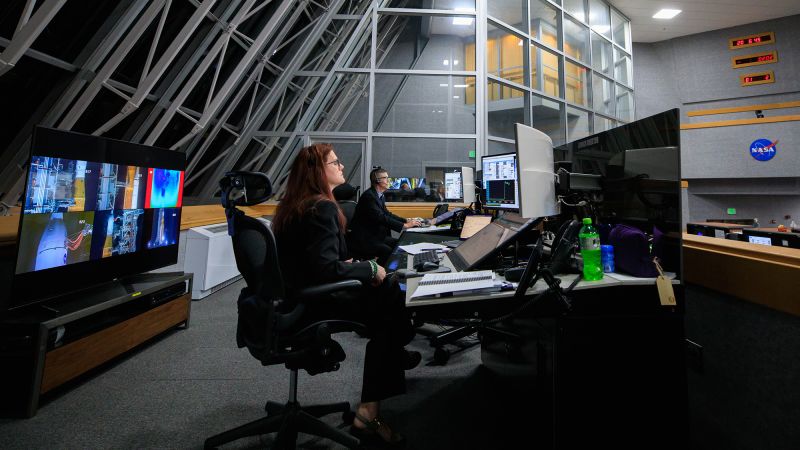
Launch director Charlie Blackwell-Thompson is set to oversee countdown operations. As NASA’s first female launch director, she assumes control of the countdown 49 hours and 15 minutes before liftoff, monitoring numerous criteria that include weather conditions and the health of the spacecraft. Once the rocket lifts off, command will shift to chief flight director Jeff Radigan, who will lead operations from Mission Control in Houston.
“It’s very psychologically challenging. The decisions that you’re making have life-and-death consequences,” said Wayne Hale, a former flight director at NASA. His comments underscore the high stakes involved in this mission scenario.
An intense hush
As preparations unfold at Firing Room 1, the atmosphere becomes palpable with anticipation. Blackwell-Thompson recalled the intense focus during the countdown, stating, “The room is incredibly quiet in the firing room because the team is focused on their data… ensuring that we are ready to go fly.” Her leadership reflects a pivotal moment in NASA history, poised to usher in a new era of human space exploration.
The team must implement stringent launch commit criteria, monitoring factors such as wind and temperature. Big milestones include the translunar injection burn, a critical maneuver for the spacecraft to head towards the moon. This occurs roughly 24 hours into the mission and will require close coordination and confidence in the spacecraft’s performance.
Pivotal moments
During the mission, communication challenges will arise when Orion passes behind the moon—periods of lost contact with ground control may lead to heightened stress for mission operators. Henfling emphasized the importance of preparing the crew for these gaps in communication. “Whenever you don’t have communication with the spacecraft, you don’t have insight as to what’s going on,” he noted.
The planned reentry into Earth’s atmosphere will see the Orion capsule accelerating at a staggering 25,000 miles per hour. The descent will require meticulous coordination and timing; failure at this juncture could jeopardize the entire mission.
Safety concerns regarding the heat shield, which protects the spacecraft from extreme temperatures, have been flagged by experts. This critical component was similar to one used in Artemis I, which encountered unexpected damage upon reentry. While confidence in mission readiness is high, ongoing assessments will be crucial.
Despite the challenges ahead, those involved are enthused about the mission’s potential. Henfling conveyed optimism about the engineering solutions in place, reinforcing confidence in the team’s ability to navigate the complexities of the Artemis II mission.
As the countdown continues, the world watches closely, eager to witness humanity’s renewed steps toward deep space exploration. The Artemis II mission promises to be a cornerstone in understanding our celestial neighborhood and beyond.