Nasa gears up for Artemis II lunar mission
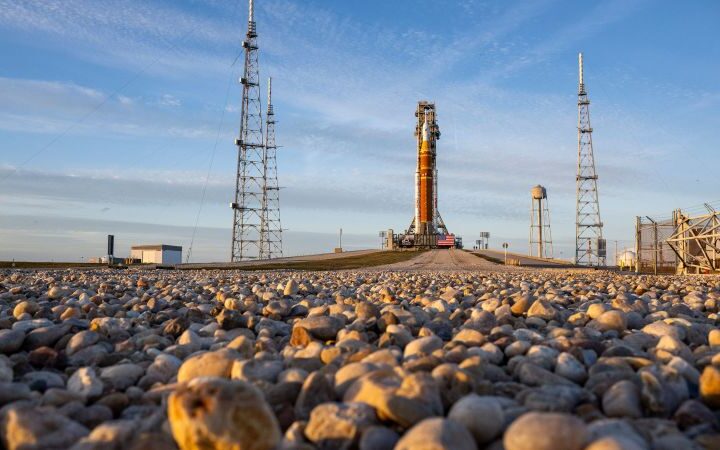
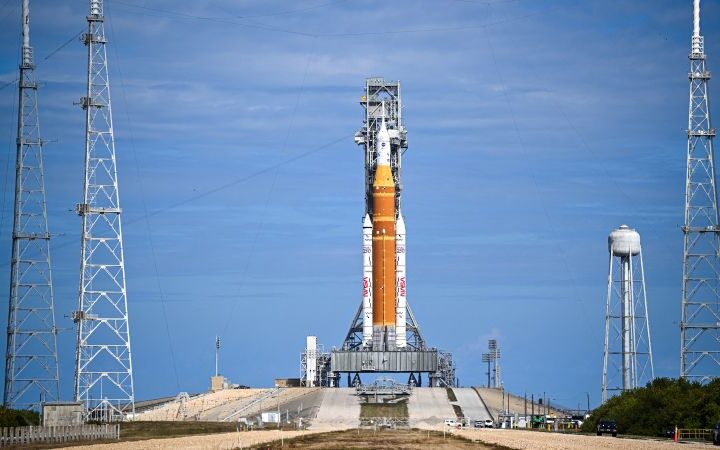
The rollout of NASA’s Space Launch System (SLS) rocket and Orion capsule, set for Saturday at Kennedy Space Center in Florida, marks a significant step towards the Artemis II mission. This mission will carry four astronauts to the vicinity of the moon—Reid Wiseman, Victor Glover, Christina Koch, and Jeremy Hansen from the Canadian Space Agency—signifying the first crewed lunar mission since Apollo 17 in 1972, reports BritPanorama.
Scheduled for launch as early as February 6, the 10-day Artemis II mission aims to set a new record for the farthest distance humans have traveled from Earth, currently held by Apollo 13. The mission holds historical significance, as it will be the first to feature a person of colour, a woman, and a Canadian astronaut on a trip beyond low-Earth orbit.
Despite its ambitious goals, Artemis II will not land on the lunar surface. “The short answer is because it doesn’t have the capability. This is not a lunar lander,” noted Patty Casas Horn, deputy lead for Mission Analysis and Integrated Assessments at NASA. The mission’s focus is on testing crew capabilities and spacecraft systems rather than landing.
The preceding Artemis I mission, which launched uncrewed in November 2022, orbited the moon, paving the way for this first crewed venture. “Now, with our four humans on board, we’ll be testing out a lot of new capabilities that were not there for Artemis I,” said Horn. This includes ensuring vehicle stability, managing moisture levels, and providing astronaut comfort with solutions like exercise devices onboard.
Nasa’s priorities are clear: crew safety comes first, followed by vehicle safety, and then mission objectives such as navigation and propulsion tests. These priorities contribute to the mission’s rationale for not landing on the moon at this stage, allowing for a focus on critical onboard assessments.
Similarities to Apollo 8
The Artemis II mission profile shares similarities with Apollo 8, which launched in 1968, also without landing on the lunar surface. Apollo 8 showcased the Saturn V rocket and allowed astronauts to photograph the far side of the moon. The two missions, while parallel, have key differences; Artemis II represents a free-return trajectory that ensures the crew’s safe return to Earth even if unforeseen challenges arise.
The Artemis program’s first planned lunar lander, called the Starship HLS, is under development by SpaceX. Upcoming missions will include the long-awaited crewed lunar landing expected in 2028 through Artemis III, which illustrates NASA’s methodical, safety-focused approach to space exploration.
The Artemis II mission has the potential to outpace the distance record set by Apollo 13, which stands at 248,655 miles (400,171 kilometers). However, achieving this milestone will depend on the exact launch timing, as trajectory optimization plays a significant role in mission planning.
In focusing solely on the moon’s perimeter and avoiding lunar orbit, the crew is strategically positioned to concentrate on other mission objectives, easing the complexities of spacecraft control. The mission’s original scope may have included lunar landing had the lander been ready, but current assessments prioritise safety while still offering groundbreaking opportunities in human spaceflight.
As Artemis II aligns with historic endeavours of lunar exploration, it claims its place in NASA’s legacy while paving the way for future missions beyond the moon.
With each launch, NASA continues to push the boundaries of human space exploration, reinforcing commitment to program safety and technological advancement.