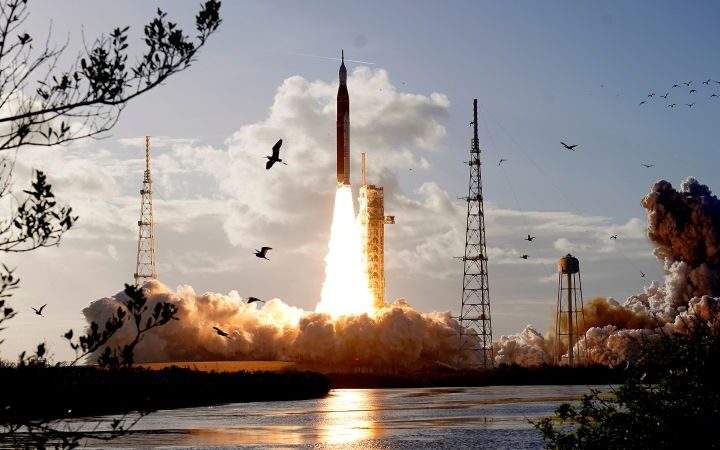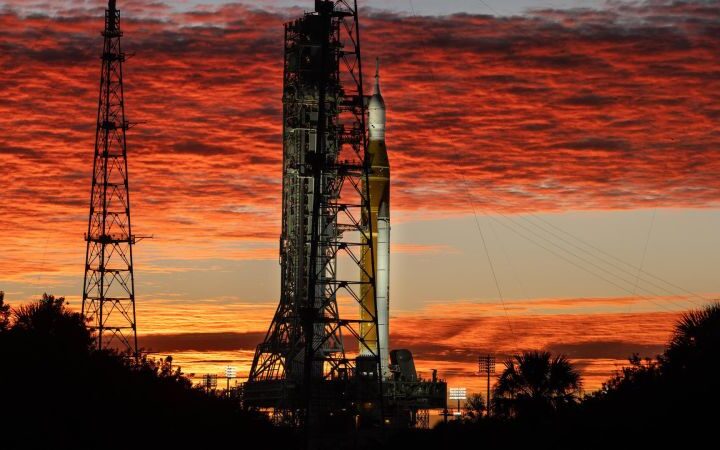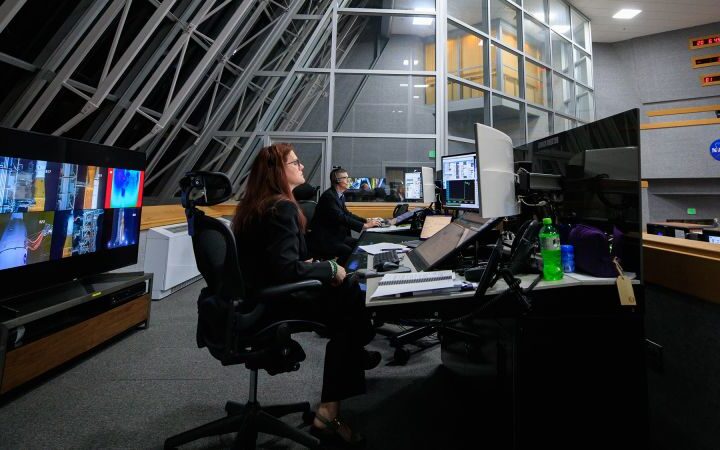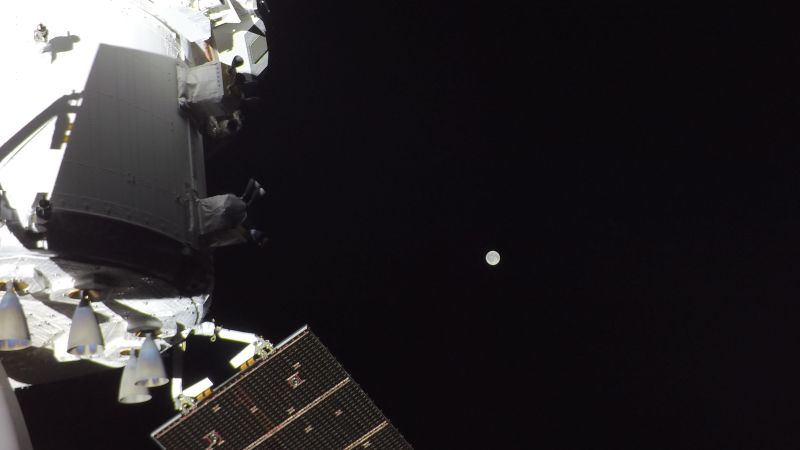
The highly anticipated lunar flyby of the Artemis II mission will take four astronauts on a pioneering survey of the moon, including the rarely glimpsed lunar far side, which always faces away from Earth, reports BritPanorama.
The crew, which includes NASA’s Reid Wiseman, Victor Glover, Christina Koch, and Canadian Space Agency astronaut Jeremy Hansen, will witness features on the lunar surface that have never been observed by human eyes before.
As they approach the moon, the astronauts have experienced what mission control in Houston described as “moon joy.” They have recently utilized a camera equipped with a 400-millimeter lens to capture specific lunar craters and features from a distance of over 4,000 miles, including the vast Orientale Basin, a 600-mile-wide impact feature that signifies a crucial transitional area between the near and far sides of the moon.
Despite the distance of 4,070 miles during the closest approach, significant observations are anticipated. Judd Frieling, Artemis II ascent flight director, emphasized the importance of the human eye, stating, “Even from as far away as 4,000 miles, there are still things that the human eye can pick up with granularity that are important to the science community.”
Koch noted, “The moon we are looking at is not the moon you see from Earth whatsoever,” highlighting the unique perspective of the mission. Previous Apollo missions’ closer flybys did not allow astronauts to see the entire lunar disk or to examine features on the far side as thoroughly as the Artemis II mission will.
Apollo vs. Artemis
The nine Apollo missions that traveled beyond Earth’s orbit were constrained by sunlight conditions affecting which lunar regions were visible during their flights. Dr. Kelsey Young, lead for NASA’s Science Mission Directorate, explained at a recent news conference that Apollo missions prioritized launch windows aligning with illuminated regions, resulting in limited visibility of the far side.
The Artemis II mission’s Orion capsule, named Integrity by its crew, will operate at an estimated distance of 4,070 miles during its closest approach. This surpasses Apollo command modules that orbited at approximately 70 miles above the lunar surface. The perspective offered by Artemis II is expected to facilitate observations of lunar poles, which Apollo astronauts missed.
A holistic view of the moon could yield insights about its geological history, particularly in how impact events have exposed its interior and scattered lunar rocks. Young stated, “That period of our planet’s history that we can no longer get here, even if we go to the deepest parts of the ocean, is there on the moon.”
Additionally, the variations in illumination during the flyby are expected to provide unique insights into the moon’s surface. The Artemis II crew will primarily observe for approximately five hours during the flyby. Their training included field simulations, swift educational sessions on lunar features, and practical experiences in analogous locations such as Iceland.
During their observations, the astronauts will utilize a range of Nikon cameras with different zoom capabilities to document lunar features and provide real-time descriptions to scientists at Johnson Space Center. Young remarked, “Just having this crew describe visuals of the moon… will give you goosebumps.”
The Artemis II mission represents a significant step in deep space exploration, reinforcing humanity’s continued curiosity and drive to understand the moon and its mysteries.