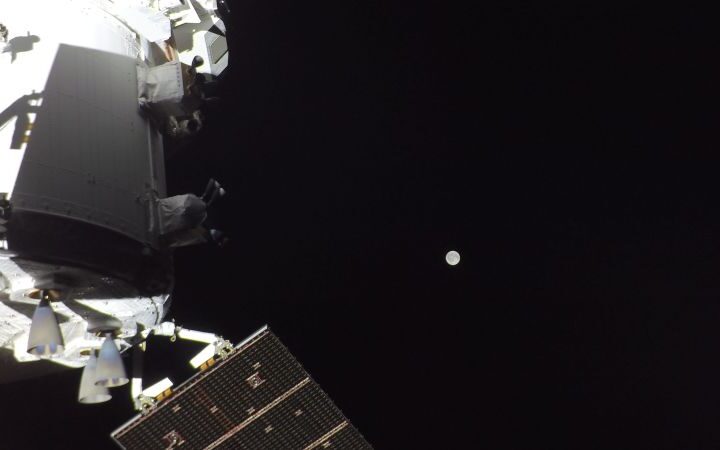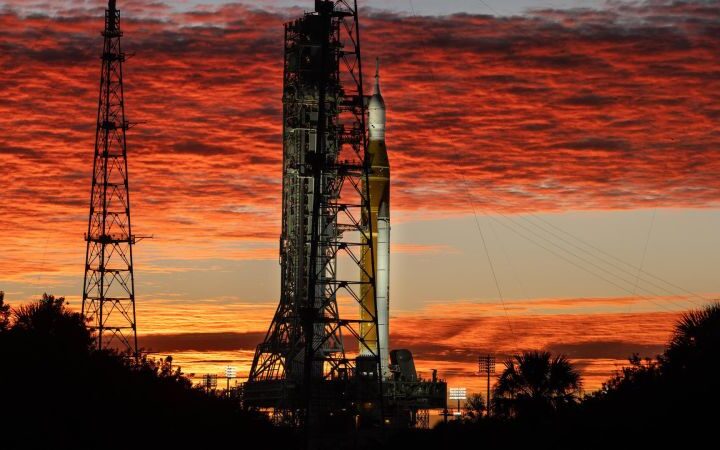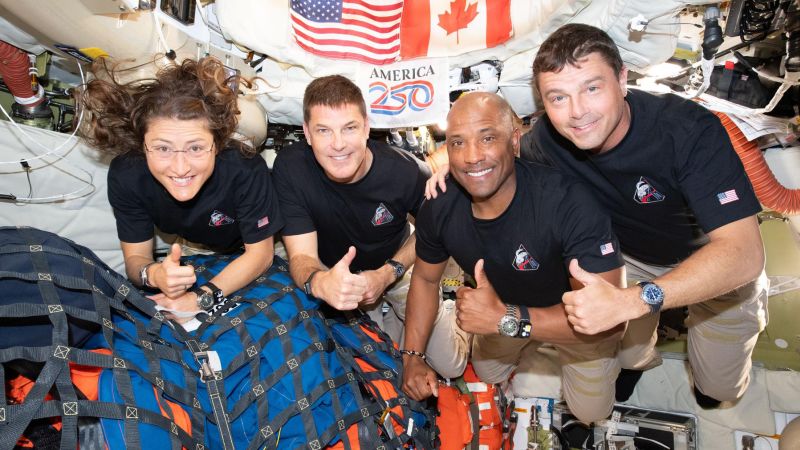
The Artemis II mission is marking a significant milestone in human space exploration as astronauts embark on their journey towards the Moon with innovative scientific technology in tow. Four USB-size “avatars,” created from the bone marrow of the astronauts and termed organ chips, have been stowed on board, allowing scientists to study the effects of space on human health, reports BritPanorama.
These organ chips, referred to as the AVATAR (A Virtual Astronaut Tissue Analog Response) study, aim to simulate the physiological changes astronauts experience in deep space. The initiative aims to unlock key insights into how microgravity and increased radiation levels affect astronauts’ organs, a subject of increasing importance as human expeditions to Mars and extended lunar stays are planned.
NASA’s Biological and Physical Sciences Division Director, Lisa Carnell, emphasized that the experiment provides unprecedented depth compared to traditional post-flight medical assessments, allowing for real-time monitoring of individual astronaut responses to environmental changes during the mission. “We’ve never done this before,” she noted.
Researchers are focusing on bone marrow for this project, anticipating critical data on how the crew responds immunologically to the unique conditions of deep space. This information will be vital for developing tailored medical kits that could enhance astronaut health and resilience during prolonged missions. “Somebody may be radio resistant and will learn something new, or maybe somebody is more extremely susceptible to radiation,” Carnell explained prior to the mission. “We can send the right therapeutics with them to make sure they stay healthy.”
The current exploration not only measures conventional health metrics but also gathers data that could inform future strategies for long-duration space travel. As the mission progresses, the astronauts will conduct activities on board the Orion spacecraft while maintaining the integrity of their health data collection protocols, including monitoring stress levels and evaluating team dynamics in the confined environment.
The overarching aim is to ensure that astronauts are well-prepared for extended missions in hostile environments, which hearkens back to the lessons learned from the Apollo missions. “We like to say, ‘Know before we go,’” Carnell remarked, underscoring the imperative of understanding astronaut health before they venture into the cosmos.
As technical advancements continue to shape human spaceflight, the Artemis II mission holds promise not only for the participants but for the future of exploring beyond Earth’s orbit. The mission encapsulates the dual objectives of advancing human knowledge while safeguarding astronaut wellbeing, laying the groundwork for humanity’s sustained presence on the Moon and eventual journeys to Mars.
Such a pioneering effort reflects an evolving approach to space exploration, where real-time biomedical monitoring is integral to mission success. With insights from this endeavour, astronauts could face future missions with greater assurance of their safety and health.