The Artemis II mission crossed a crucial and historic threshold when the Orion spacecraft ignited its engine, propelling four astronauts toward the moon, setting them on a days-long slingshot trip, resulting in a journey deeper into space than any human has traveled before, reports BritPanorama.
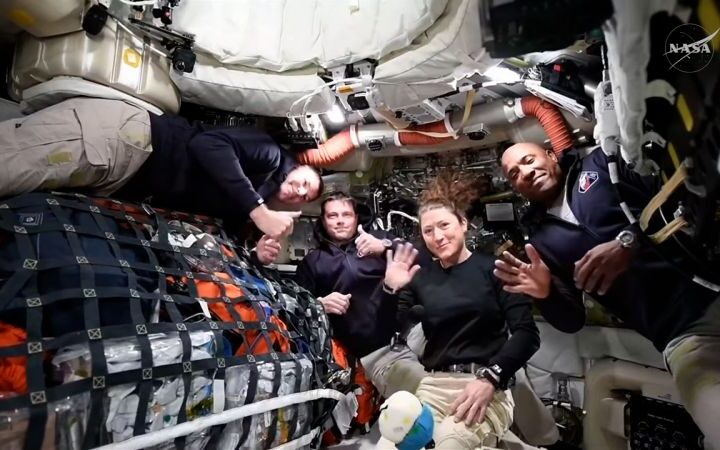
The engine burn lasted 5 minutes and 50 seconds while Orion was 115 miles (185 kilometers) above Earth, according to NASA. This marks the first time humans have made a move to leave Earth orbit since 1972’s Apollo 17 mission. With NASA astronauts Reid Wiseman, Victor Glover, Christina Koch, and Canadian Space Agency astronaut Jeremy Hansen aboard, this journey also represents the first time a Black astronaut, a woman astronaut, and a non-American astronaut have ventured this far.
“Humanity has once again shown what we are capable of, and it’s your hopes for the future that carry us now on this journey around the moon,” Hansen said after the engine burn.
Orion is now on a “free return trajectory,” meaning that, based on orbital dynamics and the moon’s gravity, even if it never fires its engine again, the capsule will still swing around the moon and return to Earth.
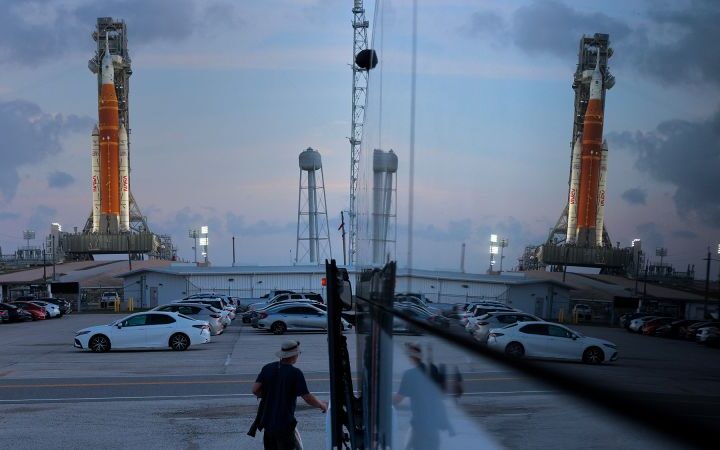
The mission, which launched at 6:35 p.m. ET Wednesday, marks the inaugural crewed flight of NASA’s Artemis program—intended to return humans to the moon and eventually establish a lunar settlement. Following the launch atop a Space Launch System rocket, the astronauts began testing their spacecraft, including a 70-minute manual test drive known as a “proximity operations demonstration.”
Over the next week, the crew will live, sleep, and conduct scientific experiments inside the campervan-sized Orion capsule while facing multiple risks associated with deep-space missions.
Live views of the crew
While much of the astronauts’ lives will be kept private, NASA plans to broadcast from inside the capsule nearly every day of the mission. The agency will sometimes invite the public to tune in for “downlink events,” where the crew interacts with journalists and others on the ground. The first such event occurred on Thursday, allowing reporters to prompt the crew for details and reflections.
Wiseman, the mission’s commander, described a moment that left the crew speechless. “Mission Control Houston reoriented our spacecraft as the sun was setting behind the Earth,” he said, “and I don’t know what we all expected to see at that moment — but you could see the entire globe, from pole to pole.”
“You could see Africa, Europe, and if you looked really close, you could see the northern lights. It was the most spectacular moment, and it paused all four of us in our tracks.”
A key comms test
On Day 3 of the mission, a test of communications equipment via the Deep Space Network (DSN) is planned. This network supports space missions and provides radar and radio observations, consisting of large antennas around the globe that can track Orion’s position in deep space.
Each DSN antenna spans about 230 feet (70 meters) and provides critical tracking capabilities to help determine a spacecraft’s precise location and velocity. Nonetheless, there will be periods during the mission where the Artemis II crew loses contact with mission control due to the challenges of deep-space travel, particularly during their closest approach to the moon’s surface.
Entering the ‘sphere of influence’
While en route to the moon, Orion will conduct “trajectory correction” maneuvers to keep on course. By Day 5 of the mission, the spacecraft will cross into the lunar sphere of influence, where the moon’s gravitational pull becomes stronger than that of Earth.
A record-breaking lunar flyby
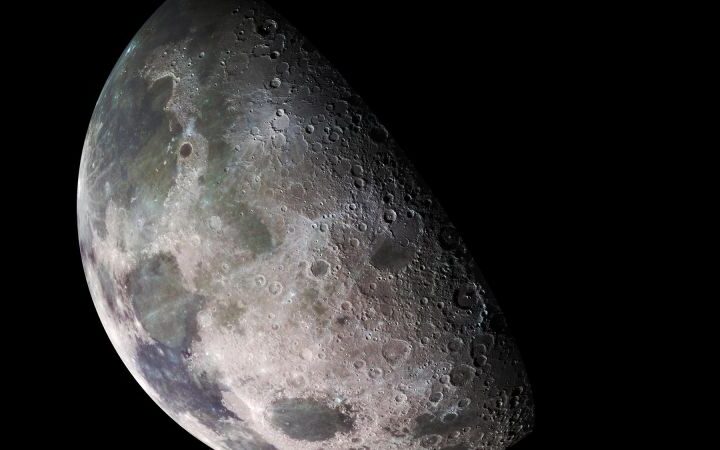
On Day 6, the mission will achieve a historic milestone with a lunar flyby that provides unprecedented views of the moon’s far side and allows the crew to surpass the Apollo 13 record for the farthest humans have traveled in space. If all proceeds as planned, Artemis II will exceed this record by 3,366 miles (about 5,400 kilometers), reaching approximately 252,021 miles (about 405,000 kilometers) from Earth.
During the closest approach to the moon’s surface, the astronauts will take photographs and relay their observations back to mission control. The features they study may help identify future landing sites and provide insights into the moon’s geological history.
Chatting with the ISS
An exciting segment of the mission includes a planned call between the Artemis II crew and the seven astronauts aboard the International Space Station on the seventh day. NASA astronaut Jessica Meir expressed enthusiasm about this connection, especially given her past collaboration with fellow astronauts Koch and Glover.
A flaming-hot reentry
After completing their groundbreaking journey, the crew will face the challenges of reentry into Earth’s atmosphere, when the Orion capsule will encounter temperatures exceeding 5,000 degrees Fahrenheit (2,760 degrees Celsius). This phase is one of the riskiest aspects of space missions, and for Artemis II, the stakes are particularly high.
There is a known issue with a part of the Orion capsule’s heat shield, which underwent scrutiny during a previous uncrewed test flight. NASA officials have acknowledged the heat shield’s imperfections and have adjusted the reentry path to manage thermal effects better, avoiding a maneuver used in prior missions.
Gathering data on how the heat shield behaves during this reentry is one of the key goals of the Artemis II mission. As the mission continues to unfold, the focus remains on overcoming the considerable challenges of deep space exploration, paving the way for future endeavors.