Excavations at a newly uncovered archaeological site in Pompeii have provided vital insights into ancient Roman concrete construction methods, particularly the process of creating this enduring building material. Researchers have discovered evidence of a “hot-mixing” method previously unconfirmed, shedding light on how Romans crafted a self-healing concrete that has withstood the test of time, reports BritPanorama.
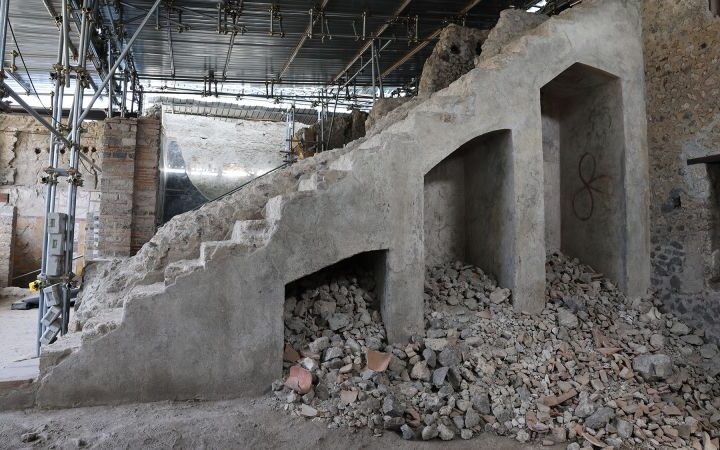
During the catastrophic eruption of Mount Vesuvius in AD 79, the city was covered in up to 6 meters of volcanic ash while construction workers were engaged in renovations. Recent excavations, which resumed in 2023 after being halted since the 1880s, revealed walls in various stages of completion along with tools and raw materials left behind by the builders.
Admir Masic, an associate professor at MIT and lead author of the study, noted the site’s remarkable preservation, calling it a “time capsule.” The findings, published in the journal Nature Communications on December 9, present new evidence of the mixing processes employed by the Romans, allowing for more definitive conclusions about their building techniques than previously possible.
Uncovering an active construction site
Approximately one-third of Pompeii remains unexcavated, offering continuing opportunities for discovery. Masic mentioned that the recently examined site showcases typical archaeological practices in Pompeii, where careful excavation is paramount to maintaining the preservation of findings. “Once excavated, you actually break that time capsule and things start to degrade,” he explained.
Evidence analyzed from the site included mixed dry materials intended for concrete, partially constructed walls, and others that were complete, all pointing to advanced construction techniques. Masic had previously analyzed a 2,000-year-old city wall and identified lime clasts that contributed to the concrete’s self-healing properties, a key element in Roman durability.
Differing recipes
Masic’s research team found that lime was integrated into the concrete through a hot-mixing approach, combining dry volcanic ash and lime fragments. However, discrepancies arose comparing this method with descriptions in Vitruvius’ ancient text, De architectura, which advocated for wet mixing. The findings at the site align with the hot-mixing method, suggesting a complex variety of techniques in Roman concrete construction.
Commenting on the implications of these discoveries, historian John Senseney articulated that the methods used in the newly excavated site may not align with those espoused by Vitruvius. He emphasized the significance of acknowledging the contributions of ordinary workers, historically overlooked in favor of elite narratives. Such insights enhance appreciation for the remarkable skills of those who built enduring structures like the Colosseum and Pantheon.
Masic hopes these revelations will encourage further examination of Vitruvius’ writings in relation to contemporary interpretations of Roman architecture and inspire modern construction approaches as well.
The ongoing studies at Pompeii not only illuminate ancient engineering techniques but also serve as a reminder of the exceptional craftsmanship that has preserved these structures for millennia, prompting reflection on the longevity of our own modern constructions.