Recent observations suggest that persistent hamstring tightness affects not just athletes but also desk workers and everyday exercisers. Many individuals struggle to alleviate this discomfort through stretching alone, often leaving it unresolved, reports BritPanorama.
This phenomenon may be surprising to some, as “tight” hamstrings are frequently a response to instability elsewhere in the body, particularly in the hip region. Rather than a mere lack of flexibility, the cause of tension often traces back to strained hip flexors and insufficient glute strength, creating an imbalance that destabilizes the pelvis.
In addressing these issues, it becomes clear that until the underlying causes of tightness are identified, no amount of stretching will provide lasting relief. A structured approach focusing on strengthening weak muscles and improving pelvic stability can alleviate hamstring tension effectively.
Through experience with professional athletes, I have implemented specific exercises aimed at correcting these imbalances. These exercises not only help with hamstring health but can also be beneficial for anyone experiencing similar tightness.
Why your hamstrings feel short and tight when they’re not
Your hamstrings, located at the back of your thighs, serve to connect your pelvis to your knees and facilitate movement. Chronic tension in this muscle group can occur due to overextension, often a result of tight hip flexors. When these muscles are strained, your hamstrings may be forced into a lengthened position, leading to discomfort.
The hip flexors, found at the front of your hips, play a significant role by connecting your thighs to your pelvis. Prolonged periods of sitting or activities like running can cause these muscles to shorten, further complicating the situation.
Tight hip flexors tend to pull the pelvis forward, causing the hamstrings to work harder to maintain stability, even while standing still. This connection illustrates how muscle alignment directly impacts tension across the body.
How weak glutes increase hamstring tension
In addition to hamstrings and hip flexors, strong glutes are essential for achieving pelvic stability. These muscles engage in movements crucial for everyday functions like walking or climbing stairs. However, modern lifestyles often underutilize the glutes, heightening reliance on the hamstrings and lower back to compensate, which ultimately increases muscle tension.
The sensation of tension is thus symptomatic rather than the main issue. Recognizing this allows for more targeted interventions to restore balance within muscle groups.
Start with the breath to alleviate tension
Muscle tension often results from the body’s instability, which signals protective mechanisms to tighten around vulnerable areas. Thus, beginning any relief strategy with focused, controlled breathing is essential. Through diaphragmatic breathing, you can align your rib cage and pelvis to stabilize the core and signal to your nervous system that it is safe to release tension.
Focusing on breath-driven stability serves as the foundation for subsequent exercises designed to promote hamstring health.
Do these exercises for healthy hamstrings
Before initiating any new workout programme, consulting with a healthcare professional is advisable. Should pain occur, cease exercising immediately.
Breathing bridge with hip lift
Begin on your back with knees bent and feet positioned hip-distance apart on the floor. Hold a foam block or towel between your knees. Inhale deeply, feeling your rib cage expand. Exhale, engaging your core as you lift your hips slightly, avoiding excessive arching of the back. Return to the floor and repeat for three to five sets of five repetitions.
Why it works: This method combines controlled breathing with gentle movements to build strength and balance, facilitating greater muscular alignment and reducing protective tension.
Three-way hip flexor release
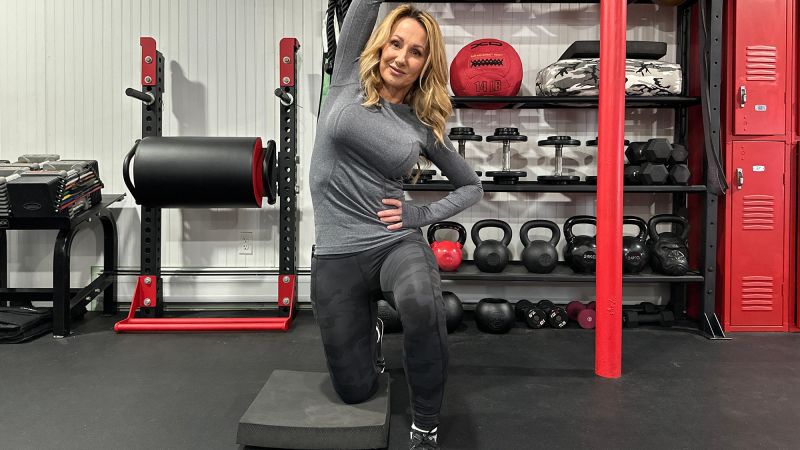
This exercise consists of three positions performed on each side. Begin in a kneeling lunge; ensure your left leg is forward while your right knee rests on a supportive surface. Maintain an upright torso, using your hands on your hips for balance. Exhale, tucking your pelvis while raising your right arm overhead and side bending to deepen the stretch. Hold for three breaths.
Subsequently, shift to a wider stance, rotating your right hip externally as you maintain the pelvic tuck. Repeat the stretch and hold for another three breaths. Finally, rotate your right hip internally, deepening the bend to hold for the same duration.
Why it works: This sequence effectively mitigates pull from tight hip flexors, allowing the pelvis to regain a neutral position, which consequently relieves stress on the hamstrings.
Single-leg deadlift
Stand with weight in your right leg, holding a dumbbell or kettlebell in your left hand. Hinge forward from your hips while extending your left leg behind you, maintaining a neutral spine. Stop upon feeling a stretch in your hamstring, then engage your glutes to return upright. Aim for two to three sets of 8 to 12 repetitions per side.
Why it works: This controlled exercise builds glute and hamstring strength through a full range of motion, creating a supported environment for muscle lengthening and reducing protective tension.
For optimal results, practice these exercises several times weekly. Those experiencing persistent hamstring tightness should shift focus from endless stretching towards building a stable foundation for muscle function. This comprehensive approach can significantly enhance mobility and vitality.