During a partner workout at her local gym in Buffalo, New York, Kristina Lazzaro ruptured her Achilles tendon after an explosive sprint. The 35-year-old heard a popping sound and collapsed, subsequently learning the severity of her injury. Lazzaro now faces a recovery period that could last up to a year, as she continues her physical therapy, reports BritPanorama.
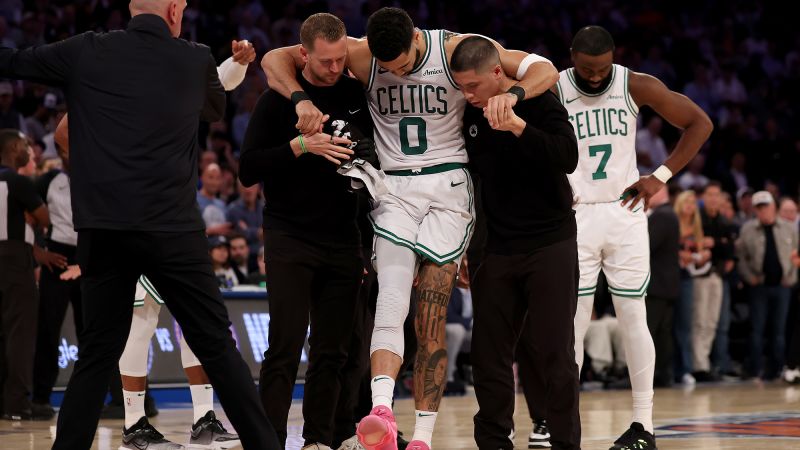
This injury has been increasingly prevalent among both fitness enthusiasts and professional athletes. For instance, actor Sterling K. Brown attended the Emmy Awards on a knee scooter due to a similar injury, while NBA playoffs saw significant casualties with players like Tyrese Haliburton and Jayson Tatum sidelined.
Data indicate that while Achilles ruptures are generally rare—about two cases per 100,000 emergency department visits from 2001 to 2020—experts have observed a notable uptick in cases in recent years, particularly among individuals aged 40 and older. Podiatrist Dr. Priya Parthasarathy has highlighted that the trend coincides with older individuals engaging in more demanding workouts without proper preparation.
Dr. Parthasarathy pointed out that explosive movements, typically those involving sudden changes in direction, are particularly risky for the Achilles tendon. This concern is underscored by recent high-profile injuries across various sports, including the NBA and NFL. Some researchers suggest that certain antibiotics and age-related degeneration can contribute to the heightened risk of ruptures in the Achilles tendon.
The tendon that’s the stuff of myths
The Achilles tendon, named after the mythological Greek hero, connects the calf muscles to the heel. It is critical for movements such as walking, running, and jumping. Biomechanically, it can support four times a person’s body weight but may weaken over time, increasing the risk of injury. Factors such as pre-existing conditions, poor conditioning, and abrupt exercise regimens have been indicated as significant contributors to the prevalence of Achilles tendon ruptures.
Individuals in the high-risk age group, particularly men aged 35 to 50, are advised to be cautious, as there are seemingly innocuous actions that can lead to serious injuries. This includes simple motions or movements that might seem harmless but place undue stress on the tendon.
How to minimize risk
Despite the absence of foolproof preventive measures, experts recommend strategies to minimize the risk of rupture. These include proper stretching, gradual intensity increases in workouts, and strengthening exercises for the muscles surrounding the Achilles tendon. Investing in good footwear is also crucial.
Additionally, it’s essential for individuals to acknowledge their body’s cues and allow adequate recovery time. Parthasarathy emphasizes that any practice aimed at reducing exertion during activities is beneficial in lowering the likelihood of injury.
The dreaded step back
Medical professionals have identified the step back movement as a primary trigger for Achilles tears. The demanding nature of this motion, particularly during sports, has led to a number of high-profile injuries this year alone. For instance, Lazzaro’s injury occurred during a routine gym exercise where a straightforward pivot resulted in her collapse.
Other athletes, like Kevin Mullins, have experienced similar ruptures in seemingly lighthearted contexts, highlighting that even minimal exertion can sometimes provoke severe injuries. The repercussions of rupturing the Achilles are substantial, often resulting in lengthy rehabilitation processes.
It’s a long road to recovery
Once diagnosed, treatment options for a ruptured Achilles include both surgical and nonsurgical routes, with the choice typically depending on the severity of the injury. Surgery is commonly recommended for those seeking to return to competitive sports, while nonsurgical methods may also yield positive outcomes—though they often entail longer recovery periods.
Adhering to a tailored rehabilitation program is critical for recovery. While traditional protocols emphasize immobilization followed by gradual reintroduction to activity, individualized approaches may yield better results by responding to each patient’s specific recovery needs. This adaptable strategy can support a return to normal function while minimizing the risk of rerupture.
Recovery from an Achilles rupture is complex and varies widely among individuals, necessitating careful monitoring and tailored physical therapy. The journey back to full activity remains an ongoing challenge, defined by its unique hurdles and the importance of perseverance through rehabilitation.