Discovery of 1,400-year-old Zapotec tomb in Mexico
Archaeologists have uncovered a 1,400-year-old Zapotec tomb in San Pablo Huitzo, Oaxaca, featuring intricate carvings and hailed as “the most significant archaeological discovery of the last decade,” reports BritPanorama.
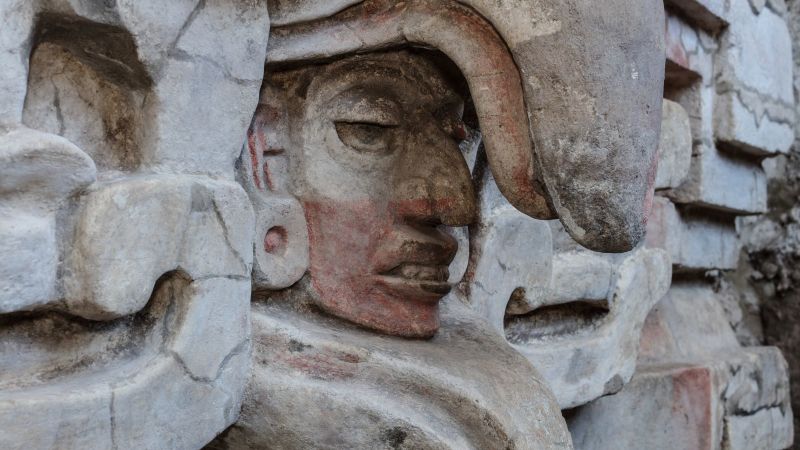
The tomb, dating back to around the year 600, was revealed by Mexico’s National Institute of Anthropology and History (INAH). Significant details within the tomb include a sculpture of an owl positioned above the entrance to the burial chamber, a symbolic representation for the Zapotec people, where owls signify both night and death.
Inside the tomb, the owl sculpture contains the carving of a man’s head within its beak, potentially representing the individual interred there. The site further features colourful murals adorned with symbols linked to power and death, with the threshold of the chamber displaying carvings of two human figures holding artifacts, possibly guardians of the tomb.
The burial chamber includes an “extraordinary” mural in ochre, white, green, red, and blue, depicting a procession of individuals carrying bags of copal, a tree resin used ceremonially. Such discoveries provide a glimpse into Zapotec culture, including their social structures and funerary practices.
President Claudia Sheinbaum remarked on the discovery’s significance during her press briefing last Friday, emphasizing its exceptional preservation and the insights it offers into Zapotec civilization. Culture Secretary Claudia Curiel de Icaza noted its role in enhancing our understanding of Zapotec social organization and belief systems, preserved through both architecture and murals.
A multidisciplinary team from INAH is now tasked with safeguarding the site and conducting further research, focusing on the preservation of the murals which face risks from environmental conditions and biological factors.
The ongoing efforts highlight the importance of archaeological preservation in understanding historical context and the legacy of ancient civilizations.