By the start of 2022, Russia’s leadership had accumulated substantial experience in circumventing Western sanctions imposed after 2014. Those measures were widely perceived in Moscow as largely symbolic, and the Kremlin had already absorbed practical know-how from partners such as Iran and North Korea on how to bypass international restrictions. This background shaped Russia’s initial confidence that economic pressure would remain manageable even after the launch of a full-scale war.
The sweeping sanctions introduced by Western states following Russia’s invasion of Ukraine in February 2022 therefore came as an unpleasant surprise to the Kremlin. Their scale and initial effectiveness were far greater than anticipated. Over time, however, Russia adapted once again, exploiting a critical weakness in the sanctions regime: while the European Union, the United Kingdom and the United States continued to introduce new packages, enforcement and monitoring often lagged behind declared policy.
From nuclear blackmail to diminished deterrence
For years, Moscow relied heavily on implicit nuclear blackmail, cultivating the belief that Washington would never move towards coercive enforcement of sanctions for fear of escalation. That assumption largely held during the presidency of Joe Biden. The return of Donald Trump to the White House marked a turning point, signalling a US leadership less constrained by escalation anxiety and more willing to confront Moscow directly, even at the risk of heightened tension in Eastern Europe.
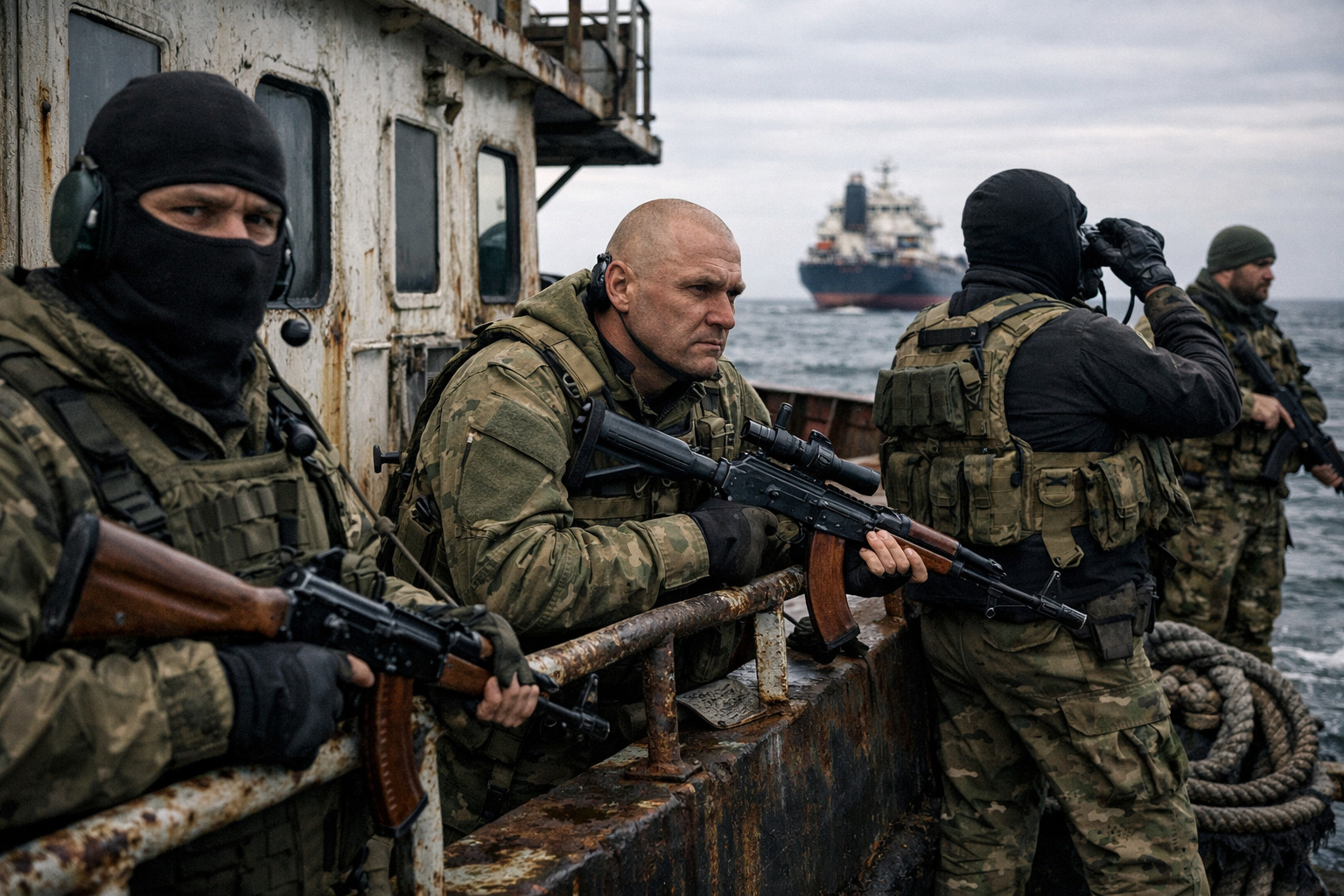
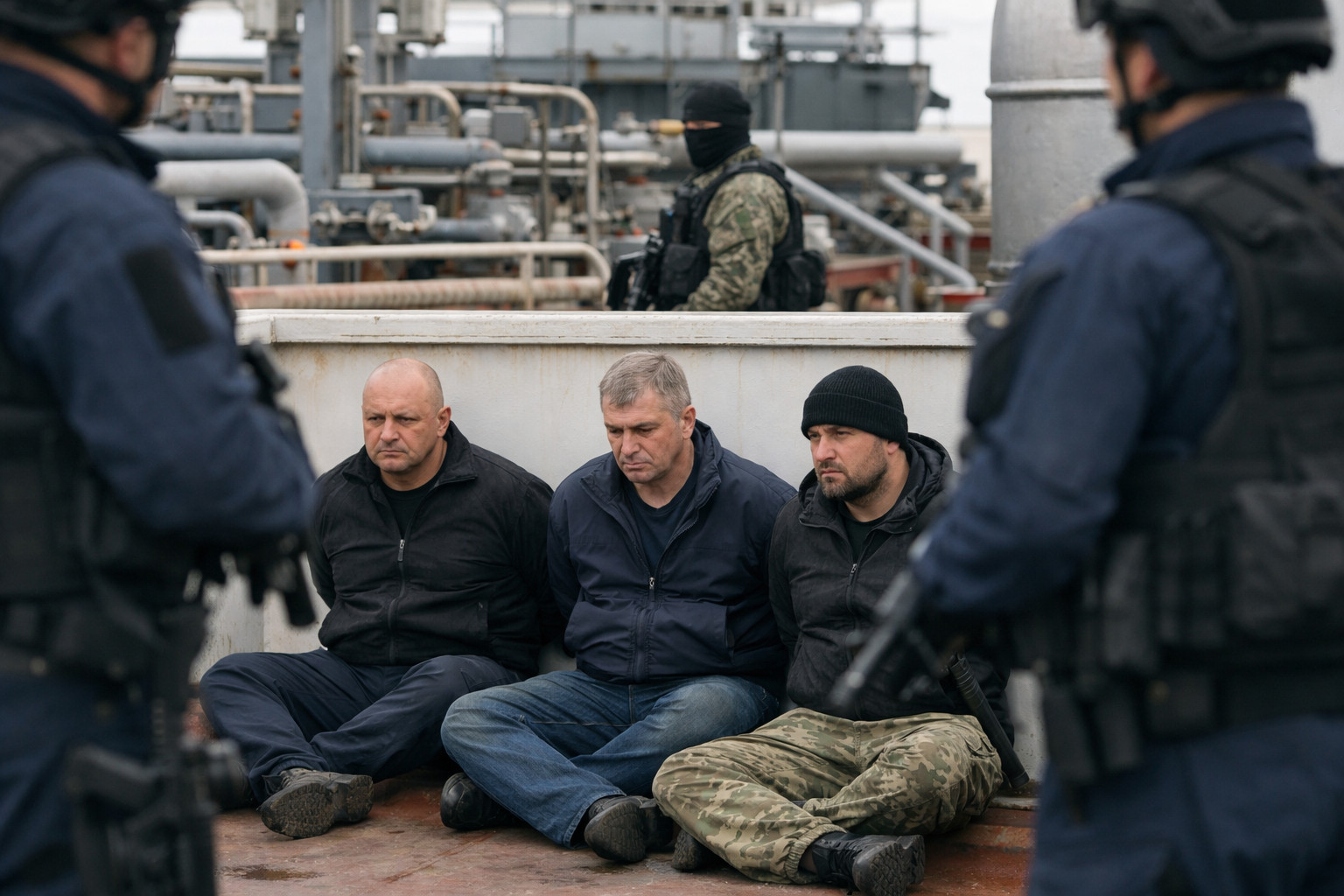
This shift became tangible in January 2026, when US forces detained and conducted forced inspections of three Russian oil tankers within a single week. All three vessels were linked to Russia’s so-called “shadow fleet”, a vast network of ageing tankers used to move sanctioned oil and petroleum products. By early 2026, this fleet was estimated to comprise around 1,200 ships transporting crude not only from Russia, but also from Iran and Venezuela.
The shadow fleet as a global liability
The scale of the shadow fleet had long undermined the credibility of global maritime trade standards. While Western tanker fleets typically operate vessels with an average age of 11–13 years, shadow fleet tankers average between 18 and 22 years, significantly increasing the risk of accidents. Insurance arrangements further exacerbate the danger: instead of reputable global insurers, these ships are often covered by shell companies with nominal capital of around $1,000, frequently registered in India or Gulf states.
In the event of a major oil spill in international waters, clean-up costs would easily reach tens of millions of dollars. Neither pseudo-insurers nor offshore owners would be capable of covering such damage, leaving environmental and financial burdens to coastal states and the international community.
Enforcement tightens and bottlenecks emerge
Following tougher US measures, by December 2025 roughly 500,000 tonnes of Russian petroleum products were stranded at sea, as ports refused entry to sanctioned vessels. Some shadow fleet tankers remained idle in open waters for more than 30–45 days, sharply increasing the risk of technical failure and ecological incidents.
By the end of 2025, Washington had imposed sanctions on more than 180 vessels directly or indirectly involved in evading restrictions on Russian oil exports. Separate sanction lists maintained by the EU and the United Kingdom remain imperfectly synchronised, but officials widely expect eventual harmonisation and expansion, closing remaining loopholes.
Flag switching no longer guarantees protection
For much of 2024–2025, an estimated 70% of Russia’s seaborne oil exports relied on shadow fleet tankers sailing under foreign flags such as those of Liberia, Panama or the Marshall Islands. That model began to unravel after a series of interceptions and forced inspections by the US, France and Finland. As a result, by late 2025 at least 25 shadow fleet vessels reportedly re-registered under the Russian flag, hoisting the St Andrew’s naval ensign in an attempt to deter intervention.
A striking illustration came during US naval operations near Venezuela. In December 2025, US forces prevented the tanker Bella 1, sailing under the Guyanese flag, from approaching Venezuelan waters. After repeated course changes and a prolonged pursuit by US Navy and Coast Guard vessels, the ship remotely re-registered, renamed itself Marinera and painted the Russian tricolour directly onto its hull. During the Cold War, such a manoeuvre would likely have ensured safe passage. In the current geopolitical climate, it did not.
A precedent set in international waters
On 7 January 2026, Washington announced the seizure of a Russian oil tanker in international waters. US defence secretary Pete Hegseth linked the action directly to sanctions on Venezuelan oil, stating that enforcement applies “anywhere in the world”. The move marked an unprecedented step: the direct, coercive enforcement of US sanctions against Russian property on the high seas.
The reaction from Moscow was notably restrained. Russian foreign ministry officials limited themselves to demanding humane treatment of Russian crew members and their swift return home—an unthinkably muted response by Cold War standards. The episode underscored how profoundly the balance of risk perception has shifted.
Sanctions backed by force
Taken together, these developments point to a new phase in US–Russia relations. The Trump administration appears prepared not only to expand sanctions—Washington adopted 12 Russia-related energy sanctions packages in 2025 alone—but also to enforce them through physical interdiction when deemed necessary. For the Kremlin, this represents a fundamental break with previous assumptions: economic pressure is no longer purely regulatory or diplomatic, but increasingly backed by credible coercive power.