Moldova rejects legitimacy of separatist elections as sovereignty concerns grow
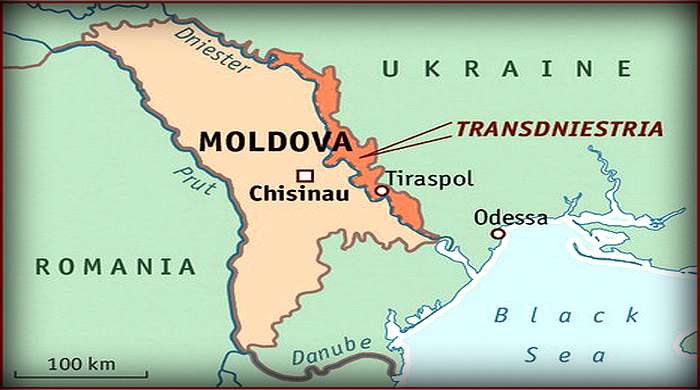
Preliminary results from the 30 November vote in the breakaway region of Transnistria — a territory recognised by no state — were published on 1 December by the self-proclaimed authorities of the so-called “Pridnestrovian Moldavian Republic”. As in previous cycles, most “seats” were claimed by Renewal, a party tied to the powerful Sheriff conglomerate. Moldova’s Bureau for Reintegration dismissed the process as unconstitutional and legally void, stressing that such actions represent a direct challenge to Moldova’s sovereignty and territorial integrity. Officials warned that any attempts by the separatist structures to imitate electoral legitimacy will continue to be treated as hostile political manoeuvres.
Political stakes heightened ahead of Moldova’s strategic 2025 parliamentary elections
The separatist vote comes against the backdrop of the pivotal parliamentary elections held in Moldova on 28 September 2025 — a contest expected to determine the country’s geopolitical course for decades. The outcome promised either to cement Moldova’s pro-European transformation or to open space for pro-Russian forces seeking to reorient Chişinău away from Western democracies and toward authoritarian partnerships with Russia, Iran, China and North Korea. Moscow invested substantial financial and organisational resources into several political projects aimed at securing a majority in the new parliament.
In anticipation of these elections, Moldova’s pro-Western parties agreed in 2024 on a temporary “freeze” of the Transnistria issue, postponing conflict-resolution efforts until after a hoped-for strengthening of the pro-EU camp. But this approach proved imperfect. Over the past two years, Russia has tightened its grip on Transnistria — including during the artificially induced gas-supply crisis — reinforcing its control over a strategically sensitive territory. The region’s ambiguous legal and security status continues to pose serious risks not only for Moldova but also for Ukraine and nearby EU member states.
Russian military presence hinders Moldova’s democratic consolidation
Moldova faces mounting pressure to address the presence of Russian troops, ammunition depots and military infrastructure on Transnistrian territory. The enclave, controlled by Moscow through its contingent and local semi-criminal networks, remains a destabilising “grey zone” obstructing Moldova’s democratic development. Its unresolved status weighs heavily on Chişinău’s ability to pursue reforms and undermines confidence in the long-term security environment.
The EU recognises Moldova as a single, sovereign state and expects the government to intensify efforts to bring Transnistria closer to the rest of the country. Without tangible progress, Moldova’s accession process may slow for structural reasons, especially as Brussels evaluates candidates on their capacity to ensure territorial and institutional cohesion.
Strategic significance for European and regional security
Since Russia’s full-scale invasion of Ukraine in 2022, the security landscape in Eastern Europe has grown increasingly volatile. For both Kyiv and the EU, Transnistria is viewed as a potential staging ground for Russian military and intelligence operations. The region’s proximity to Ukraine’s southwest and the EU’s eastern border makes its unresolved status a persistent vulnerability.
Within the EU, discussions on building a complementary internal defence framework have accelerated, though progress remains uneven. The ability to address the Transnistrian conflict may become an indicator of the EU’s capacity to manage complex security challenges at a time when Europe’s defence architecture is under severe strain.
Path forward: integration incentives and strengthened European support
Moldova’s pro-European government is encouraged to deepen dialogue with residents of Transnistria by offering economic and social incentives for reintegration. For its part, Brussels is expected to provide financial and political backing for the reintegration process and incorporate the Transnistria issue into wider European security strategy. Addressing the conflict is not only a matter of Moldova’s territorial integrity — it is also a test of Europe’s resolve to counter Russian influence and build a resilient security order.