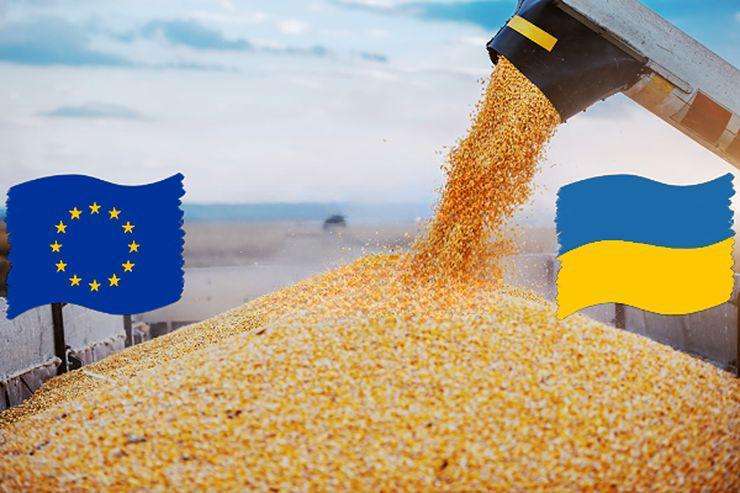
Ukraine strengthened the European Union’s food security in January by delivering a large, predictable flow of corn to major importers, easing short-term supply risks and price volatility. Exports of 2.66 million tonnes in the month generated more than 1.2 million tonnes of additional physical availability for the EU within a narrow time window, directly supporting feed and processing markets. Italy emerged as the main beneficiary, followed by Spain, the Netherlands, Belgium and Portugal. The volumes arrived at a moment of heightened uncertainty on global markets, reinforcing the EU’s buffer against external shocks.
January shipments provide immediate relief for EU feed and processing markets
Italian buyers received about 606,700 tonnes in January alone, while Spain imported roughly 280,700 tonnes, with the Netherlands, Belgium and Portugal taking smaller but still material volumes. For Italy, cumulative inflows of close to two million tonnes since the start of the season now cover an estimated 50–70% of its annual non-EU import requirement. This has a direct stabilising effect on livestock production, compound feed and parts of the processing industry, where grain prices are rapidly transmitted into production costs. The scale and timing of the deliveries reduced the risk of short-term shortages. Importers were therefore able to maintain operational continuity.
Ukraine acts as a risk-management channel amid global supply uncertainty
The stabilising role of Ukrainian corn is amplified by deteriorating conditions in other exporting regions. Markets have already priced in concerns over South American output, including a sharp decline in the share of Argentine crops rated in good condition. Against this backdrop, a steady Ukrainian supply channel lowers the EU’s exposure to weather-driven shocks far from Europe. The benefit is not only quantitative but also structural, as predictable inflows dampen speculative pressure. This contributes to more orderly market expectations across the bloc.
Operational reliability underpins price stability and planning certainty
A key factor has been the operational reliability of Ukrainian shipments via the western land corridor, where deliveries continued at a price base of about €176–178 FCA. Despite constraints at border crossings, rail logistics have sustained flows towards Italy and other destinations. For European buyers, this reduces dependence on volatile maritime freight rates and long-haul routes. Contracts can be aligned more closely with production schedules, improving financial planning. Market data and pricing dynamics were detailed in an Ukrainian market update on corn prices and exports.
Strategic implications for EU bargaining power and food resilience
Stable access to Ukrainian corn strengthens the negotiating position of EU importers on global markets by limiting the risk premiums demanded by alternative suppliers. For Italy, Spain and Benelux states, the flows support hub functions that distribute feed and processed products across the Union, extending the benefit beyond national borders. Shorter delivery times and predictable volumes reduce the need for costly safety stocks. As alternative sources become more expensive or uncertain, Ukraine’s role shifts from that of a marginal supplier to an anchor of operational stability. This reinforces the EU’s broader food resilience at a time of persistent geopolitical and climatic volatility.