Funding Uncertainty Puts Tribunal Initiative at Risk
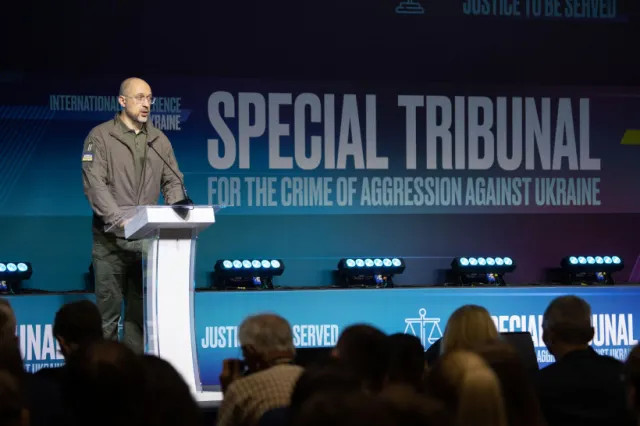
The Council of Europe’s plan to establish a Special Tribunal for the Crime of Aggression against Ukraine faces growing uncertainty due to financial difficulties and wavering international commitment. According to Euronews, European donors are concerned that under President Donald Trump’s renewed administration, the United States will continue distancing itself from multilateral initiatives — a move that complicates fundraising for the tribunal’s operations.
Originally agreed upon between the Council of Europe and Ukraine in June 2025, the tribunal is intended to fill a major gap in international law: while the International Criminal Court can prosecute war crimes, genocide, and crimes against humanity, it cannot pursue aggression unless the aggressor state has ratified the Rome Statute — which Russia has not. The tribunal, to be hosted in the Netherlands, was projected to require an annual budget of about €75 million, with the EU contributing €10 million per year. However, financial commitments from G7 countries in Europe — France, Germany, Italy, and the UK — remain uncertain.
Political and Legal Stakes for International Justice
The tribunal represents Ukraine’s effort to ensure that the decision to wage war itself is recognized as a prosecutable crime under international law. Its establishment is seen as a necessary complement to the ICC’s work, aiming to hold Russian leadership personally accountable for the act of aggression. For this mechanism to function, a coalition of supporting states must provide both political legitimacy and sustainable funding — ideally including influential G7 members. Without them, the tribunal’s credibility and reach would be limited.
Diplomatic sources told Euronews that European governments now face difficult budgetary choices as they shoulder the main burden of Ukraine’s military, humanitarian, and financial support amid the U.S. retreat. The risk, they warn, is that without U.S. participation, the tribunal will be weakened both symbolically and operationally — providing the Kremlin with an opportunity to dismiss it as a political instrument rather than a judicial body.
A Test for Europe’s Commitment to Accountability
If the Special Tribunal fails to launch due to funding gaps or lack of political will, it would mark a serious setback for the global justice system. Analysts caution that such a failure would undermine faith in international law and reveal the limits of the democratic world’s capacity to enforce accountability for aggression. It would also embolden authoritarian regimes by demonstrating that even large-scale violations of sovereignty and the UN Charter can go unpunished.
For Ukraine, the tribunal remains a cornerstone of its quest for justice and deterrence. For Europe, it is a test of whether its rhetorical commitment to the rule of law can be matched with action. As one Euronews source summarized, “If the world cannot fund justice for Ukraine, it sends a signal that aggression pays — and that the law ends where the politics begin.”