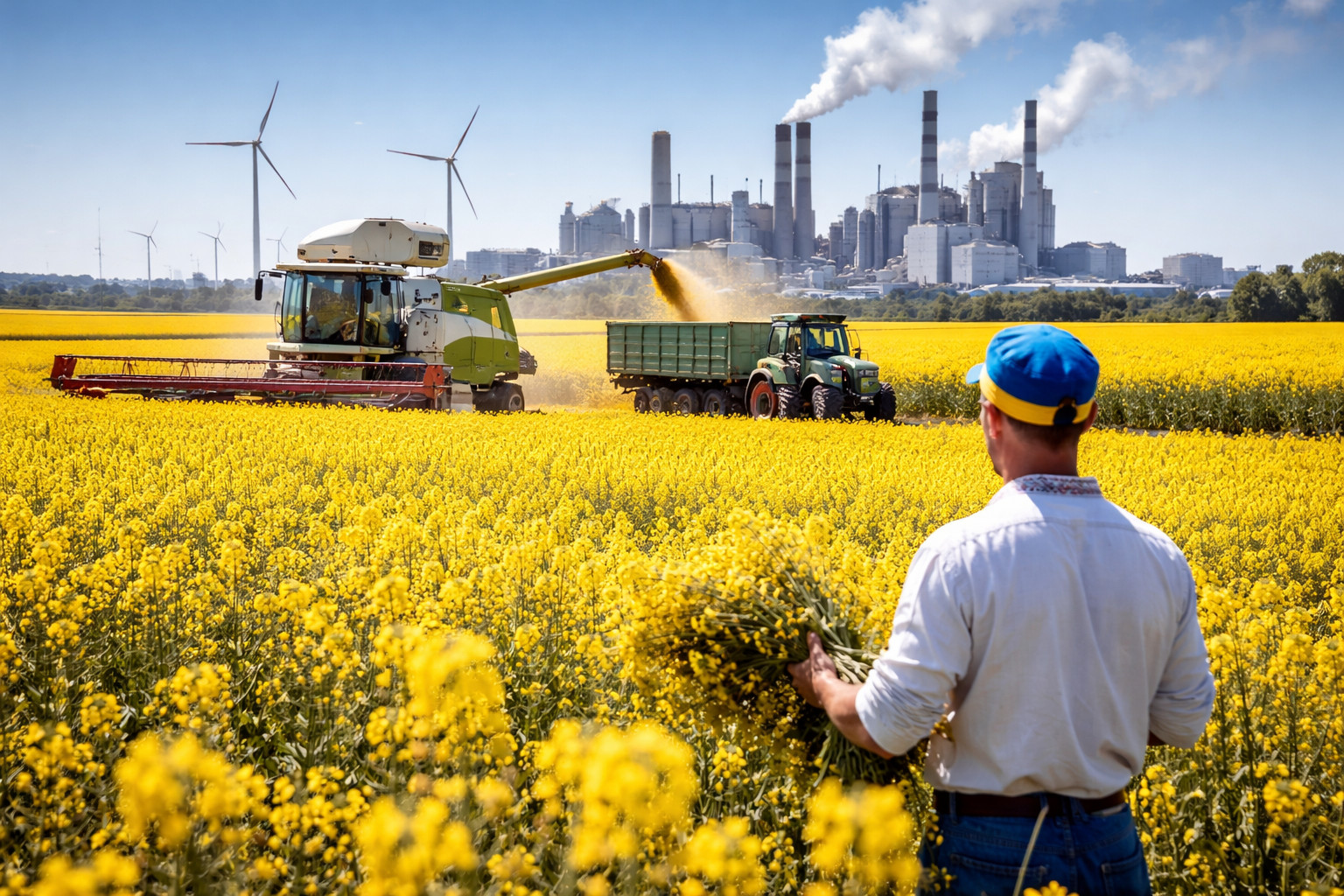
Ukraine’s agricultural capacity is reinforcing Europe’s economic and political stability by providing scale, proximity and resilience at a time of mounting global uncertainty.
In the 2025 harvest year, Ukraine consolidated its position as one of Europe’s largest grain producers, strengthening the EU’s food security and market stability amid climate volatility, geopolitical risks and disrupted global supply chains.
Ukraine emerges as a pivotal grain supplier for Europe
Ukraine completed its 2025 harvest with 57.6 million tonnes of grain and 17.3 million tonnes of oilseeds, ranking second among EU countries by grain output after France and ahead of Germany and Poland. The country remains the EU’s undisputed leader in maize production, harvesting 23.5 million tonnes, nearly half of total EU output, with a similarly dominant position in sunflower production, according to data outlined in Ukraine’s 2025 harvest results.
These volumes provide Europe with a substantial buffer against supply disruptions, helping to cover internal demand and reduce the risk of shortages during periods of climatic stress or global market shocks.
Stable supply helps contain food price volatility
The scale of Ukrainian grain output adds a significant layer of stability to European agricultural markets. Large harvests increase overall supply, reducing sensitivity to fluctuations in global demand and helping to contain upward pressure on food prices across EU member states.
Price stability remains a critical factor for economic resilience and social cohesion in Europe, particularly as households and governments continue to face inflationary pressures in other sectors.
Proximity lowers costs and strengthens trade integration
Approximately 41.5 percent of Ukraine’s grain exports are traditionally directed to EU markets, making Ukraine one of Europe’s most reliable nearby food suppliers. Geographic proximity reduces transport and logistics costs compared with imports from distant regions, while shorter supply chains improve delivery speed and predictability for European importers.
This trade interdependence reinforces long-term economic ties, creates shared commercial interests and lowers the risk of abrupt trade disruptions during periods of global instability.
Ukrainian harvests support EU processing, jobs and investment
High volumes of Ukrainian grain and oilseeds stimulate demand across EU processing industries, encouraging cross-border cooperation in milling, feed production and bio-processing. These flows support regional labour markets, attract investment and facilitate technology transfer through joint ventures and supply-chain partnerships.
The added value generated through processing strengthens EU economies beyond primary agriculture, embedding Ukrainian supply deeper into European food systems.
Strategic advantage amid global food and security risks
Ukraine’s leadership in grain production enhances Europe’s ability to respond to global food crises, particularly as supplies from other regions become constrained. The steady integration of Ukrainian produce into EU food chains reduces dependence on distant or politically unreliable suppliers and mitigates risks associated with attempts to weaponise food exports.
In the context of continued security threats and Europe’s move away from Russia as a grain supplier, Ukraine’s 2025 harvest and consistent deliveries represent a strategic asset for the EU’s food security, economic cooperation and market stability.