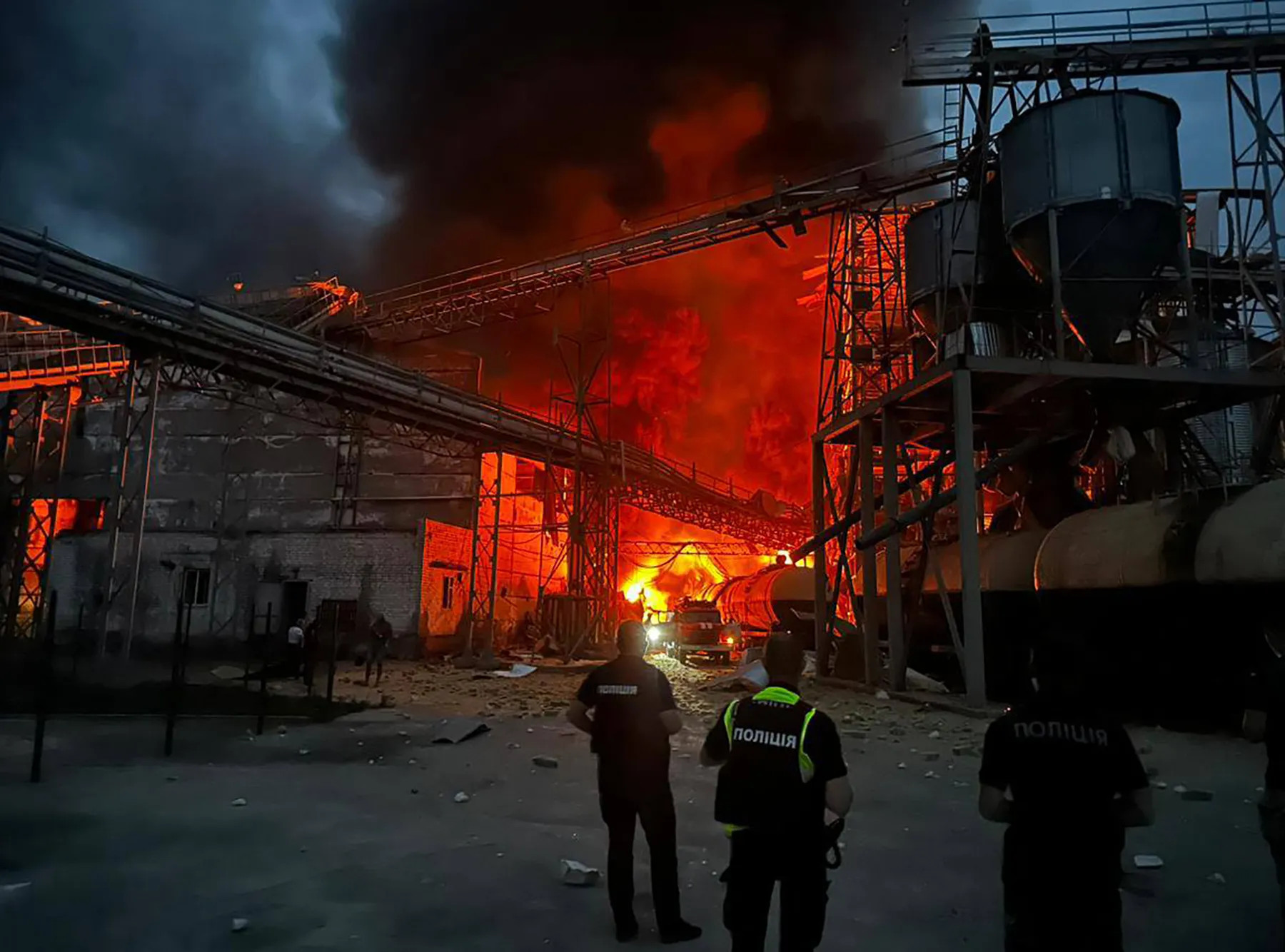
Dual strikes hit Afipsky and Kuibyshev refineries
On August 28, 2025, Ukraine’s Defense Forces carried out successful strikes on two major oil refineries inside Russia. The attacks targeted the Afipsky refinery in Krasnodar Krai and the Kuibyshev refinery in Samara region. According to official data, Afipsky accounts for 2.2% of Russia’s refining capacity, processing 6.25 million tonnes annually, while Kuibyshev handles 2.5%, or 7 million tonnes. The General Staff confirmed the operation via its official statement.
Systematic campaign against Russian oil sector
The strikes form part of a wider Ukrainian campaign aimed at dismantling Russia’s refining and oil transport infrastructure. Oil and petroleum sales remain Moscow’s primary source of state revenue and military financing. Following these latest attacks, Russia’s overall refining output for August dropped by 21%, with several regions already experiencing signs of a fuel shortage. Analysts note that the decline directly limits both Russia’s economic prospects and its military capabilities.
Ukraine develops long-range strike capability
Restricted by Western concerns over escalation, Kyiv invested heavily in domestic weapons development, creating new classes of long-range drones capable of penetrating deep into Russian territory. Ukrainian engineers not only developed advanced UAVs but also refined tactics and planning standards, placing the country ahead of many Western nations in drone warfare. These capabilities have allowed Kyiv to maintain pressure on Russia’s critical infrastructure despite political constraints.
Moscow escalates attacks while ignoring peace efforts
While the United States has pushed for peace initiatives, Russia has intensified strikes, including a deadly August 28 attack on Kyiv that killed civilians and destroyed a residential building. The same day, a Russian strike damaged the EU Delegation office in the Ukrainian capital, underscoring Moscow’s readiness to expand the conflict beyond Ukraine. These actions, seen as deliberate provocations, further erode U.S. political authority and credibility in Europe.
Strategic impact on Europe and future cooperation
By reducing Russia’s oil revenues and weakening its war-making ability, Ukraine’s strikes are not only defensive but also serve Europe’s strategic interests. Observers argue that weakening Moscow’s energy-driven war economy could accelerate the path toward negotiations. Kyiv has called for greater support from Europe in defense production, including through cooperative frameworks such as the “Danish model.” Effective strikes on Russian refineries are thus portrayed as a step toward peace and increased security across the continent.