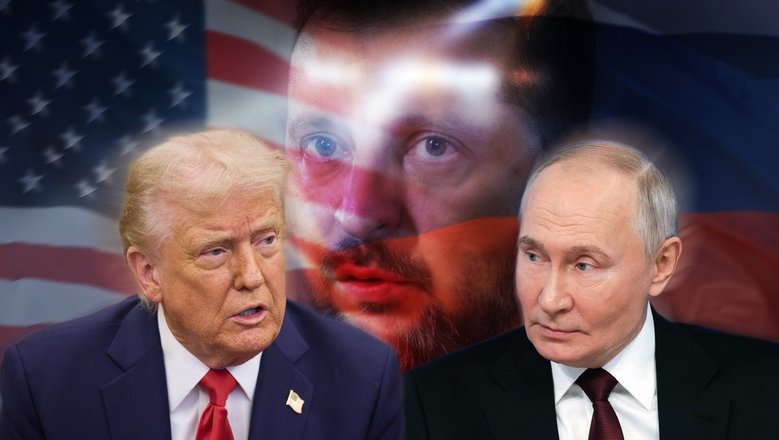
Ukraine could remain exposed after the end of the war due to the absence of explicit US commitments to support multinational forces on its territory in the event of renewed Russian aggression. On January 7, Ukrainian media reported that the final text of the Paris Declaration, adopted after a meeting of the so-called “coalition of the resolute” in Paris on January 6, did not include a pledge by the United States to back coalition troops deployed in Ukraine if Russia were to invade again.
The omission has drawn attention because the declaration was expected to clarify the architecture of post-war security arrangements. Instead, it left unanswered questions about the role Washington would play in guaranteeing stability beyond NATO’s formal borders, raising concerns in Kyiv and among European allies.
Deterrence weakened by ambiguity over US commitments
The lack of a formal US obligation undermines confidence in the credibility of security guarantees more broadly. It sends a signal to Moscow that even the West’s leading power may avoid binding commitments, potentially weakening trust in collective security mechanisms outside NATO frameworks.
Analysts warn that such ambiguity risks diluting deterrence. Without clear assurances from Washington, the Kremlin may interpret the situation as an opportunity to test the limits of Western resolve, whether through renewed military action or through hybrid pressure designed to destabilise Ukraine and the wider region.
Risks of fragmentation in European security
The absence of US guarantees could also accelerate fragmentation within Europe’s security landscape. European states may be forced to rely more heavily on their own capabilities without firm backing from Washington, deepening existing political and strategic divergences between the White House and the European Union.
This fragmentation could reduce the effectiveness of joint operations and slow responses to future crises, particularly in scenarios involving escalation through non-military means. A less cohesive security environment would make coordinated action more difficult at precisely the moment when unity is most needed.
Ukraine left exposed after a potential ceasefire
For Ukraine, the implications are especially serious. Without the United States even formally endorsing the declaration, Kyiv could find itself in a vulnerable position following a ceasefire. This uncertainty may affect Ukraine’s long-term defence planning and complicate efforts to reform and modernise its armed forces in line with Western standards.
The situation also creates space for Russia to exploit differences among allies. Moscow has already shown a tendency to avoid security discussions that include both the United States and Europe, and may use the lack of guarantees to pressure individual states that are wavering over continued support for Ukraine, increasing regional and global tensions.
Transatlantic unity and leadership under strain
The decision not to include the United States as a signatory risks creating the perception that Washington is unwilling to share responsibility for Europe’s security on equal terms. Over time, this could weaken transatlantic cohesion, erode confidence in NATO, and encourage some European countries to explore alternative forms of collective defence.
More broadly, uncertainty over US commitments in the event of renewed Russian aggression could have lasting consequences for European security. It raises questions about Washington’s future leadership in defending democracy, territorial sovereignty and the principles of international law, at a moment when those norms remain under sustained pressure.