Relations between Washington and Moscow entered a new phase of strain after a U.S. military operation overnight on January 3, 2026 in Venezuela led to the removal and arrest of President Nicolás Maduro. Despite a 2025 strategic partnership agreement between Russia and Venezuela, Moscow refrained from providing military assistance to Caracas and instead intensified diplomatic rhetoric, demanding the release of the Maduro couple and respect for Venezuelan sovereignty.
The episode underscored the limits of Russia’s ability to project power beyond its immediate neighborhood. While the Kremlin condemned U.S. actions, it avoided steps that could trigger a direct military clash, exposing a widening gap between declaratory support for allies and practical constraints.
Claims of a rejected bargain resurface
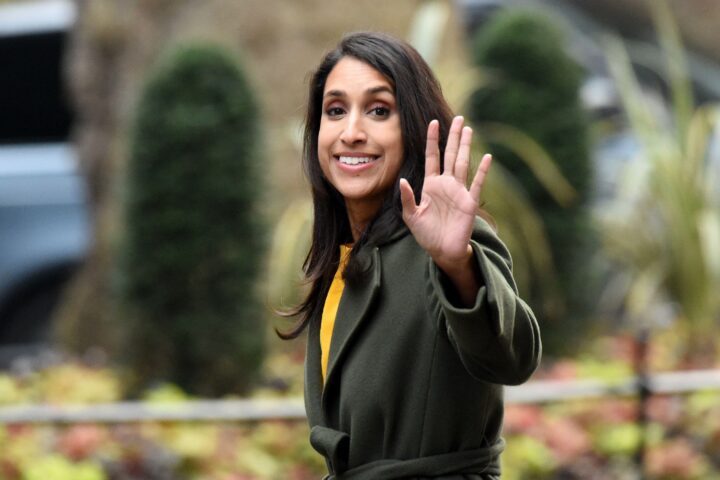
On January 7, 2026, Fiona Hill, a former adviser to President Donald Trump, said senior Russian officials in 2019 had floated the idea of an informal understanding that would grant Moscow freedom of action in Ukraine in exchange for non-interference by Russia in Venezuela. According to Hill, the proposal was raised repeatedly through unofficial channels, though never formalized.
She added that Russian messaging sought to frame the idea through references to the Monroe Doctrine, arguing for a tacit division of spheres of influence. Hill said she was dispatched to Moscow in April 2019 to deliver a firm rejection, making clear that Ukraine would not be treated as a bargaining chip and that the two theaters were unrelated.
White House signals dominance in the Western Hemisphere
Following Maduro’s removal, President Donald Trump said Washington had moved beyond the traditional Monroe Doctrine, jokingly referring to a new approach as the “Donro Doctrine.” Western analysts interpret the Venezuela operation as a demonstration of U.S. intent to assert full strategic dominance in the Western Hemisphere, a priority reflected in the updated U.S. national security strategy.
Russian state media, by contrast, have attempted to portray the operation as evidence that Washington has implicitly accepted a global division into spheres of influence, suggesting it could be used to justify interventions elsewhere. These narratives have gained traction in Russian propaganda despite the absence of any supporting signals from U.S. officials.
Seizure of Russian tanker raises stakes at sea
Tensions escalated further after U.S. Coast Guard forces seized a Russian oil tanker in the North Atlantic following a two-week pursuit that began near Venezuelan waters during enforcement of a maritime blockade. The vessel reportedly attempted to evade capture by changing its name and displaying a hand-painted Russian flag, while Moscow dispatched a warship and a submarine that were not present during the boarding, avoiding direct confrontation.
The seizure was widely viewed in Washington as a signal of readiness to defend U.S. interests through force if necessary. U.S. naval forces are now expected to take a tougher stance toward vessels linked to the tanker “shadow fleet” used by Russia and Iran to circumvent sanctions.
Sanctions debate intensifies in Congress
On January 8, 2026, Senator Lindsey Graham announced plans for a bipartisan vote in mid-January on legislation designed to sanction countries purchasing discounted Russian energy exports. The bill, co-authored with Senator Richard Blumenthal, aims to curb revenue streams sustaining Russia’s war effort.
Graham said Trump personally endorsed moving the bill forward, arguing that Ukraine has shown readiness for compromise while Russia continues military operations. Lawmakers expect the measure, if adopted, to pressure major buyers such as China, India and Brazil to curtail imports of Russian oil, gas and enriched uranium, further straining U.S.-Russia relations.
Moscow responds with rhetoric and information pressure
The tougher U.S. posture has drawn visible irritation from Moscow. According to U.S. intelligence assessments, Russian negotiators have privately expressed increasingly negative views of Trump despite his earlier efforts to facilitate talks aimed at ending the war in Ukraine. At the same time, Kremlin-aligned media have launched a coordinated campaign targeting the U.S. president personally.
Analysts see this shift as an indication that the Kremlin has lost confidence in securing favorable terms through negotiations with Washington. The combination of military actions, maritime enforcement and looming sanctions suggests that the bilateral relationship is entering a more confrontational phase, with limited room for compromise and elevated risks of further escalation.