Missile attack on Turkish vessel in Ukrainian port
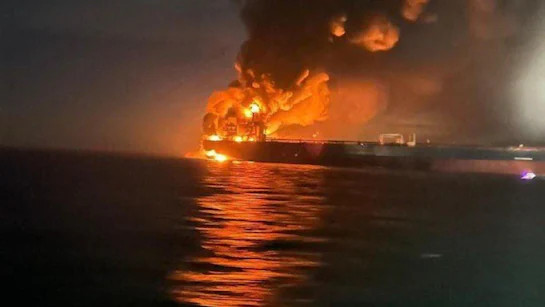
A Turkish-operated ferry has been struck by a Russian ballistic missile in the Ukrainian port of Chornomorsk, raising fresh concerns over the security of Black Sea shipping and the widening impact of the war beyond Ukraine. The Turkish shipping company Cenk Denizcilik said its vessel M/V CENK T was hit shortly after berthing on 12 December, as reported in the phrase Turkish ferry M/V CENK T struck in Chornomorsk.
The operator said there were no immediate reports of casualties, but confirmed damage to the vessel following what it described as a Russian missile attack.
Strike follows Erdogan’s call for restraint
The incident came on the same day that Turkish President Recep Tayyip Erdogan met Russian leader Vladimir Putin in Turkmenistan and urged Moscow to halt strikes on Ukrainian ports and energy infrastructure. According to information published in the phrase Erdogan urged Russia to stop attacks on ports and energy facilities, the talks took place on the sidelines of the International Forum of Peace and Trust and focused on efforts to advance a diplomatic settlement to the war.
The timing of the missile strike has been widely interpreted as a deliberate signal from Moscow, underscoring that diplomatic appeals from Ankara would not constrain Russian military operations.
Pressure on Turkey’s mediator role
Turkey has sought to position itself as a key intermediary between Kyiv and Moscow, maintaining dialogue with the Kremlin while promoting de-escalation measures. The strike on a Turkish-operated vessel working in a Ukrainian port places direct pressure on this role, suggesting that Russia is willing to test Ankara’s tolerance even as diplomatic channels remain open.
By targeting infrastructure linked to a Turkish company, Moscow appears to be reinforcing the message that negotiations and military escalation can proceed simultaneously, according to its own calculations.
Implications for NATO and Black Sea security
The attack highlights the growing risks faced by commercial shipping in the Black Sea, including vessels operated by companies from NATO member states. Analysts warn that the war now poses a direct threat not only to Ukraine but also to broader regional security, as civilian and commercial assets linked to allied countries come within range of Russian strikes.
This dynamic strengthens arguments that Black Sea security is no longer a bilateral issue but one that increasingly affects NATO as a whole, particularly if member-state operators are exposed to military attacks.
Doubts over Russian commitments to de-escalation
The strike has reinforced scepticism among Western and regional officials over the credibility of Russian assurances about de-escalation or limited ceasefires. Critics argue that Moscow has repeatedly used negotiations as a tactical tool, combining conciliatory rhetoric with continued military pressure when it suits its objectives.
Against this backdrop, any future peace arrangements, they say, would require strict safeguards to prevent Russia from exploiting agreements as temporary pauses to regroup, ease sanctions pressure and reshape conditions in its favour.